



What Is Kalguksu in Korean Cuisine?
Kalguksu is one of Korea’s traditional noodle dishes. The noodles are made by rolling wheat-flour dough thin and cutting it by hand with a knife before cooking them in hot broth.
The name literally means “knife-cut noodles”, referring to the traditional method of cutting the dough by hand rather than producing the noodles mechanically.
Depending on the region and restaurant, the broth may be prepared with anchovies, kelp, clams, beef bones, chicken, or other ingredients, so the flavor of kalguksu can vary considerably from one place to another.
The noodles are usually slightly thick, giving them a texture that can feel both soft and pleasantly chewy.
In Korea, kalguksu has long been enjoyed as an affordable and comforting meal, particularly on rainy or cold days when a bowl of warm broth is especially appealing.
Daejeon is one of the Korean cities where kalguksu has developed into a particularly strong part of local food culture.
• Traditional Korean noodle dish made from wheat-flour dough
• Name means “knife-cut noodles”
• Broths can include anchovies, kelp, clams, beef, or chicken
• Soft yet pleasantly chewy noodle texture
• Popular Korean comfort food served in warm broth
• Regional broth and toppings vary throughout Korea
Why Should You Try Kalguksu When Visiting Daejeon?
Daejeon is located near the center of South Korea and developed as an important transportation and railway city.
Today, many travelers know Daejeon for bakeries and bread, but kalguksu is another food that has been closely connected with the everyday lives of local residents for generations.
After the Korean War, wheat supplied as relief aid became more widely distributed, while Daejeon’s role as a major railway and logistics hub helped flour and noodle culture develop in the city.
Around Daejeon Station, noodle restaurants became practical places where refugees, workers, market visitors, and railway passengers could quickly eat a filling meal.
Through this history, kalguksu became more than a simple bowl of noodles and developed into one of Daejeon’s best-known local comfort foods.
Many kalguksu restaurants continue to operate throughout Daejeon today, making the dish one of the local foods worth experiencing during a trip to the city.
• One of Daejeon’s representative local foods
• Developed alongside the spread of wheat flour after the Korean War
• Closely connected with Daejeon Station and railway culture
• Filling everyday meal for travelers and workers
• Part of Daejeon’s continuing noodle culture
• Recommended local food experience for visitors
Why Did Daejeon Become Famous for Kalguksu?
The history of Daejeon kalguksu is closely connected with Daejeon Station.
As an important transportation center where major railway lines connected, Daejeon attracted large numbers of passengers and workers. Quick and filling noodle dishes naturally became popular around transportation and market areas.
After the Korean War, the availability of relief-supplied wheat increased, and Daejeon’s role as a distribution hub further encouraged the growth of noodle restaurants.
At the time, kalguksu was a practical meal because it could provide a satisfying portion of food without being overly complicated.
This historical background helps explain why travelers can still find many long-running restaurants in Daejeon serving kalguksu together with dishes such as duruchigi.
• Development of railway transportation around Daejeon Station
• Major center for wheat-flour distribution
• Expansion of noodle dishes after the Korean War
• Everyday meal for workers and local residents
• Daejeon’s noodle culture continues today
What Is Daeseon Kalguksu?
Daeseon Kalguksu is a long-established Daejeon restaurant that began near Daejeon Station in 1954.
Its story began with a simple operation near the station, serving kalguksu to workers, market visitors, and people moving through the busy railway district.
After operating in several areas of central Daejeon, Daeseon Kalguksu moved to its current Dunsan-dong location in 2001 and has continued serving kalguksu, suyuk, and duruchigi.
From its 1954 beginning to 2026, the restaurant represents more than 70 years of Daejeon food history.
For travelers who want to understand how kalguksu became one of Daejeon’s representative foods, Daeseon Kalguksu provides a direct connection to the city’s noodle culture.
• Established near Daejeon Station in 1954
• More than 70 years of history
• One of Daejeon’s long-running kalguksu restaurants
• Moved to Dunsan-dong in 2001
• Known for kalguksu, suyuk, and duruchigi
• Good destination for experiencing Daejeon food culture
The Signature Dish at Daeseon Kalguksu
The most straightforward dish to try on a first visit to Daeseon Kalguksu is the classic kalguksu.
According to the current menu, kalguksu is KRW 9,000.
The broth is prepared with ingredients such as anchovies and kelp, creating a relatively light and savory base.
The noodles are topped with ingredients such as crown daisy, sesame powder, dried seaweed, and meat garnish, adding aroma and richness to the mild broth.
Rather than relying on an intensely seasoned soup, the dish emphasizes a clean broth and the combination of noodles and toppings.
If you are visiting Daejeon for the first time and want to experience a traditional local-style noodle dish, this is the most basic place to begin at Daeseon Kalguksu.
• Kalguksu: KRW 9,000
• Signature dish of Daeseon Kalguksu
• Mild anchovy and kelp-based broth
• Crown daisy, sesame, seaweed, and meat garnish
• Soft noodles
• Recommended for first-time visitors
What Is the Difference Between Bibim Guksu and Cold Bibim Guksu?
If you prefer spicy noodles instead of a bowl with broth, Daeseon Kalguksu also serves bibim guksu.
The current menu lists Bibim Guksu at KRW 9,500 and Cold Bibim Guksu at KRW 9,500.
Bibim guksu combines noodles with sesame oil and a spicy gochujang-based sauce, creating a flavor that is both spicy and nutty.
The regular version uses warmer noodles, while Cold Bibim Guksu provides a cooler and more refreshing texture.
The cold version can be particularly appealing in summer, while regular bibim guksu also pairs well with suyuk.
• Bibim Guksu: KRW 9,500
• Cold Bibim Guksu: KRW 9,500
• Gochujang-based spicy seasoning
• Nutty flavor from sesame oil
• Choice between warm and cold noodles
• Pairs well with suyuk
Suyuk Is Available in Large, Medium, and Small Portions
Another popular dish at Daeseon Kalguksu is suyuk, or tender boiled pork.
The current menu offers three portion sizes.
Large is KRW 40,000, medium is KRW 35,000, and small is KRW 30,000.
The meat is boiled until tender and sliced into pieces that are easy to share.
The lean meat provides a soft texture, while the skin and fattier portions can add a more pleasantly chewy bite.
For two people, the small portion can work well with individual bowls of noodles, while larger groups may prefer the medium or large size.
• Large Suyuk: KRW 40,000
• Medium Suyuk: KRW 35,000
• Small Suyuk: KRW 30,000
• Soft and pleasantly chewy texture
• Classic pairing with kalguksu
• Suitable for sharing
What Is Osam Duruchigi?
In addition to noodles and suyuk, one of the distinctive menu choices at Daeseon Kalguksu is Osam Duruchigi.
The current price is KRW 32,000.
“Osam” combines the Korean words for squid and pork belly.
The chewy squid and rich pork belly are stir-fried together in a spicy Korean-style sauce, producing a much stronger flavor than the restaurant’s mild kalguksu.
Ordering mild kalguksu together with spicy Osam Duruchigi creates a clear contrast between the two dishes, making it a good combination for groups.
• Osam Duruchigi: KRW 32,000
• Squid and pork belly combination
• Spicy Korean-style duruchigi
• Stronger flavor than kalguksu
• Good shared dish for groups
Squid and Tofu Duruchigi Is Another Popular Choice
If you want both seafood and tofu, you can choose the Squid + Tofu Duruchigi.
The current price is KRW 30,000.
Soft tofu absorbs the spicy sauce, while squid adds a contrasting chewy texture.
In Daejeon, it is also common to add extra noodles to the sauce remaining after eating duruchigi.
At Daeseon Kalguksu, combining duruchigi with an additional noodle serving is one way to experience Daejeon’s distinctive noodle culture beyond a standard bowl of kalguksu.
• Squid + Tofu Duruchigi: KRW 30,000
• Soft tofu and chewy squid
• Spicy Korean seasoning
• Works well with additional noodles
• Good introduction to Daejeon-style duruchigi
Squid Duruchigi and Tofu Duruchigi
Visitors who prefer one main ingredient can also choose either squid or tofu separately.
Squid Duruchigi is KRW 30,000, while Tofu Duruchigi is KRW 27,000.
Squid Duruchigi focuses on the chewy texture of squid, while Tofu Duruchigi highlights soft tofu coated in the spicy sauce.
If you enjoy spicy food, pairing either dish with a mild bowl of kalguksu provides a good balance between two very different flavors.
• Squid Duruchigi: KRW 30,000
• Tofu Duruchigi: KRW 27,000
• Chewy texture from squid
• Soft texture from tofu
• Good combination with mild kalguksu
Daeseon Kalguksu Full Menu and Prices
The current menu at Daeseon Kalguksu is centered around noodles, suyuk, and several types of duruchigi.
Noodle choices include classic kalguksu, bibim guksu, and cold bibim guksu.
Visitors can also order different sizes of suyuk and dishes such as Osam Duruchigi, Squid + Tofu Duruchigi, Squid Duruchigi, and Tofu Duruchigi.
Fresh tofu, rice, and extra noodles are also available, making it easy to adjust the meal depending on the number of people dining together.
• Kalguksu: KRW 9,000
• Bibim Guksu: KRW 9,500
• Cold Bibim Guksu: KRW 9,500
• Large Suyuk: KRW 40,000
• Medium Suyuk: KRW 35,000
• Small Suyuk: KRW 30,000
• Osam Duruchigi: KRW 32,000
• Squid + Tofu Duruchigi: KRW 30,000
• Squid Duruchigi: KRW 30,000
• Tofu Duruchigi: KRW 27,000
• Fresh Tofu: KRW 5,000
• Bowl of Rice: KRW 1,000
• Extra Noodles: KRW 3,000
What Should First-Time Visitors Order?
For a first visit to Daeseon Kalguksu, the most straightforward combination is Kalguksu + Suyuk.
The mild noodle broth and tender boiled pork allow visitors to experience two of the restaurant’s most representative dishes in one meal.
If you prefer spicy Korean food, you can add one of the duruchigi dishes instead of or alongside the suyuk.
Visitors who prefer noodles without soup may want to choose Bibim Guksu.
For groups of three or more, ordering different noodle dishes along with one shared plate of suyuk or Osam Duruchigi makes it easier to compare several styles of Daejeon food.
• First visit: Kalguksu + Suyuk
• Two people: Kalguksu + Small Suyuk
• Spicy food lovers: Add Duruchigi
• Prefer noodles without broth: Bibim Guksu
• Groups can share several different dishes
What Do Korean Visitors Say on Naver Map?
Korean visitors often describe the broth at Daeseon Kalguksu as clean, savory, and refreshing rather than excessively heavy.
The noodles are also frequently described as soft while maintaining an enjoyable texture.
Suyuk receives positive comments for being moist and tender, especially when eaten together with kalguksu.
Another frequently mentioned combination is adding extra noodles to the spicy sauce from tofu or squid duruchigi.
Because the restaurant has operated in Daejeon for decades, some visitors also mention returning with family or revisiting a familiar taste from earlier years.
• Clean and savory kalguksu broth
• Soft noodle texture
• Moist and tender suyuk
• Duruchigi sauce with extra noodles is a popular combination
• Long-established restaurant visited by local residents
• Waiting may occur during busy meal times
What Do International Visitors Say on Google?
International visitor reviews often mention the tender texture of the suyuk and the combination of boiled pork with kalguksu.
For travelers trying Korean kalguksu for the first time, the mild broth and soft noodles can make the dish relatively approachable.
Duruchigi, on the other hand, uses a spicy Korean-style sauce, so travelers who are sensitive to spicy food may want to begin with the classic kalguksu.
Groups can also share several dishes to experience both the mild and spicy sides of Daejeon cuisine in one meal.
• Mild kalguksu is relatively approachable for international visitors
• Positive comments about the suyuk and kalguksu combination
• Good place to experience Korean noodle cuisine
• Check the spice level before ordering duruchigi
• Groups can share several dishes
Where Is Daeseon Kalguksu Main Branch?
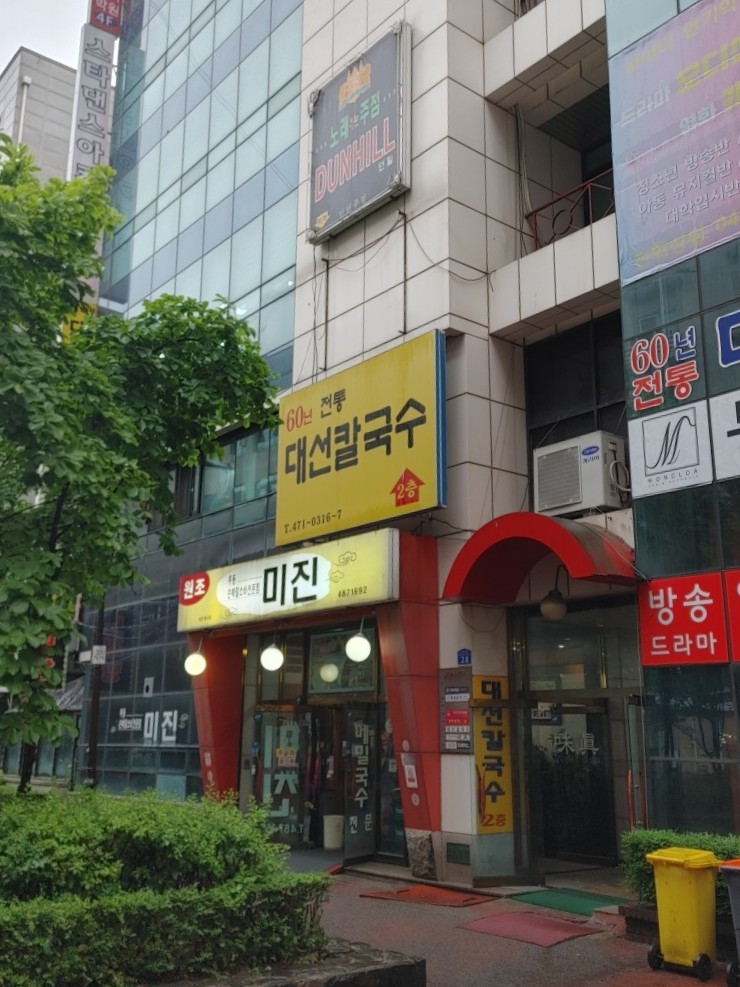
The main branch of Daeseon Kalguksu is located at 2F, Osung Building, 28 Dunsanjung-ro 40beon-gil, Seo-gu, Daejeon, South Korea.
Although Daeseon Kalguksu originally began near Daejeon Station in 1954, it now continues its long history in Dunsan-dong.
The restaurant is close to Daejeon City Hall and the central Dunsan commercial district, making it convenient to visit during sightseeing or business trips in central Daejeon.
• Address: 2F, 28 Dunsanjung-ro 40beon-gil, Seo-gu, Daejeon
• Located inside Osung Building
• Central Dunsan-dong location
• Close to Daejeon City Hall
• Convenient access by subway
Daeseon Kalguksu Naver Map
Daeseon Kalguksu Google Map
How to Get to Daeseon Kalguksu from City Hall Station
The closest subway station to Daeseon Kalguksu is City Hall Station on Daejeon Metro Line 1.
According to the provided map information, the restaurant is approximately 201 meters from Exit 7.
After leaving City Hall Station through Exit 7, walk toward Dunsanjung-ro 40beon-gil and enter the Osung Building. Daeseon Kalguksu is located on the second floor.
• Daejeon Metro Line 1
• City Hall Station Exit 7
• Approximately 201 meters
• Around 3–5 minutes on foot
• Located on the second floor of Osung Building
How to Get to Daeseon Kalguksu from Daejeon Station
If you arrive at Daejeon Station by KTX or regular train, using Daejeon Metro Line 1 is one of the simplest ways to reach Daeseon Kalguksu.
Take Metro Line 1 from Daejeon Station and get off at City Hall Station.
According to the provided route information, the subway ride takes approximately 12 minutes, followed by around 4 minutes of walking from City Hall Station to the restaurant.
The entire journey takes approximately 19 minutes.
The fare shown in the provided route information is KRW 1,550.
Because no major transfer is required, this is an easy route to understand even for travelers visiting Daejeon for the first time.
• Starting point: Daejeon Station
• Take Daejeon Metro Line 1
• Get off at City Hall Station
• Subway ride: approximately 12 minutes
• Walk from City Hall Station: approximately 4 minutes
• Total travel time: approximately 19 minutes
• Listed fare: KRW 1,550
How to Get to Daeseon Kalguksu from Daejeon Complex Terminal
If you arrive in Daejeon by express or intercity bus, you can reach Daeseon Kalguksu from Daejeon Complex Terminal by local bus.
According to the provided recommended route, travelers can take Bus 106 from the terminal area and get off near City Hall Station.
The bus ride takes approximately 18 minutes, followed by around 4 minutes on foot to the restaurant.
The complete journey is shown as approximately 25 minutes.
The listed public transportation fare is KRW 1,500.
Actual travel time can vary depending on traffic and bus arrival times, so checking real-time bus information shortly before departure is recommended.
• Starting point: Daejeon Complex Terminal
• Bus 106 available
• Bus ride: approximately 18 minutes
• Walk after getting off: approximately 4 minutes
• Total travel time: approximately 25 minutes
• Listed fare: KRW 1,500
• Check real-time bus information before departure
Which Is Closest: Daejeon Station, Complex Terminal, or City Hall Station?
Daeseon Kalguksu is closest to City Hall Station.
If you are already in Dunsan-dong or near Daejeon City Hall, walking from City Hall Station is the simplest option.
Travelers arriving at Daejeon Station can take Metro Line 1 without a major transfer, making the railway route particularly convenient.
From Daejeon Complex Terminal, the bus journey takes approximately 25 minutes based on the provided route.
• City Hall Station: about 201 meters, 3–5 minutes on foot
• Daejeon Station: approximately 19 minutes by subway and walking
• Daejeon Complex Terminal: approximately 25 minutes by bus and walking
• Daejeon Station route is convenient for KTX travelers
• Complex Terminal route is useful for express and intercity bus travelers
Daeseon Kalguksu Opening Hours and Break Time
The main branch of Daeseon Kalguksu is currently listed as open every day from 11:30 AM to 10:00 PM.
The restaurant has a break time from 3:00 PM to 5:00 PM.
The lunch last order is at 2:20 PM, while the evening last order is at 9:20 PM.
Because the lunch last order is relatively close to the beginning of the break time, travelers arriving after 2:00 PM should pay particular attention to the ordering schedule.
• Open daily: 11:30 AM–10:00 PM
• Break time: 3:00 PM–5:00 PM
• Lunch last order: 2:20 PM
• Dinner last order: 9:20 PM
• Check the latest operating information before visiting
Is Daeseon Kalguksu Suitable for Families and Groups?
The main branch of Daeseon Kalguksu can accommodate a variety of visitors, from solo diners ordering one bowl of noodles to families and larger groups.
Available facilities and services include group dining, reservations, takeaway, separate male and female restrooms, and high chairs for young children.
For groups, ordering only individual bowls of kalguksu is not the only option. Adding suyuk or one of the duruchigi dishes makes it easier to share several different flavors at the table.
• Group dining available
• Takeaway available
• Reservations available
• Separate male and female restrooms
• High chairs available
• Suitable for families and group meals
Why Visit Daeseon Kalguksu on Your First Trip to Daejeon?
Daeseon Kalguksu is more than simply a restaurant serving noodles. Its history also provides a glimpse into the development of Daejeon’s kalguksu culture.
The restaurant began near Daejeon Station in 1954 and has continued for more than 70 years, reflecting the period when kalguksu became part of everyday life for residents of the city.
By trying mild kalguksu, tender suyuk, and spicy duruchigi together, travelers can experience several different characteristics of Daejeon food culture at one table.
If you are looking for a local Daejeon food experience beyond the city’s famous bakery culture, Daeseon Kalguksu is worth considering.
• History dating back to 1954
• Long-established Daejeon kalguksu restaurant
• Representative of Daejeon noodle culture
• Suyuk and duruchigi available alongside noodles
• Recommended for a local Daejeon food itinerary
Find Korean Medical and Local Travel Information with Kosmedi
Kosmedi (soon to become KormPath) is a service designed to help international travelers and foreign patients access Korean medical and travel information more conveniently.
Users can check hospital information reviewed by local Korean staff, whether interpretation services are available, medical procedures, health screenings, hospital events, and patient reviews in one place.
Kosmedi also provides exclusive hospital discount coupons and special events available only through the service, while hospital and appointment questions can be addressed through real-time messaging support.
In addition to medical information, Kosmedi introduces local Korean restaurants such as Daeseon Kalguksu, as well as tourist attractions, festivals, discount events, popular destinations, and places frequently visited by local residents.
This helps international travelers plan both Korean medical care and local travel experiences within the same service.
• Hospital information checked by local Korean staff
• Information about available interpretation services
• Medical procedures, health screenings, events, and reviews
• Kosmedi-exclusive discount coupons and events
• Real-time messaging support
• Korean restaurants, festivals, tourist attractions, and local travel information

