



What Is a Korean Medicine Clinic?
A Korean medicine clinic is a medical facility that takes a comprehensive approach to a patient’s current symptoms and physical condition using various traditional Korean medicine treatments such as acupuncture, cupping, pharmacopuncture, Chuna manual therapy, and herbal medicine. Rather than focusing only on one uncomfortable area, Korean medicine also considers factors such as when symptoms began, how often they recur, lifestyle habits, posture, fatigue, sleep, and digestion in order to determine an appropriate treatment direction for each individual.
For international visitors traveling or staying in Korea for an extended period, Korean medicine clinics also provide an opportunity to experience treatments that have long been used in Korea, including acupuncture, cupping, Chuna therapy, and herbal medicine. In central Seoul, some clinics are conveniently located near major sightseeing areas, making it possible to combine medical care with travel plans. Visitors who are interested in managing accumulated travel fatigue, neck and shoulder tension, everyday pain, body balance, weight management, or body contouring may consider receiving a consultation.
• Acupuncture, cupping, pharmacopuncture, Chuna manual therapy, herbal medicine, and other Korean medicine treatments
• Lifestyle habits and overall physical condition considered together with symptoms
• Broad approach from pain management and fatigue recovery to body balance and weight management
• Available for international visitors interested in experiencing Korean medicine
What Is Bonjung Korean Medicine Clinic?
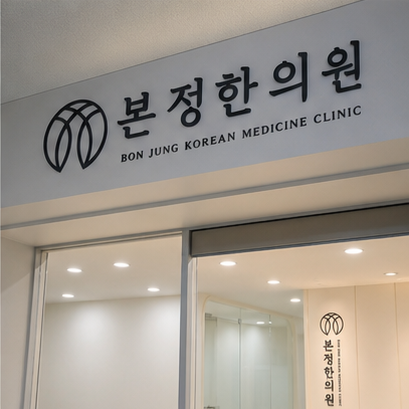
Bonjung Korean Medicine Clinic is a Kosmedi partner clinic located in Jongno, Seoul. It is approximately a five-minute walk from Jonggak Station and Insadong, making it relatively easy to visit for international travelers staying in central Seoul.
Bonjung Korean Medicine Clinic offers a variety of programs based on Korean medicine treatments such as acupuncture, cupping, pharmacopuncture, Chuna manual therapy, and herbal medicine. These programs cover everyday pain, body balance, fatigue, wellness, and healthy weight management.
Programs particularly recommended for international patients include diet herbal medicine, facial asymmetry and V-Line care, and body contour programs. Patients can combine oral herbal medicine for weight management with facial and body contour programs, allowing both internal wellness management and external contour care to be considered together.
• Kosmedi partner clinic located in Jongno, Seoul
• Approximately a five-minute walk from Jonggak Station and Insadong
• Acupuncture, cupping, pharmacopuncture, Chuna manual therapy, herbal medicine, and other Korean medicine treatments
• Programs for pain, fatigue, body balance, and wellness
• Diet herbal medicine, V-Line, and body contour programs
• Convenient location for combining treatment with sightseeing in Seoul
Instagram에서 이 게시물 보기
Main Departments at Bonjung Korean Medicine Clinic
Bonjung Korean Medicine Clinic provides consultations for a wide range of symptoms and everyday health concerns through multiple Korean medicine specialties.
The clinic’s areas of care include Sasang constitutional medicine, acupuncture and moxibustion, Korean internal medicine, Korean medicine for women’s health, Korean pediatrics, Korean neuropsychiatry, Korean ophthalmology, otolaryngology and dermatology, and Korean rehabilitation medicine.
Chuna manual therapy, acupuncture, diet herbal medicine, post-traffic-accident care, and constitutional herbal medicine are also among the clinic’s main areas of treatment. This allows the clinic to address not only musculoskeletal discomfort but also a patient’s constitution and lifestyle condition.
• Sasang Constitutional Medicine
• Acupuncture and Moxibustion
• Korean Internal Medicine
• Korean Medicine for Women’s Health
• Korean Pediatrics
• Korean Neuropsychiatry
• Korean Ophthalmology, Otolaryngology, and Dermatology
• Korean Rehabilitation Medicine
• Chuna manual therapy, acupuncture, diet herbal medicine, post-traffic-accident care, and constitutional herbal medicine
Meet the Chief Directors of Bonjung Korean Medicine Clinic
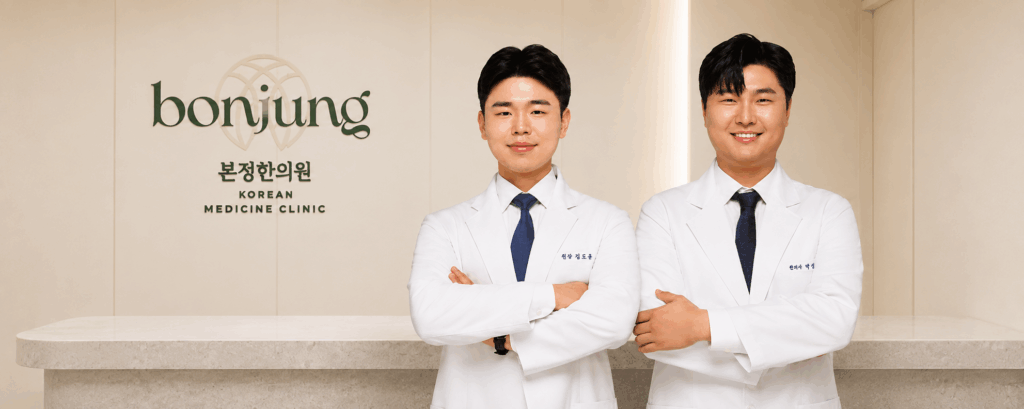
Bonjung Korean Medicine Clinic is led by Chief Director Kyung Dong-ku and Chief Director Park Seong-joo. Rather than viewing a patient’s complaint as a single isolated symptom, they consider the patient’s current physical condition, lifestyle habits, pain patterns, and body balance when discussing an appropriate Korean medicine treatment direction.
Both chief directors provide a broad range of Korean medicine care, including acupuncture, cupping, pharmacopuncture, Chuna manual therapy, and herbal medicine prescriptions. Their consultations cover everyday pain and fatigue management as well as body balance, diet programs, V-Line care, and body contour programs. International patients visiting a Korean medicine clinic for the first time can discuss their current discomfort and treatment goals before determining a suitable approach.
Chief Director Kyung Dong-ku
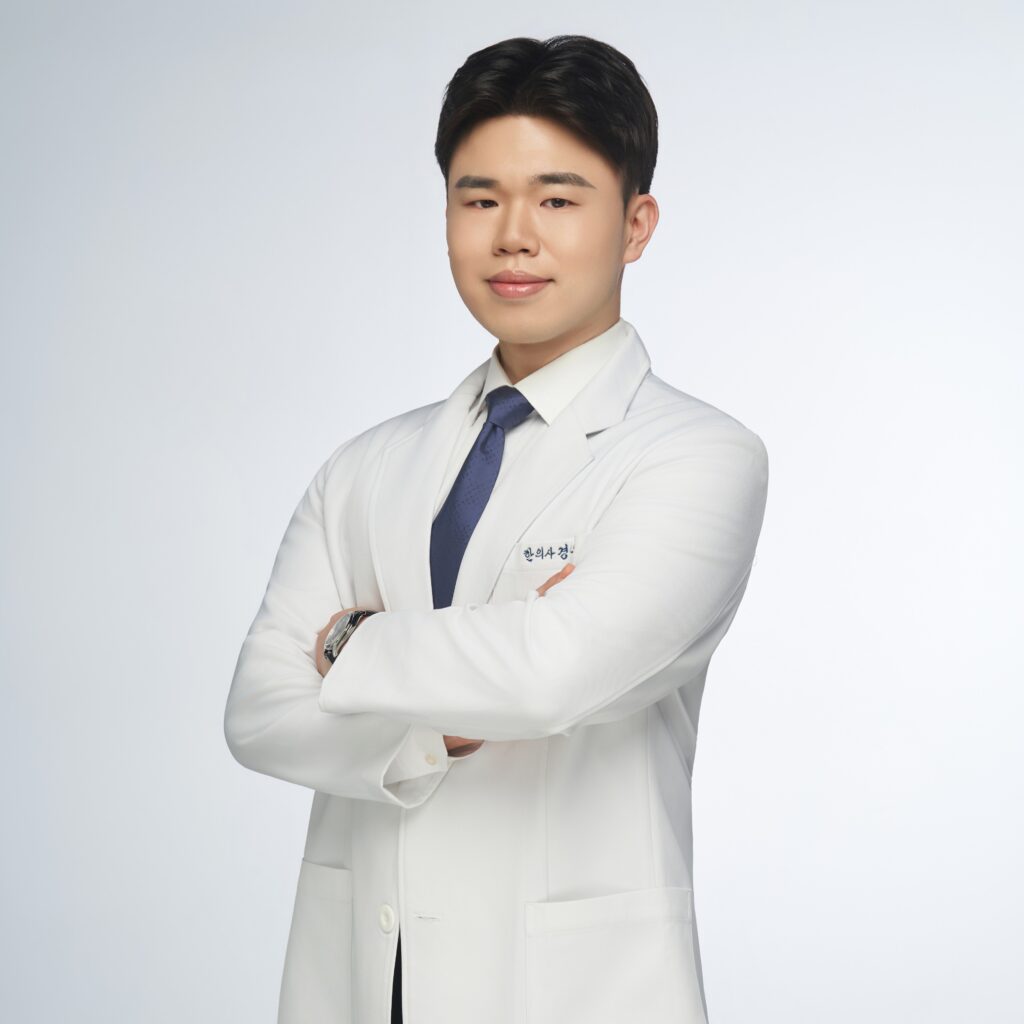
Chief Director Kyung Dong-ku carefully evaluates each patient’s current symptoms and physical condition and considers appropriate Korean medicine treatments as part of the overall treatment plan. In addition to common concerns such as everyday pain and fatigue, he also discusses the patient’s individual treatment and management goals when establishing a care plan.
• Chief Director of Bonjung Korean Medicine Clinic
• Considers both symptoms and overall physical condition
• Uses various Korean medicine treatments including acupuncture, cupping, pharmacopuncture, Chuna manual therapy, and herbal medicine
• Provides consultations based on individual condition and treatment goals
Chief Director Park Seong-joo
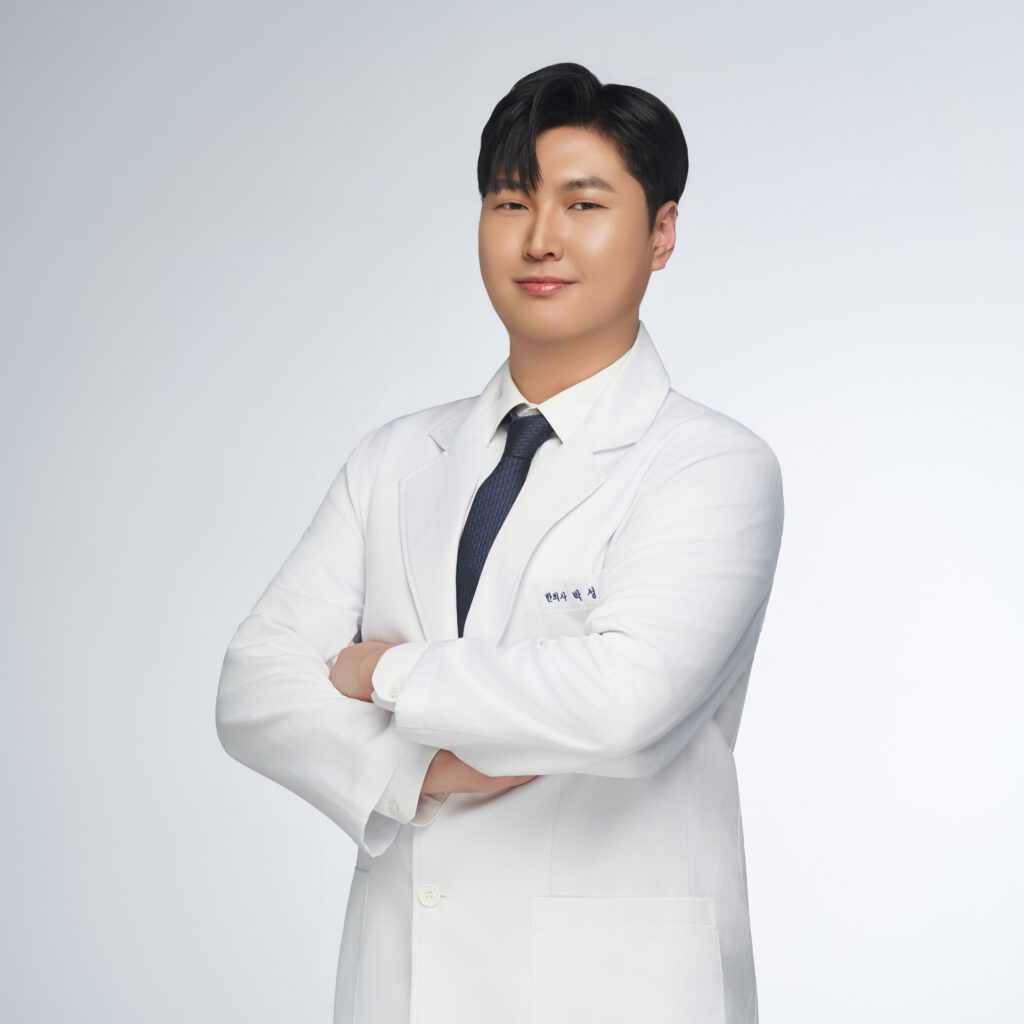
Chief Director Park Seong-joo also provides Korean medicine care by reviewing each patient’s physical condition and everyday discomfort in a comprehensive way. Rather than focusing only on symptoms in one specific area, he considers lifestyle habits, body balance, and current physical condition when discussing an appropriate direction for care.
• Chief Director of Bonjung Korean Medicine Clinic
• Reviews current symptoms and lifestyle condition together
• Provides care using various Korean medicine treatments
• Considers each patient’s area of interest and treatment goals
At Bonjung Korean Medicine Clinic, patients can consult with Chief Director Kyung Dong-ku and Chief Director Park Seong-joo about Korean medicine care based on individual goals, including pain management, condition recovery, diet herbal medicine, V-Line care, and body contouring.
Main Programs Recommended for International Patients
Bonjung Korean Medicine Clinic places particular emphasis on diet herbal medicine, facial asymmetry and V-Line care, and body contour programs for international patients.
Diet herbal medicine is prescribed individually after considering more than just body weight. During consultation, factors such as body constitution, appetite, digestion, swelling, bowel movements, sleep, and overall physical condition are reviewed.
Patients interested in facial shape and balance can consider the V-Line Program, while those focused on body contouring can choose a body contour program. Herbal medicine for weight management can also be combined with facial and body contour treatments.
• Diet Herbal Medicine Program
• Facial asymmetry and V-Line care
• Body contour program
• Consultation based on individual constitution and lifestyle condition
• Herbal medicine can be combined with facial and body contour programs
Recovery Program for Travel Fatigue and Everyday Pain
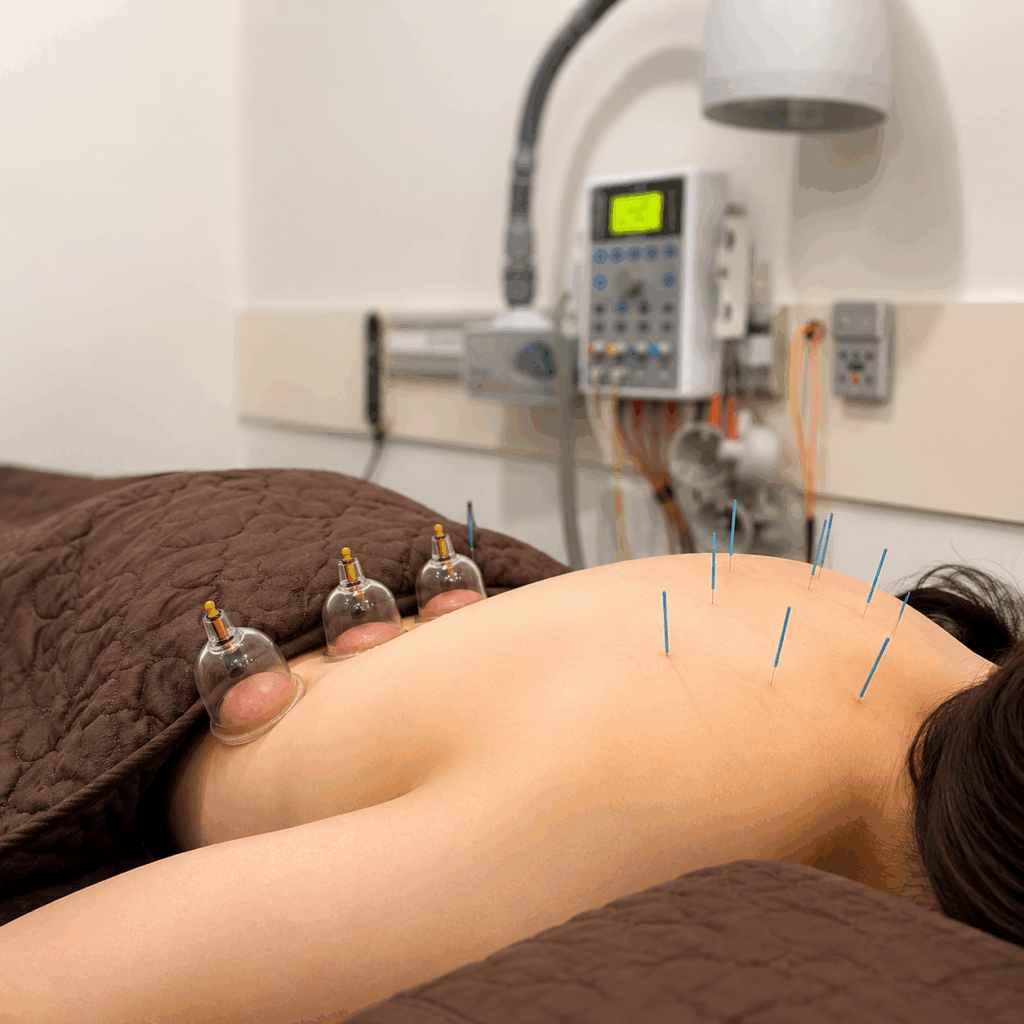
If you are experiencing accumulated fatigue after a long flight or extensive walking, or if you regularly experience discomfort in areas such as the neck, shoulders, or lower back, you can consider the Recovery Program at Bonjung Korean Medicine Clinic.
The Recovery Program is divided into Basic, Plus, and Premium levels. Acupuncture and cupping form the foundation of the programs, while physical therapy, consultation, pharmacopuncture, and Chuna manual therapy are added depending on the selected program.
The Premium Recovery Program focuses on jet lag and fatigue management and includes acupuncture, cupping, physical therapy, consultation, pharmacopuncture, and Chuna manual therapy with full-body alignment care.
• Basic Recovery Program: Acupuncture · Cupping · Physical Therapy
• Plus Recovery Program: Acupuncture · Cupping · Physical Therapy · Consultation · Pharmacopuncture
• Premium Recovery Program: Acupuncture · Cupping · Physical Therapy · Consultation · Pharmacopuncture · Chuna Manual Therapy
• Full-body alignment care included in the Premium Recovery Program
• Can be used for accumulated travel fatigue and everyday physical discomfort
Body Contouring Treatments for Selected Areas
Bonjung Korean Medicine Clinic also provides Body Contouring Treatments for patients who want to focus on selected areas of the body.
Fat-Dissolving Pharmacopuncture is a body contouring treatment in which pharmacopuncture is applied to selected areas. It can be considered after consultation for patients who want targeted body contour care.
Bodyline Tightening uses thread embedding to support bodyline firmness and contour. The actual treatment area and method are determined after considering each patient’s body shape and current physical condition.
• Fat-Dissolving Pharmacopuncture
• Targeted pharmacopuncture for selected body areas
• Bodyline Tightening
• Body contour care using thread embedding
• Treatment direction determined according to individual body shape and treatment area
V-Line Program for Facial Balance and Contour
Patients interested in overall facial contour and balance may consider the V-Line Program at Bonjung Korean Medicine Clinic.
This program combines V-Line electroacupuncture, fat-dissolving pharmacopuncture, thread tightening, Chuna manual therapy, and TMJ alignment in one program.
Rather than focusing on only one treatment, the program approaches the facial line and jaw area through several Korean medicine treatment methods and may be considered by patients who want a more balanced and refined facial contour.
• V-Line Electroacupuncture
• Fat-Dissolving Pharmacopuncture
• Thread Tightening
• Chuna Manual Therapy
• TMJ Alignment
• Program designed to consider overall facial contour and balance
Bodyline Signature Premium Care for Full-Body Contouring
Patients who want to manage overall body contour and body balance rather than focusing on one specific area can consider Bodyline Signature Premium Care.
This program combines fat-dissolving electroacupuncture, fat-dissolving pharmacopuncture, thread tightening, and Chuna manual therapy as a full-body contouring program.
It is designed to combine Korean medicine-based body contour care with functional full-body balance management.
• Fat-Dissolving Electroacupuncture
• Fat-Dissolving Pharmacopuncture
• Thread Tightening
• Chuna Manual Therapy
• Full-body contour management
• Program that also considers overall body balance
Diet Herbal Medicine Prescribed According to Individual Condition
Diet Herbal Medicine is one of the main programs at Bonjung Korean Medicine Clinic. Rather than providing the same herbal medicine to everyone, personalized herbal medicine is prescribed after a consultation and evaluation of the individual’s condition.
The consultation reviews factors such as body constitution, appetite, digestion, swelling, bowel movements, sleep, and overall condition. Patients who also want facial V-Line care or body contouring may combine the herbal medicine program with related treatments.
• Personalized diet herbal medicine based on individual condition
• Evaluation of body constitution
• Review of appetite and digestion
• Review of swelling and bowel movements
• Review of sleep and overall condition
• Personalized herbal medicine prescribed after consultation
• Can be combined with V-Line and body contour programs
Pain Recovery and Everyday Condition Management
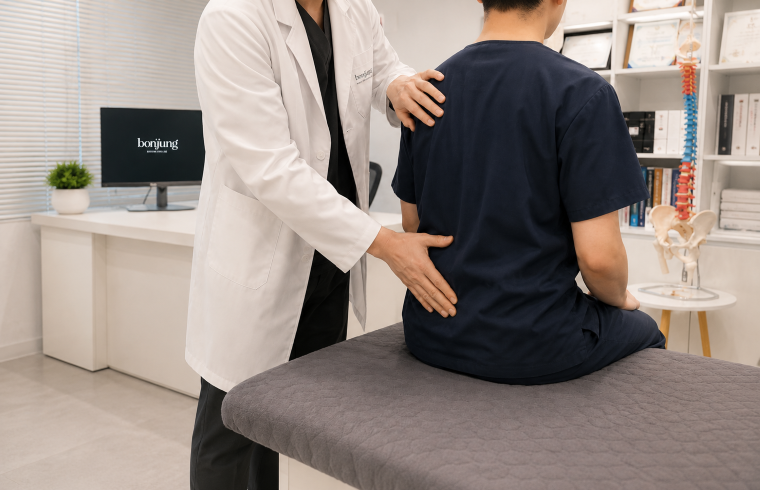
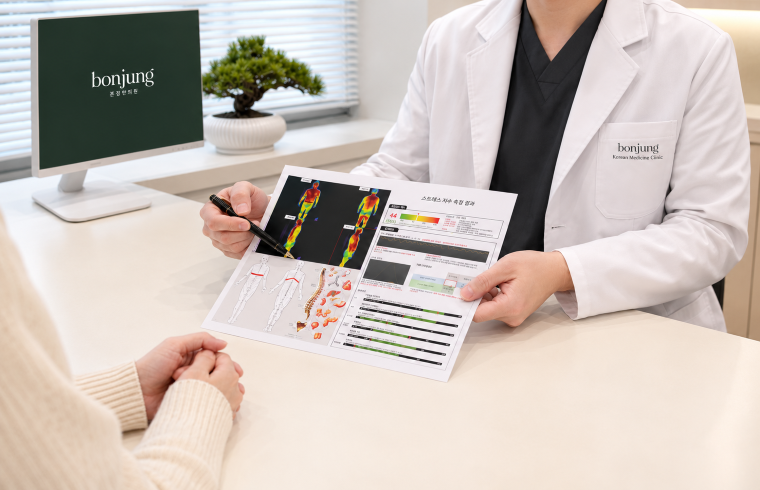
Bonjung Korean Medicine Clinic evaluates common everyday concerns such as neck and shoulder tension, recurring headaches, and wrist pain while also reviewing the patient’s overall physical condition.
Rather than looking only at the painful area, the clinic considers when symptoms began, how they present, possible recurring causes, lifestyle habits, the degree of neck and shoulder tension, and the condition of surrounding muscles and joints when determining a management direction.
Long hours of computer work or smartphone use can keep the body in the same posture for extended periods and may contribute to neck and shoulder tension. When headaches occur together with this type of tension, the condition of muscles around the cervical spine, joint movement, and soft-tissue tension can also be evaluated.
The wrist may also become uncomfortable through repeated use during driving, pushing a stroller, wringing laundry, typing, or using a smartphone.
• Evaluation of neck and shoulder tension
• Review of when recurring headaches begin and how they present
• Consideration of lifestyle habits and repetitive movements
• Comprehensive review of surrounding muscles and joints
• Detailed evaluation of the location and condition of persistent wrist discomfort
How Are Recurring Headaches Evaluated?
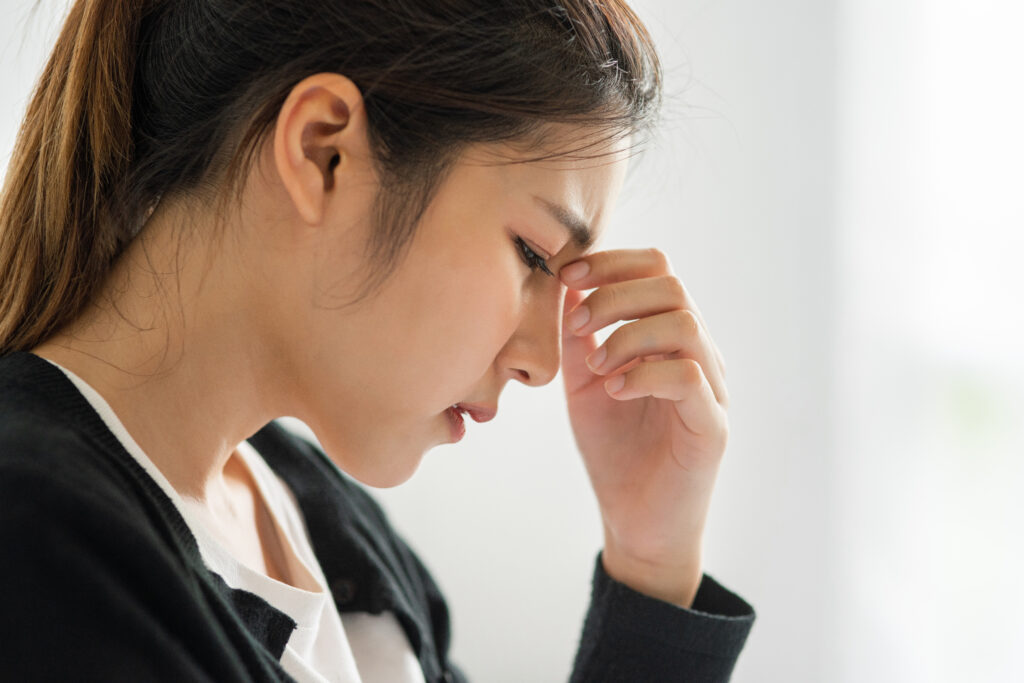
At Bonjung Korean Medicine Clinic, headaches are evaluated by looking beyond the location of the pain. The clinic also considers when the headache begins, how it presents, possible recurring causes, lifestyle habits, and the degree of tension in the neck and shoulders.
If tension around the neck, shoulders, or back of the head appears together with headaches, the movement of muscles and joints around the cervical spine and the degree of soft-tissue tension may also be reviewed when determining the treatment direction.
In Korean medicine, even headaches that seem similar may be approached differently depending on the patient’s overall physical condition and accompanying symptoms. Treatment is therefore not determined solely by the fact that a patient has head pain.
• Review of when headaches begin
• Evaluation of pain location and pattern
• Review of recurring causes and lifestyle habits
• Evaluation of tension around the neck, shoulders, and back of the head
• Consideration of muscle and joint movement around the cervical spine
Korean Medicine Treatments That May Be Considered for Headaches
Depending on the patient’s current physical condition and headache pattern, Korean medicine treatments such as acupuncture, pharmacopuncture, herbal medicine, and Chuna manual therapy may be considered.
Acupuncture may be applied while considering acupuncture points and muscle tension. When neck, shoulder, or occipital tension accompanies a headache, the condition of the muscles and joints around the cervical spine and the degree of soft-tissue tension may also be reviewed when determining the management direction.
Pharmacopuncture uses a purified solution derived from herbal medicine ingredients. The recurring headache area and surrounding tissue condition can be considered together, along with headache patterns, neck and shoulder tension, and the level of soft-tissue burden.
Herbal medicine does not focus only on the symptom of head pain. Factors such as sleep, fatigue, digestive function, stress, lifestyle habits, and constitution are also considered when determining the direction of the prescription. In Korean medicine, headaches may be evaluated according to patterns such as wind, phlegm-fluid retention, blood stasis, qi and blood deficiency, or ascending liver yang, so the approach can differ depending on the individual’s current condition.
Chuna manual therapy is a Korean medicine manual therapy in which a Korean medicine doctor uses the hands or parts of the body to evaluate functional balance in the spine, joints, and muscles. When prolonged computer or smartphone use contributes to restricted cervical or thoracic movement or repeated postural imbalance, tension may develop more easily in the neck and shoulders. If headaches occur together with this condition, functional movement and overall postural balance may also be reviewed.
• Acupuncture: considers acupuncture points and muscle tension
• Pharmacopuncture: uses a purified solution derived from herbal medicine ingredients
• Herbal Medicine: considers sleep, fatigue, digestion, stress, lifestyle habits, and constitution
• Headaches may be approached according to patterns such as wind, phlegm-fluid retention, blood stasis, qi and blood deficiency, and ascending liver yang
• Chuna Manual Therapy: evaluates functional balance and movement of the spine, joints, and muscles
Recurring Wrist Pain Should Be Evaluated by Cause
Wrist pain can occur even without a specific accident and may result from repetitive movements in everyday life.
Pain may become more noticeable when turning a steering wheel, carrying a child, pushing a stroller, or wringing laundry, all of which repeatedly use the wrist and thumb together.
Office workers who spend long periods typing or using smartphones may also repeatedly use their fingers and wrist joints without sufficient time for rest.
When wrist pain keeps recurring, it may be necessary to distinguish between inflammation, tendon sheath-related issues, and the condition of the wrist joint rather than assuming it is simply fatigue. Bonjung Korean Medicine Clinic carefully evaluates the exact location where the discomfort occurs.
• Wrist discomfort while turning a steering wheel
• Movements using the wrist and thumb together, such as pushing a stroller or wringing laundry
• Repetitive keyboard and smartphone use
• Lifestyle conditions that make sufficient wrist rest difficult
• Evaluation of inflammation, tendon sheath condition, and wrist joint condition when symptoms recur
• Detailed examination starting from the exact location of pain
Post-Traffic-Accident Symptoms May Appear Later

Post-traffic-accident symptoms may appear immediately after an accident, but in some cases they can emerge after two to three days or even two to three weeks.
Possible causes include whiplash injury, which occurs when the neck is suddenly and forcefully shaken, as well as blood stasis, a Korean medicine concept describing blood that has lost normal function and remains stagnant in one area.
Even if a person does not initially feel significant discomfort immediately after an accident, symptoms may develop in different areas of the body over time, so it is important to continue monitoring physical changes.
• Symptoms may appear two to three days after an accident
• In some cases, symptoms may emerge two to three weeks later
• Whiplash injury may be a contributing cause
• Blood stasis may also be considered
• Ongoing monitoring of physical changes after an accident may be important
Possible Symptoms After a Traffic Accident
Post-traffic-accident symptoms are not always limited to one area of the body and may involve a combination of physical and psychological symptoms.
Possible symptoms include neck pain and stiffness, shoulder tightness and arm pain, abdominal fullness and nausea, headaches, dizziness and balance problems, severe fatigue, reduced concentration, and psychological anxiety.
If physical or psychological discomfort that feels different from usual continues after an accident, it is important to carefully evaluate the current condition.
• Neck pain and stiffness
• Shoulder tightness and arm pain
• Abdominal fullness and nausea
• Headaches
• Dizziness and balance problems
• Severe fatigue
• Reduced concentration
• Psychological anxiety
Diet, Women’s Health, Children’s Growth, and Student Wellness
In addition to pain management and post-traffic-accident care, Bonjung Korean Medicine Clinic also provides consultations for a range of everyday health concerns.
These include diet management, women’s health, children’s growth, and restorative herbal medicine for students preparing for important examinations. Rather than evaluating only one specific symptom, Korean medicine care can take into account the individual’s constitution, lifestyle environment, and current physical condition.
For diet programs in particular, personalized herbal medicine is prescribed after reviewing body constitution, appetite, digestion, swelling, bowel movements, sleep, and overall physical condition.
• Diet consultation and herbal medicine prescription
• Korean medicine care for women’s health
• Consultation for children’s growth
• Restorative herbal medicine consultation for students
• Approach that considers constitution and lifestyle patterns together
What to Know Before Treatment
Programs at Bonjung Korean Medicine Clinic are not applied in exactly the same way to every patient. Treatment may vary depending on the patient’s current physical condition and treatment area. It is therefore important to clearly explain treatment goals and current health conditions during consultation before receiving treatment.
Depending on the type and area of treatment, temporary soreness, bruising, swelling, or tenderness may occur. If you have an important event such as a wedding, photo shoot, major meeting, or other schedule where appearance or physical condition is important, it is recommended to inform the medical team before treatment.
• Consultation recommended before treatment
• Programs may vary depending on individual condition and treatment area
• Temporary soreness may occur
• Bruising or swelling may occur
• Tenderness may occur in the treated area
• Inform the medical team in advance if you have an important event scheduled
Languages Available for International Patients
International patients can receive care at Bonjung Korean Medicine Clinic, with assistance available in Japanese and English.
Language support can be an important consideration when choosing a medical facility overseas. Because Bonjung Korean Medicine Clinic is a Kosmedi partner clinic, international visitors who are unfamiliar with using medical services in Korea can contact Kosmedi in advance to check available programs, appointment schedules, and other information needed before visiting.
• Japanese available
• English available
• International patients accepted
• Advance inquiries and appointment preparation available through Kosmedi
Information to Prepare Before Booking
Preparing a few details before booking Bonjung Korean Medicine Clinic can help make the consultation process smoother. It is helpful to organize information such as whether you have Korean health insurance, which programs you are interested in, your current areas of discomfort, and the areas you would like to receive treatment or care for.
International patients often have a limited stay in Korea, so providing your travel dates and preferred program together can also help with appointment planning. By contacting Kosmedi, you can check available treatment methods and programs at Bonjung Korean Medicine Clinic, prices, and appointment availability, and you can also receive assistance with booking according to your preferred schedule.
If this is your first time using a Korean medicine clinic or you are unsure which program may be appropriate, you can share your concerns and treatment goals with Kosmedi first to receive the necessary information.
• Whether you have Korean health insurance
• Programs you are interested in
• Current areas of discomfort
• Areas you would like to receive treatment or care for
• Purpose of visit and length of stay in Korea
• Check treatment methods and programs through Kosmedi
• Check prices through Kosmedi
• Check appointment availability and receive booking assistance through Kosmedi
Address and Subway Directions
Bonjung Korean Medicine Clinic is located on the 4th floor of Owon Building, 20 Insadong 5-gil, Jongno-gu, Seoul.
It is approximately 368 meters from Exit 3-1 of Jonggak Station on Seoul Subway Line 1. After exiting through Jonggak Station Exit 3-1, walk straight, turn right along the Centropolis road, and continue until you see Owon Building on the left. Bonjung Korean Medicine Clinic is located on the 4th floor.
The clinic is also easily accessible from Insadong and Jogyesa Temple, making it convenient to combine treatment with sightseeing in Insadong or Jongno before or after your appointment.
• Address: 4F, Owon Building, 20 Insadong 5-gil, Jongno-gu, Seoul
• Subway: Jonggak Station, Seoul Subway Line 1
• Recommended exit: Jonggak Station Exit 3-1
• Approximately 368 meters from the station exit
• Convenient access from Insadong and Jogyesa Temple
Google Map(Click)
How to Visit by Bus or Car
If you are traveling by bus, get off at the Jogyesa · Jongno Police Station stop and walk toward the Centropolis building. Continue straight until you see Owon Building on the left.
If you are traveling by car, search for Bonjung Korean Medicine Clinic in your navigation app. Parking is available at the public parking lot next to Hanaro Building, approximately a one-minute walk from the clinic.
Traffic and parking conditions in Jongno can vary depending on the time of day, so visitors traveling by car may want to allow extra time.
• Jogyesa · Jongno Police Station bus stop available
• Walk toward Centropolis and continue on foot
• Search “Bonjung Korean Medicine Clinic” in your navigation app
• Public parking available next to Hanaro Building
• Allow extra travel time due to central Jongno traffic conditions
Open 365 Days with Weekday Evening Care
Bonjung Korean Medicine Clinic operates 365 days a year and provides weekday evening care, with appointments also available on Saturdays and Sundays.
Weekday evening care can be convenient for office workers who cannot visit during daytime hours as well as travelers with busy sightseeing schedules. Weekend appointments also make it easier to plan treatment around travel or work.
Actual treatment hours and same-day appointment availability may vary depending on the date and booking schedule, so it is recommended to confirm availability before visiting.
• Open 365 days a year
• Weekday evening care
• Saturday appointments available
• Sunday appointments available
• Convenient for office workers and travelers
• Confirm current treatment hours and appointment availability before visiting
If You Want to Experience Korean Medicine in Jongno, Seoul
Bonjung Korean Medicine Clinic offers a broad range of Korean medicine care in central Seoul, from basic treatments such as acupuncture and cupping to pharmacopuncture, Chuna manual therapy, diet herbal medicine, V-Line care, and full-body contour programs.
Patients can choose programs according to their goals, from Recovery Programs for accumulated travel fatigue and everyday discomfort to facial and body contouring and diet herbal medicine based on individual condition.
Its location approximately five minutes on foot from Jonggak Station and Insadong is also convenient for international patients traveling in central Seoul. Assistance is available in Japanese and English, helping international visitors prepare more comfortably for their first Korean medicine consultation.
• Convenient location in central Jongno, Seoul
• Acupuncture, cupping, pharmacopuncture, and Chuna manual therapy available
• Recovery Program for travel fatigue and everyday discomfort
• Diet Herbal Medicine Program
• Facial V-Line and body contour care
• Japanese and English available
• Consultation and programs tailored to individual condition
Bonjung Korean Medicine Clinic, a Kosmedi Partner Clinic
Bonjung Korean Medicine Clinic is a Kosmedi partner clinic.
For inquiries and reservations regarding Bonjung Korean Medicine Clinic, guidance is available through Kosmedi.
If you have any questions regarding the clinic or treatments, please contact Kosmedi for consultation and reservation assistance.
Ask us Anything!
• WhatsApp: +82 10 9948 7172 | https://wa.me/821099487172
• Email: Kosmedisns@gmail.com
• LINE ID: kosmedi
• Instagram: @kosmedi.official | https://www.instagram.com/kosmedi.official/
• X: @KosmediOfficial | https://x.com/KosmediOfficial
Kosmedi is a service that provides international visitors seeking medical care in Korea with information about local partner hospitals and clinics. International patients can more conveniently check available languages, major treatment and procedure programs, events, and appointment information.
If you are planning to visit Bonjung Korean Medicine Clinic, you can prepare for your appointment by providing Kosmedi with the program you are interested in, your current areas of discomfort, your desired treatment or care, and your travel dates in Korea. Real-time message consultation is also available, allowing international visitors who are unfamiliar with Korean medical services to ask questions before their visit.
Kosmedi is not limited to medical information. It also introduces tourist attractions, restaurants, popular cafes, festivals, events, and local destinations frequently visited by people in Korea. International travelers who want to organize both medical appointments and sightseeing in Seoul can use Kosmedi to find a wider range of practical local information, including information about Bonjung Korean Medicine Clinic.
• Official Kosmedi partner clinic
• Hospital and treatment program information for international patients
• Available language and appointment information
• Real-time message consultation
• Kosmedi-related events and benefits when available
• Korea tourist attractions, restaurants, cafes, and festivals
• Popular local destinations and travel information


6개의 댓글이 있습니다.
Good morning! I found your article about Bonjung Korean Medicine Clinic while looking for something to help with travel fatigue during my Seoul trip.
I’m especially interested in the Premium Recovery Program because I usually get pretty bad neck and shoulder tension after long flights. Does the treatment include acupuncture, cupping, and Chuna therapy all in the same visit? And roughly how long should I allow for the full appointment?
Thanks so much!
Hello Mr. or Ms. Collins,
Thank you for contacting Kosmedi.
We have sent a reply to your email regarding the Premium Recovery Program at Bonjung Korean Medicine Clinic that you inquired about.
Please check your inbox when you have a chance.
Thank you.
Sincerely,
Kosmedi
Hello, my name is Sanne, I’m 43 and I’ll be in Korea from September 30th. I found your page about Bonjung Korean Medicine Clinic and I’m interested in the V-Line treatment because I have a bit of a double chin and would prefer something non-surgical. Is it possible to do the treatment in just one day, and could you let me know roughly how much it costs and how long the appointment takes? My sister is also thinking about coming with me for treatment, but she’s not 100% sure yet. Thank you!
Hello Ms. van Dijk,
Thank you for contacting Kosmedi.
We have sent a reply to your email address regarding your inquiry about Bonjung Korean Medicine Clinic’s V-Line treatment.
Please check your inbox when you have a chance.
Thank you.
Sincerely,
Kosmedi
Hey, I’m interested in the V-Line Program at Bonjung Korean Medicine Clinic. Could you let me know roughly how much it costs and how long the whole treatment takes from consultation to finish? I’m trying to see if I can fit it into my Seoul schedule. Thanks!
Dear Ms. Jacobs,
Thank you for your inquiry. We have sent a reply to your email regarding your questions about Bonjung Korean Medicine Clinic, including the estimated cost of the V-Line Program and how long the full treatment process may take from consultation to completion.
Please kindly check your inbox and spam folder.
Sincerely,
Kosmedi