

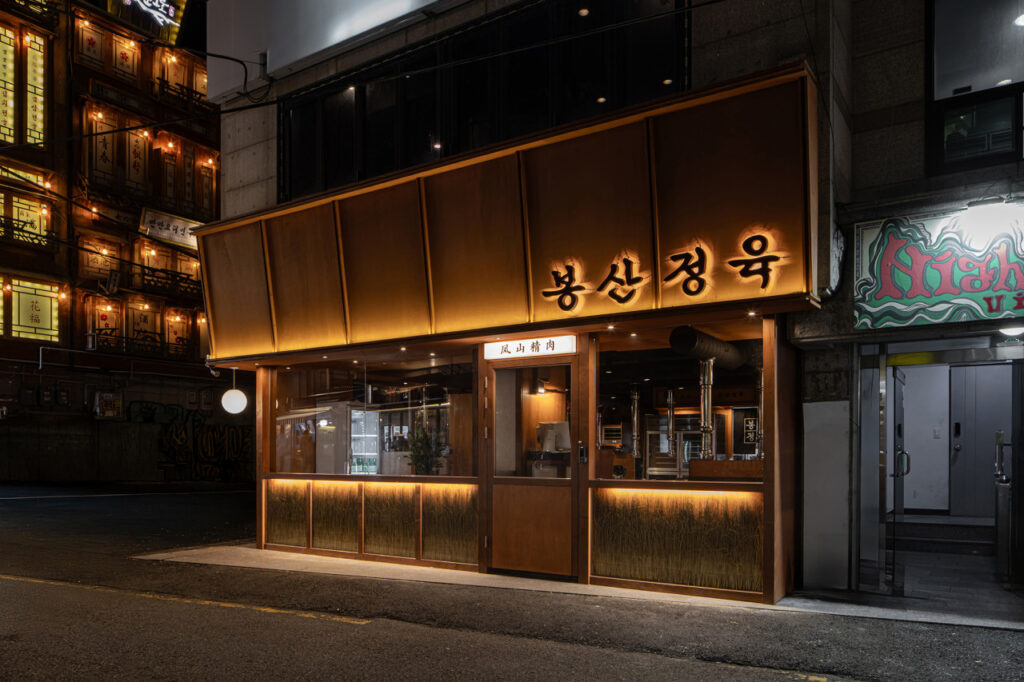
bongsan jeongyuk hongdae


Experience Authentic Korean BBQ in Hongdae

Hongdae is one of Seoul’s most popular travel districts and is easy to explore even for first-time international visitors. Centered around Hongik University Station, the area is packed with fashion stores, beauty shops, cafés, live performances, shopping streets, and restaurants. During the day, visitors can enjoy shopping and cafés, while evenings are ideal for Korean BBQ and local nightlife.

The AREX Airport Railroad also stops at Hongik University Station, which makes Hongdae a popular neighborhood for international travelers arriving in Seoul from Incheon International Airport.

Bongsan Jeongyuk Hongdae Main Branch is a Korean BBQ restaurant in central Hongdae specializing in premium pork and 1++ Hanwoo beef. Unlike Korean BBQ restaurants where customers grill the meat themselves, trained staff at Bongsan Jeongyuk cook each cut according to its ideal doneness, making the restaurant especially convenient for travelers experiencing Korean BBQ for the first time.

• Korean BBQ restaurant in central Hongdae
• Premium pork and 1++ Hanwoo beef
• Meat is grilled by trained staff
• Walking distance from Hongik University Station
• Convenient for international visitors
• Good place to combine dinner with Korean alcoholic drinks


The Story Behind the Name Bongsan Jeongyuk

The name Bongsan Jeongyuk comes from Bongsan-dong in Yeosu, where the restaurant owner’s maternal grandmother lived.

As a child, the owner did not enjoy seafood, so the grandmother would prepare generous meals featuring meat and various homemade dishes. The restaurant was created around those memories of a carefully prepared, warm, and comforting Korean meal.

Bongsan Jeongyuk follows the idea of “a neat and warm butcher’s table.” Its philosophy combines three elements: the carefully prepared meals remembered from childhood, a comfortable and welcoming dining space, and a commitment to personally selected quality meat that is grilled properly for each guest.

• Name inspired by Bongsan-dong in Yeosu
• Based on memories of meals prepared by the owner’s grandmother
• Focus on a warm and carefully prepared Korean dining experience
• Meat is personally selected for quality
• Comfortable dining atmosphere is emphasized
• Grilling service is part of the overall restaurant experience


Korean BBQ Without Having to Grill the Meat Yourself

One of the most difficult parts of Korean BBQ for first-time international visitors can be knowing exactly when each cut of meat is properly cooked.

At Bongsan Jeongyuk, staff members who have received grilling training cook the pork and Hanwoo according to the characteristics of each cut.

This reduces the pressure of grilling everything yourself, whether you order pork belly and pork collar that need to be thoroughly cooked or Hanwoo striploin, chuck flap tail, and beef tongue whose texture can change significantly depending on doneness.

Korean visitor reviews also frequently mention that having the staff grill the meat from beginning to end makes it easier to focus on conversation and enjoy the meal.

• Staff grill the meat for customers
• Doneness is adjusted according to each cut
• Convenient for first-time Korean BBQ visitors
• Pork and Hanwoo are prepared differently according to their characteristics
• Easier to focus on dining and conversation


First Visit? Try the Bongsan Butchers SET

If you are visiting Bongsan Jeongyuk for the first time, starting with a set menu can be easier than ordering individual cuts.

The Bongsan Butchers SET is a 600g combination featuring Pork Belly, Pork Collar, Hanwoo Striploin, and Chuck Flap Tail. Its biggest advantage is that visitors can compare premium Korean pork and Hanwoo beef in a single meal.

This is particularly suitable for travelers who want to experience Korean pork belly but also do not want to miss Hanwoo during their trip to Korea.

• Bongsan Butchers SET
• Total weight: 600g
• Price: KRW 142,000
• Pork Belly
• Pork Collar
• Hanwoo Striploin
• Chuck Flap Tail
• Includes both pork and Hanwoo beef


For More Variety, Choose the Bongsan Luxury SET

The Bongsan Luxury SET at Bongsan Jeongyuk is larger than the Bongsan Butchers SET and also includes Garlic Marinated Beef Short Ribs.

With a total weight of 1,100g, it works well for groups who want to enjoy pork, Hanwoo, and marinated beef ribs together.

For families or groups of friends visiting Korea, this set makes ordering easier because several representative Korean BBQ cuts can be enjoyed without selecting each item separately.

• Bongsan Luxury SET
• Total weight: 1,100g
• Price: KRW 232,000
• Pork Belly
• Pork Collar
• Hanwoo Striploin
• Chuck Flap Tail
• Garlic Marinated Beef Short Ribs


Pork Platter SET for Korean Pork BBQ

If you want to focus more on Korean pork than Hanwoo, the Pork Platter SET at Bongsan Jeongyuk is a practical option.

The 500g set includes Pork Belly, Pork Collar, and Pork Skirt. If you want more after finishing the main platter, an additional 250g Extra Half Set containing Pork Belly and Pork Collar is also available.

This is a good way to compare the texture of several Korean pork cuts while enjoying them with traditional Korean side dishes.

• Pork Platter SET 500g: KRW 58,000
• Pork Belly
• Pork Collar
• Pork Skirt
• Extra Half Set 250g: KRW 29,000
• Extra Half Set: Pork Belly + Pork Collar


Korean Beef “Hanwoo” SET for Hanwoo Lovers

If experiencing premium Korean Hanwoo is one of the main goals of your Korea trip, the Korean Beef “Hanwoo” SET at Bongsan Jeongyuk is worth considering.

The 650g set combines Hanwoo Striploin, Chuck Flap Tail, and Garlic Marinated Beef Short Ribs, allowing diners to compare different textures and flavor profiles.

An additional 250g Extra Half Set containing Hanwoo Striploin and Chuck Flap Tail is also available if the group wants more meat after the initial order.

• Korean Beef “Hanwoo” SET 650g: KRW 176,000
• Hanwoo Striploin
• Chuck Flap Tail
• Garlic Marinated Beef Short Ribs
• Extra Half Set 250g: KRW 91,000
• Extra Half Set: Hanwoo Striploin + Chuck Flap Tail


Bongsan Jeongyuk Signature Menu: Pork Belly

Among the individual pork dishes at Bongsan Jeongyuk, Pork Belly is one of the signature choices.

The pork belly retains part of the skin, giving it a slightly chewier texture than completely skinless pork belly. The restaurant emphasizes a cross-aging process designed to create a satisfying texture.

For international visitors experiencing Korean samgyeopsal for the first time, this is one of the easiest individual cuts to start with.

• Pork Belly 150g: KRW 17,000
• Signature pork menu
• Pork belly with part of the skin retained
• Aged to emphasize a chewy texture
• Recommended for first-time Korean pork belly visitors


Pork Collar, Pork Skirt, and Marinated Black Pork Ribs Prices

In addition to pork belly, Bongsan Jeongyuk offers several other individual pork cuts.

Pork Collar is a good choice for guests who prefer a meaty cut with balanced marbling, while Pork Skirt provides a different texture from both pork belly and pork collar.

Marinated Black Pork Ribs offer a sweeter, seasoned Korean-style flavor and may be more approachable for international visitors who prefer marinated meat over plain grilled cuts.

• Pork Collar 150g: KRW 17,000
• Pork Skirt 150g: KRW 19,000
• Marinated Black Pork Ribs 250g: KRW 21,000
• Multiple pork cuts can be ordered individually


From 1++ Hanwoo Striploin to Premium Beef Tongue

Bongsan Jeongyuk also offers a varied selection of premium Hanwoo beef.

Guests can order Hanwoo Striploin, Chuck Flap Tail, and Hanwoo Beef Tongue individually, while Garlic Marinated Beef Short Ribs are another signature menu option.

Beef tongue may already be familiar to some international Korean BBQ fans, and the restaurant’s staff grilling service also applies to Hanwoo dishes so customers do not need to determine the ideal doneness themselves.

• Hanwoo Striploin 100g: KRW 38,000
• Chuck Flap Tail 100g: KRW 41,000
• Hanwoo Beef Tongue 100g: KRW 36,000
• Garlic Marinated Beef Short Ribs 330g: KRW 35,000
• Staff grilling service included


Raw Beef with Gochujang and Minari Is a Limited-Sale Menu

If you want to add a distinctly Korean dish alongside the grilled meat at Bongsan Jeongyuk, consider the Raw Beef with Gochujang and Minari.

This dish combines Korean-style raw beef with gochujang and fragrant minari, creating a very different texture and flavor from grilled meat.

Because it is sold in limited quantities, availability can depend on the time of your visit and ingredient supply.

• Raw Beef with Gochujang and Minari: KRW 24,000
• Limited-sale menu
• Combination of raw beef and gochujang
• Fresh minari adds an aromatic flavor
• Recommended for travelers interested in Korean yukhoe


Bibimbap with Bracken Fern and Perilla Oil

One of the notable rice dishes at Bongsan Jeongyuk is Bibimbap with Bracken Fern and Perilla Oil.

The earthy bracken fern and nutty perilla oil complement the richness of grilled meat and provide a more traditional Korean combination of rice and seasoned vegetables.

It is a useful side dish for international visitors who want to experience Korean namul and rice rather than ordering only meat.

• Bibimbap with Bracken Fern & Perilla Oil: KRW 10,000
• Made with bracken fern and perilla oil
• Pairs well with grilled meat
• Good introduction to Korean seasoned vegetables and rice


Korean Side Dishes: Stews, Cold Noodles, and Steamed Egg

To experience Korean BBQ more fully at Bongsan Jeongyuk, consider ordering soup, rice, noodles, or steamed egg together with the meat.

The menu includes Zucchini Stew with Gochujang, Soybean Paste Stew, Cold Noodles with Aged Kimchi, and Steamed Egg in an Earthen Pot, making it easy to continue from grilled meat into a traditional Korean-style finishing meal.

Steamed egg in particular is a classic side dish commonly found at Korean BBQ restaurants.

• Zucchini Stew with Gochujang: KRW 9,000
• Soybean Paste Stew: KRW 8,000
• Cold Noodles with Aged Kimchi: KRW 7,000
• Steamed Egg in Earthen Pot: KRW 6,000
• Steamed Rice, Shindongjin Variety: KRW 1,000


Restaurant Recommendation | Gochang Black Raspberry Highball

If you want a drink to pair with your Korean BBQ at Bongsan Jeongyuk, the Gochang Black Raspberry Highball is one of the restaurant’s recommended options.

Bokbunja is a Korean black raspberry commonly used in alcoholic beverages and fruit drinks. Compared with a standard whisky highball, it has a sweeter and more fruit-forward flavor, making it relatively approachable for international visitors who find soju too strong.

Gochang black raspberry is available not only as a highball but also as Black Raspberry Wine and a non-alcoholic Black Raspberry Ade.

• Gochang Black Raspberry Highball: KRW 9,000
• Gochang Black Raspberry Wine 350ml: KRW 21,000
• Gochang Black Raspberry Ade: KRW 6,000
• Recommended for guests who enjoy fruity flavors
• Non-drinkers can choose the Black Raspberry Ade


Try Korean Makgeolli and Traditional Liquor

Travelers who want to experience both Korean BBQ and Korean alcohol can also choose from makgeolli and traditional Korean spirits at Bongsan Jeongyuk.

Fresh Korean Rice Wine is available in White and Black varieties, while traditional and distilled drinks such as Igangju, Solsongju, Ilpoom Jinro, and Hwayo are also listed.

For travelers who want a more distinctive Korean dining experience, trying one of these drinks instead of standard soju can be an interesting addition to the meal.

• Fresh Korean Rice Wine White 750ml: KRW 21,000
• Fresh Korean Rice Wine Black 750ml: KRW 24,000
• Igangju 375ml: KRW 24,000
• Solsongju 375ml: KRW 19,000
• Ilpoom Jinro 375ml: KRW 25,000
• Hwayo 375ml: KRW 25,000
• Highball: KRW 8,000
• Soju: KRW 5,000
• Beer: KRW 6,000


English, Chinese, and Japanese Menus for International Visitors

Bongsan Jeongyuk is located in Hongdae, an area heavily visited by international travelers, and provides multilingual menus to make ordering easier.

English, Chinese, and Japanese menus allow international customers to compare meat cuts, serving weights, and prices more easily.

Because staff members also grill the meat for customers, visitors do not need to understand detailed Korean grilling instructions in order to enjoy the meal.

• 🇺🇸 English menu
• 🇨🇳 Chinese menu
• 🇯🇵 Japanese menu
• Meat weight and price clearly displayed
• Staff grilling service
• Convenient for international travelers


Reservations Available Through CatchTable

Bongsan Jeongyuk accepts reservations through CatchTable.

Advance booking is recommended for weekend evenings or when visiting with a larger group.

Hongdae becomes especially busy on Friday and weekend evenings, so travelers with a fixed itinerary may find it more convenient to secure a table in advance rather than waiting after arrival.

• CatchTable reservations available
• Weekend evening reservations recommended
• Advance booking recommended for groups
• Useful for travelers with a fixed schedule


What Korean Visitors Commonly Mention in Naver Map Reviews

Public Korean reviews of Bongsan Jeongyuk frequently highlight both meat quality and the staff grilling service.

Visitors often mention that staff grill pork belly, pork collar, and Hanwoo according to the dining pace, making the meal more comfortable. Korean side dishes such as seaweed, pickled vegetables, aged kimchi, minari, and bracken fern are also mentioned as useful accompaniments that allow customers to enjoy the meat in several different ways.

Reviews also note that the availability of English, Chinese, and Japanese menus makes the restaurant convenient when visiting with international guests, while the clean seating area and comfortable atmosphere are often considered suitable for dates and group gatherings.

• Positive feedback about staff grilling the meat
• Good reviews of pork and Hanwoo quality
• Variety of Korean side dishes
• Multilingual menus available
• Clean and comfortable atmosphere
• Frequently considered suitable for dates and group meals


What International Visitors May Appreciate from Google Map Reviews

One of the most practical advantages of Bongsan Jeongyuk for international travelers is that guests do not need to grill Korean BBQ themselves.

Staff cook the meat, multilingual menus are available, and the restaurant is within walking distance of Hongik University Station, making it relatively easy to include in a Seoul travel itinerary.

Visitors can also experience more than pork belly. The menu includes 1++ Hanwoo, beef tongue, raw beef, bokbunja drinks, and makgeolli, allowing first-time Korean BBQ travelers to compare several styles of Korean food and drink in one place.

• Staff-grilled Korean BBQ
• English, Chinese, and Japanese menus
• Pork belly and 1++ Hanwoo available together
• Korean raw beef and side dishes available
• Makgeolli and bokbunja drinks available
• Convenient location for a Hongdae itinerary


Bongsan Jeongyuk Hongdae Main Branch Location

Bongsan Jeongyuk is located at 1F, 30 Yanghwa-ro 16-gil, Mapo-gu, Seoul.

The restaurant sits between Hongik University Station and the main Hongdae commercial area, making it easy to combine dinner with cafés, shopping, street performances, and other attractions around Hongdae.

• Address: 1F, 30 Yanghwa-ro 16-gil, Mapo-gu, Seoul
• Area: Hongdae and Seogyo-dong
• Walking distance from Hongik University Station
• Convenient for combining Hongdae shopping and dining


Bongsan Jeongyuk Naver Map

Bongsan Jeongyuk Google Map


How to Get to Bongsan Jeongyuk from Hongik University Station

The nearest subway station to Bongsan Jeongyuk is Hongik University Station.

Hongik University Station is served by Seoul Subway Line 2, the AREX Airport Railroad, and the Gyeongui-Jungang Line, making it convenient not only from other parts of Seoul but also for international travelers arriving from Incheon International Airport.

The restaurant is approximately 484–485 meters from Exit 9, with a walking time of around seven minutes.

• Starting point: Hongik University Station
• Seoul Subway Line 2
• AREX Airport Railroad
• Gyeongui-Jungang Line
• Recommended exit: Exit 9
• Distance: approximately 485m
• Walking time: approximately 7 minutes


Can You Walk to Bongsan Jeongyuk from Sangsu Station?

Bongsan Jeongyuk is also accessible on foot from Sangsu Station on Seoul Subway Line 6.

From Exit 1, the restaurant is approximately 600 meters away, with a walking time of around nine minutes.

This route can be useful for travelers exploring Sangsu, Hapjeong, and the western part of the Hongdae area.

• Sangsu Station, Subway Line 6
• Recommended exit: Exit 1
• Distance: approximately 600m
• Walking time: approximately 9 minutes
• Convenient for combining Sangsu and Hongdae sightseeing


Bongsan Jeongyuk Opening Hours and Last Order

Bongsan Jeongyuk is currently listed as open every day from noon until 11:00 PM.

Last order is at 10:20 PM, and the restaurant is listed as operating year-round, including public holidays and major Korean holiday periods.

If you want to enjoy the meat slowly and add side dishes or drinks, it is better to arrive well before last order rather than visiting shortly before the kitchen closes.

• Monday: 12:00 PM–11:00 PM
• Tuesday: 12:00 PM–11:00 PM
• Wednesday: 12:00 PM–11:00 PM
• Thursday: 12:00 PM–11:00 PM
• Friday: 12:00 PM–11:00 PM
• Saturday: 12:00 PM–11:00 PM
• Sunday: 12:00 PM–11:00 PM
• Last order: 10:20 PM
• Open year-round
• Listed as open during public holidays and major Korean holidays


Facilities and Services

Bongsan Jeongyuk provides several facilities that make the restaurant suitable for both individual travelers and groups.

Reservations and group dining are available, along with wireless internet, separate male and female restrooms, and a waiting area.

The entrance and seating areas are also listed as wheelchair accessible, which may be useful for visitors who require easier mobility access.

• Group dining available
• Reservations available
• Wireless internet
• Separate male and female restrooms
• Waiting area
• Wheelchair-accessible entrance
• Wheelchair-accessible seating


Recommended Ordering Guide for First-Time Korean BBQ Visitors

If you are visiting Bongsan Jeongyuk for the first time, it is usually easier to begin with a set menu appropriate for your group size and then add individual cuts if you want more.

If you want both pork and Hanwoo, start with the Bongsan Butchers SET. If you mainly want Korean pork, the Pork Platter SET is straightforward and easy to understand.

Adding Bibimbap with Bracken Fern & Perilla Oil or Steamed Egg in an Earthen Pot creates a more complete Korean BBQ meal, while the Gochang Black Raspberry Highball is a useful choice for travelers who want to try a distinctive Korean-style drink.

• First visit: Bongsan Butchers SET
• Pork-focused meal: Pork Platter SET
• Signature individual cut: Pork Belly
• Rice dish: Bibimbap with Bracken Fern & Perilla Oil
• Side dish: Steamed Egg in Earthen Pot
• Recommended drink: Gochang Black Raspberry Highball
• For groups, start with a set and add individual cuts later


Looking for Korean BBQ in Hongdae?

Bongsan Jeongyuk offers more than a standard samgyeopsal meal. Visitors can experience premium pork, Hanwoo, beef tongue, marinated ribs, Korean raw beef, and traditional Korean alcoholic drinks in one restaurant.

For international travelers, the combination of staff grilling, English, Chinese, and Japanese menus, and easy walking access from Hongik University Station is particularly practical.

If you want to experience Korean BBQ culture but feel uncomfortable ordering or grilling meat yourself, Bongsan Jeongyuk can be a convenient Hongdae restaurant to consider.

• First-time Korean BBQ travelers
• Visitors who want both pork belly and Hanwoo
• Travelers looking for staff-grilled Korean BBQ
• International visitors who need multilingual menus
• Travelers interested in bokbunja and makgeolli
• Visitors looking for dinner after shopping in Hongdae


Discover Korean Hospitals, Hongdae Restaurants, and Travel Information with Kosmedi

Kosmedi helps international travelers and foreign patients access medical and travel information in Korea more conveniently.

Kosmedi introduces hospitals checked by local Korean staff and medical institutions where the availability of actual interpretation services has been confirmed. Users can immediately review information about dermatology, plastic surgery, health checkups, and other medical services, including procedures, prices, events, reviews, and detailed hospital introductions.

For Kosmedi partner hospitals and clinics, international visitors can also check whether Kosmedi-exclusive discount coupons and special events are available. Before traveling to Korea or while staying in the country, users can access real-time messaging consultation to ask questions about hospital reservations and medical services.

Kosmedi is not limited to hospital information. The service also introduces Hongdae restaurants suitable for international travelers, including Bongsan Jeongyuk, as well as Korean cafés, shopping destinations, festivals, pop-up stores, tourist attractions, discount events, popular places, and local destinations frequently visited by Korean residents.

From foreign patients combining medical appointments with a Seoul trip to general international travelers who want to experience Korean BBQ and local Hongdae food culture, Kosmedi helps users find both medical and tourism information in one place.

• Hospital information checked by local Korean staff
• Medical institutions with confirmed interpretation services
• Procedure, health checkup, price, event, and review information
• Kosmedi-exclusive discount coupons and special events
• Real-time messaging consultation
• Korean restaurant and café information
• Hongdae restaurants and local dining recommendations
• Festival, pop-up store, and tourist attraction information
• Discount events and popular destination information
• Local destinations frequently visited by Korean residents
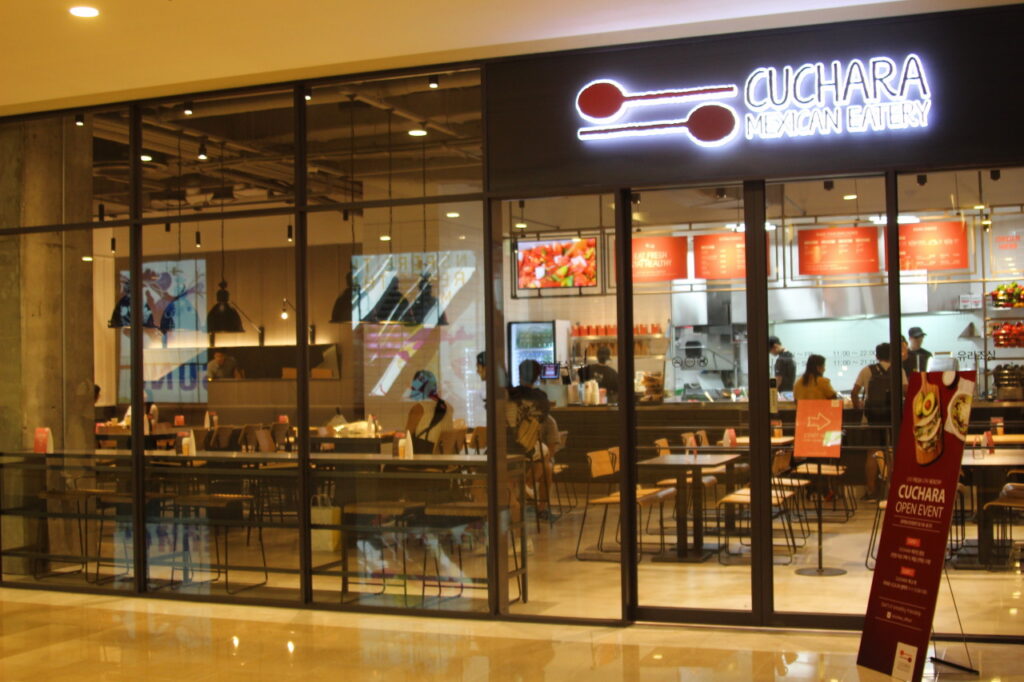

 

cuchara gangnam


Enjoy a Customizable Mexican Meal in Gangnam at Cuchara

Cuchara is a Mexican fast-casual restaurant brand centered around burritos, burrito bowls, tacos, and salads that allow customers to build a meal by choosing their preferred ingredients.

Rice, protein, vegetables, salsa, and extra toppings can be combined according to personal taste, making the concept relatively easy to use for international visitors looking for American-style customizable Mexican food in Korea.

Cuchara Samsung Seocho Office Branch is located on the B1 floor of the Samsung Electronics Seocho Office near Gangnam Station in Seoul. Its convenient location makes it useful for travelers looking for a quick lunch or dinner between shopping, medical appointments, sightseeing, or business schedules in Gangnam. The casual format also makes it suitable for solo dining.

• Focuses on burritos, burrito bowls, tacos, and salads
• Customizable ordering with ingredients selected individually
• Approximately 2 minutes on foot from Gangnam Station
• Convenient for solo dining and quick lunches
• Takeout and delivery available
• Listed as a food safety-certified establishment


First Visit? Learn How to Order at Cuchara

The ordering process may initially seem complicated to international visitors, but the basic system at Cuchara Samsung Seocho Office Branch is straightforward.

First, choose the base menu such as a burrito, burrito bowl, taco, or salad. Next, select a protein such as chicken, steak, carnitas, al pastor, shrimp, or tofu, followed by rice, vegetables, salsa, and optional toppings.

The menu itself explains the process as “Choose Your Menu → Pick Your Topping → Add Your Salsa.” Thinking of the order as a simple step-by-step ingredient selection makes the process easier.

If you do not like spicy food or cilantro, it is a good idea to ask for those ingredients to be excluded. Guacamole and certain additional toppings may cost extra.

• STEP 1: Choose your menu
• STEP 2: Choose your protein and toppings
• STEP 3: Choose salsa and sauces
• Spiciness can be adjusted
• Unwanted ingredients can be removed
• Final price may change depending on extra toppings


Which Main Toppings Can You Choose?

Cuchara Samsung Seocho Office Branch offers several protein choices, meaning the same burrito bowl or taco can taste very different depending on the combination.

Options range from classic grilled chicken to Mexican-style pork such as carnitas and al pastor, along with steak, grilled shrimp, and tofu. More recently, Korean-inspired Chuncheon Char-Grilled Dakgalbi has also been added to the menu.

Prices may change depending on the menu format and additional toppings, so the amounts below are best used as basic reference prices.

• Grilled Chicken: KRW 9,900
• Carnitas: KRW 10,900
• Chuncheon Char-Grilled Dakgalbi: KRW 11,900
• Al Pastor: KRW 11,900
• Spicy Chipotle Pork: KRW 13,900
• Steak: KRW 13,900
• Grilled Shrimp: KRW 13,900
• Cuchara Tofu: KRW 9,900


Best Combo Menus Are Convenient for First-Time Visitors

If choosing every topping individually feels difficult, a preset Best Combo Menu can be a convenient alternative at Cuchara Samsung Seocho Office Branch.

The recommended combinations are already selected, making them particularly useful for first-time visitors or international travelers who may not feel comfortable ordering multiple ingredients individually in Korean.

Combo options include burrito bowls, salads, burritos, and tacos. Prices can still change if additional toppings are selected.

• Steak Burrito Bowl Combo: KRW 15,400
• Al Pastor Burrito Bowl Combo: KRW 13,400
• Grilled Chicken Burrito Bowl Combo: KRW 11,400
• Carnitas Burrito Combo: KRW 12,400
• Grilled Chicken Salad Combo: KRW 12,900
• Grilled Shrimp Taco Combo: KRW 15,400


Recommended Menu 1 | Chuncheon Char-Grilled Dakgalbi Platter

One of the more distinctive recent menu items at Cuchara Samsung Seocho Office Branch is the Chuncheon Char-Grilled Dakgalbi Platter.

The dish combines smoky, flame-grilled Chuncheon-style dakgalbi with tortillas and a variety of toppings. Its main appeal is the combination of familiar Mexican-style serving elements with Korean-style spicy grilled chicken.

For international travelers who want to experience Mexican food with a Korean twist during their trip, this can be an interesting option.

• Chuncheon Char-Grilled Dakgalbi Platter
• Price: KRW 27,900
• Made with flame-grilled dakgalbi
• Served with tortillas and various toppings
• Suitable for sharing several ingredients together


Recommended Menu 2 | All Meat Tacos

Visitors who prefer meat-heavy dishes may want to consider the All Meat Tacos.

This set allows customers to try steak tacos, carnitas tacos, and grilled chicken tacos together, with Monterey Jack cheese included. It is particularly suitable for diners who want to compare several types of meat without ordering separate full dishes.

Two sauces are also included, offering more variety than a standard taco order built around only one protein.

• All Meat Tacos
• Price: KRW 16,400
• Steak Taco
• Carnitas Taco
• Grilled Chicken Taco
• Includes 2 sauces


Choose Chuncheon Char-Grilled Dakgalbi as Tacos, Burrito, Bowl, or Salad

The Chuncheon Char-Grilled Dakgalbi at Cuchara Samsung Seocho Office Branch is available not only as a platter but also as tacos, a burrito, a burrito bowl, or a salad.

The chicken is flame-grilled for a smoky flavor and combined with sweet potato and rice cakes, creating a Korean-inspired variation of the usual Cuchara menu.

Travelers who enjoy tortillas can choose tacos or a burrito. Those who prefer rice and toppings together in a bowl can choose the burrito bowl, while diners looking for a lighter option can select the salad.

• Chuncheon Char-Grilled Dakgalbi Taco: KRW 11,900
• Chuncheon Char-Grilled Dakgalbi Burrito: KRW 11,900
• Chuncheon Char-Grilled Dakgalbi Burrito Bowl: KRW 11,900
• Chuncheon Char-Grilled Dakgalbi Salad: KRW 11,900
• Korean-Mexican combination featuring sweet potato and rice cakes


Comparing Popular Burrito Bowls

One of the easiest full-meal choices at Cuchara Samsung Seocho Office Branch is the burrito bowl.

Instead of wrapping the ingredients in a tortilla, rice, protein, vegetables, salsa, and other toppings are served together in a bowl. This makes it easy to mix ingredients and customize the meal by removing or adding specific toppings.

If you prefer a stronger beef flavor, consider steak. For a softer pork-based option, al pastor may suit you better, while grilled chicken is one of the more straightforward basic choices.

• Steak Burrito Bowl: KRW 13,900
• Al Pastor Burrito Bowl: KRW 11,900
• Grilled Chicken Burrito Bowl: KRW 9,900
• Price may change with additional toppings
• Convenient choice for lunch or solo dining


Recommended Tacos and Burritos

If you prefer tacos or burritos, the Grilled Shrimp Taco and Carnitas Burrito are representative options at Cuchara Samsung Seocho Office Branch.

The Grilled Shrimp Taco uses shrimp seasoned with Mexican-style spices, while the Carnitas Burrito combines shredded pork with your preferred toppings inside a tortilla.

Burritos are relatively convenient for takeout because the ingredients are wrapped inside a tortilla and can be eaten without requiring a bowl.

• Grilled Shrimp Taco: KRW 13,900
• Carnitas Burrito: KRW 10,900
• Additional toppings available
• Convenient option for takeout meals


Want Something Lighter? Try the Grilled Chicken Salad

If you want a lighter meal in Gangnam or prefer vegetables without rice or tortillas, a salad is another option at Cuchara Samsung Seocho Office Branch.

The Grilled Chicken Salad combines spicy chicken with vegetables, and its starting price is relatively affordable compared with several other meat options.

Because Cuchara allows customers to select salsa and toppings, even the same salad can be adjusted according to personal taste.

• Grilled Chicken Salad: KRW 9,900
• Vegetable-focused meal
• Salsa and toppings can be customized
• Suitable for travelers looking for a lighter lunch


Side Dishes | From Nachos to Kimchi Fries

Cuchara Samsung Seocho Office Branch also offers a variety of side dishes that can be shared alongside the main meal.

Traditional Mexican-style options such as nachos, cheese dip, and guacamole are available, while Korean-inspired items such as K-MEX Kimchi Fries combine familiar Korean flavors with Mexican-style ingredients.

Groups can order individual main dishes and add nachos or other side dishes to share.

• Cheese Dip: KRW 3,000
• Guacamole: KRW 3,500
• Cheese Stick: KRW 4,200
• Taquitos: KRW 4,800
• Nachos & Salsa: KRW 4,500
• Nachos & Cheese Dip: KRW 6,000
• Nachos & Salsa & Guacamole: KRW 7,500
• Cuchara Beef Tortilla Soup: KRW 6,500
• K-MEX Kimchi Fries: KRW 6,500
• Carnitas Nachos: KRW 10,500
• Walking Taco: KRW 7,900
• Light Pack: KRW 4,900
• Topping Pack: KRW 5,900


Drink Prices at Cuchara

Soft drinks, bottled water, coffee, and imported beverages are available at Cuchara Samsung Seocho Office Branch.

If you are ordering spicy salsa or chipotle-based dishes, adding a drink can make the meal more comfortable. Alcoholic beverages are also available, although travelers may want to consider their schedule after the meal before ordering alcohol.

• Soft Drink: KRW 3,000
• Perrier: KRW 4,000
• Jarritos: KRW 4,500
• Barista Rules Americano: KRW 2,500
• Bottled Water: KRW 1,300
• Coronita Extra: KRW 4,500
• Corona Extra: KRW 8,000
• Bottled Beer: KRW 8,000


Plant-Based Options and Cauliflower Rice

Visitors who do not eat meat or want to reduce their carbohydrate intake can use tofu and cauliflower rice when building a meal at Cuchara Samsung Seocho Office Branch.

The menu introduces cauliflower rice as a Plant-Based Meals option and indicates that it can be selected for an additional KRW 1,500.

However, travelers following a strict vegan diet, managing food allergies, or avoiding gluten should separately confirm the ingredients used in sauces, preparation methods, and the possibility of cross-contact with restaurant staff.

• Cuchara Tofu available
• Cauliflower Rice: +KRW 1,500
• Can be combined with vegetables and salsa
• Plant-based meal combinations available
• Visitors with strict dietary restrictions should confirm ingredients and preparation methods separately


What Korean Visitors Mention in Naver Map Reviews

The provided Naver Map information shows more than 5,800 reviews for Cuchara Samsung Seocho Office Branch, indicating that it is a frequently reviewed location.

Korean reviews commonly mention the ability to select ingredients individually and describe burrito bowls as practical full meals. Many visitors also use the restaurant for solo dining or lunch, while the casual atmosphere and broad menu selection are frequently noted.

Some customers mention that the total price can rise when guacamole or multiple additional toppings are added. Perceptions of portion size and value may therefore vary depending on the combination selected.

• Large number of Korean visitor reviews
• Burrito bowls and customization are frequently mentioned
• Often considered convenient for solo dining and lunch
• Wide menu variety is commonly noted
• Additional toppings can increase the final price
• Perceived value and portion size may vary by combination


What Do International Visitors Mention in Google Map Reviews?

International visitors often compare the ordering system at Cuchara with Chipotle in the United States.

Travelers who are already familiar with selecting rice, beans, protein, vegetables, and salsa individually may find Cuchara Samsung Seocho Office Branch relatively easy to use even without understanding every Korean menu description.

Google Map-based information also presents this location as an accessible customizable Mexican restaurant for international visitors, with comments highlighting quick lunches, solo dining, and casual meals. Customers should still note that optional extras can change the final price.

• Ordering system is often compared with Chipotle
• Customers choose their own ingredients
• Menu format is relatively easy for international visitors to understand
• Suitable for quick lunches
• Comfortable atmosphere for solo diners
• Final price can change depending on optional additions


How Busy Is Cuchara During Lunch?

Cuchara Samsung Seocho Office Branch is located inside the Samsung Electronics Seocho Office building, so weekday lunchtime can attract many nearby office workers.

Reviews frequently mention lunch and solo dining. Because ingredients are selected one by one during ordering, waiting times may become longer when many customers arrive at the same time.

International visitors who want more time to look at the menu may find it easier to arrive slightly before or after the main office lunch rush.

• Popular with nearby office workers at lunchtime
• Around noon can be busy
• First-time visitors may prefer to avoid peak lunch hours
• Deciding your preferred combination in advance can make ordering easier


Cuchara Samsung Seocho Office Branch Location

Cuchara Samsung Seocho Office Branch is located at B112, B1, Samsung Electronics Seocho Office, 11 Seocho-daero 74-gil, Seocho-gu, Seoul.

The restaurant is very close to Gangnam Station Exit 8, making it easy to reach for travelers visiting Gangnam-daero or the Samsung Town area.

Because the restaurant is located underground inside the building, first-time international visitors should look for the Samsung Electronics Seocho Office and proceed to the basement rather than searching for a street-level storefront.

• Address: 11 Seocho-daero 74-gil, Seocho-gu, Seoul
• B112, B1, Samsung Electronics Seocho Office
• Area: Gangnam Station and Seocho Samsung Town
• Located on the basement level inside the building
• Public transportation is the most convenient option


Cuchara Samsung Naver Map

Cuchara Samsung Google Map


How to Get to Cuchara Samsung Seocho Office Branch from Gangnam Station

The nearest subway station to Cuchara Samsung Seocho Office Branch is Gangnam Station.

According to the provided map information, the restaurant is approximately 142 meters from Gangnam Station Exit 8 on the Shinbundang Line, or about a two-minute walk.

After leaving through Exit 8, walk toward the Samsung Electronics Seocho Office building and proceed to the B1 floor. The short distance makes this route relatively easy even for international visitors unfamiliar with the Gangnam area.

• Starting point: Gangnam Station
• Subway lines: Line 2 and Shinbundang Line
• Recommended exit: Exit 8
• Distance: approximately 142 meters
• Approximately 2 minutes on foot
• Go to B1 of the Samsung Electronics Seocho Office building


Why You Should Recheck Opening Hours on the Day of Your Visit

The provided Naver Map information lists different opening hours depending on the day of the week for Cuchara Samsung Seocho Office Branch.

Thursday is shown as 10:00 AM–10:00 PM, while Friday and Monday through Wednesday are listed as 10:30 AM–9:00 PM. Saturday and Sunday are shown as 11:00 AM–9:00 PM, with last order generally listed at 8:30 PM.

However, Cuchara’s official store information separately lists weekday operation from 7:30 AM to 9:00 PM, with a morning menu available from 7:30 AM to 10:00 AM. Weekend opening times are also displayed differently across available information, so checking the latest map or official store information on the actual day of your visit is recommended.

• Thursday map listing: 10:00 AM–10:00 PM
• Friday: 10:30 AM–9:00 PM
• Saturday: 11:00 AM–9:00 PM
• Sunday: 11:00 AM–9:00 PM
• Monday: 10:30 AM–9:00 PM
• Tuesday: 10:30 AM–9:00 PM
• Wednesday: 10:30 AM–9:00 PM
• Map-listed last order: 8:30 PM
• Official store information also lists a weekday morning menu from 7:30 AM–10:00 AM
• Check the latest opening hours on the day of your visit


Visiting in the Morning? Check the Morning Menu

Official store information indicates that only the morning menu is available on weekdays from 7:30 AM to 10:00 AM.

The provided map information also shows a September 30, 2026 announcement for a Morning Omelet Burrito. If your main goal is a standard burrito bowl, taco, or other regular menu item at Cuchara Samsung Seocho Office Branch, visiting after the morning-menu period may be more suitable.

• Official weekday morning menu: 7:30 AM–10:00 AM
• Morning Omelet Burrito has been promoted
• Consider visiting after 10:00 AM if you want the regular menu
• Check actual availability before visiting


Check Parking Conditions Before Driving

Parking information for Cuchara Samsung Seocho Office Branch differs depending on the information source.

The provided Naver Map facilities screen shows parking as unavailable, while Cuchara’s official store information lists parking among the available facilities.

If you plan to arrive by car, it is therefore best to check whether visitor parking is available inside the Samsung Electronics Seocho Office building and whether any conditions apply to restaurant customers.

Because the restaurant is only about two minutes from Gangnam Station Exit 8, public transportation is the simplest option for most international travelers.

• Provided Naver Map information: parking listed as unavailable
• Cuchara official store information: parking listed as available
• Confirm actual parking conditions before visiting
• Public transportation is recommended because Gangnam Station is only about 2 minutes away


Available Facilities and Services

Cuchara Samsung Seocho Office Branch provides several conveniences for both solo diners and groups.

The provided map information lists reservations, group use, wireless internet, takeout, and delivery among the available services.

Travelers with limited time in Gangnam can use takeout, while groups may find it more comfortable to visit outside the busiest lunch period.

• Reservations
• Group dining available
• Wireless internet
• Takeout
• Delivery
• Suitable for solo dining
• Listed as a food safety-certified establishment


Why Cuchara Is Convenient for International Travelers

Cuchara Samsung Seocho Office Branch is relatively accessible for international visitors because customers do not need to understand every Korean dish name or cooking method before ordering.

You can begin with a familiar format such as a burrito bowl or taco and then select the ingredients displayed in front of you. Vegetables, sauces, and other ingredients you do not want can usually be excluded, making customization easy.

The restaurant is also only about two minutes from Gangnam Station, so it can be conveniently added to a Gangnam itinerary involving dermatology clinics, plastic surgery clinics, shopping, sightseeing, or other appointments.

• Familiar Mexican fast-casual ordering format for international visitors
• Ingredients can be selected individually
• Plant-based combinations are possible
• Excellent accessibility from Gangnam Station
• Convenient for a quick lunch or dinner
• Easy to combine with Gangnam medical or shopping schedules


Looking for a Flexible and Casual Meal in Gangnam?

Cuchara Samsung Seocho Office Branch is closer to a Mexican fast-casual restaurant where customers build meals according to their personal taste than to a traditional sit-down Mexican restaurant serving only predetermined dishes.

Starting with a burrito bowl, taco, burrito, or salad, customers can select rice, protein, vegetables, and salsa individually. This creates a broad range of choices for diners who enjoy spicy food as well as those who prefer milder flavors.

Its location near Gangnam Station makes it particularly practical for travelers searching for a solo meal, quick lunch, a combination of vegetables and protein, or a Mexican meal with Korean-inspired flavors.

• Travelers looking for Mexican food near Gangnam Station
• Visitors who enjoy burrito bowls and tacos
• Diners who prefer choosing ingredients individually
• Solo travelers looking for a quick meal
• Visitors interested in Korean-style dakgalbi combined with Mexican food
• International travelers looking for a meal between Gangnam sightseeing or medical appointments


Discover Korean Hospitals, Restaurants, and Gangnam Travel Information with Kosmedi

Kosmedi helps international travelers and foreign patients access medical and travel information in Korea more conveniently.

Kosmedi introduces hospitals checked by local Korean staff and medical institutions where the availability of interpretation services has been confirmed. Users can review information about dermatology, plastic surgery, health checkups, and other medical services, including procedures, prices, events, reviews, and detailed hospital introductions.

At Kosmedi partner hospitals and clinics, international visitors can also check whether Kosmedi-exclusive discount coupons and special events are available. Before coming to Korea or while staying in the country, users can access real-time messaging consultation to ask questions about hospital reservations and medical services.

Kosmedi is not limited to hospital information. The service also introduces Korean restaurants suitable for international visitors, including Cuchara Samsung Seocho Office Branch, as well as cafés, shopping destinations, festivals, pop-up stores, discount events, tourist attractions, popular places, and local destinations frequently visited by Korean residents.

From foreign patients managing medical schedules in Gangnam to general international travelers looking for Seoul restaurants and the latest travel information, Kosmedi helps users find both medical and tourism information in one place.

• Hospital information checked by local Korean staff
• Medical institutions with confirmed interpretation services
• Procedure, health checkup, price, event, and review information
• Kosmedi-exclusive discount coupons and special events
• Real-time messaging consultation
• Korean restaurant and café information
• Festivals, pop-up stores, and tourist attraction guides
• Discount events and popular destination information
• Gangnam travel information
• Local destinations frequently visited by Korean residents
 

2026 gwangju biennale


2026 Gwangju Biennale | Experience Contemporary Art in Korea

Gwangju Biennale Official Website(Eng)

The Gwangju Biennale is one of Korea’s leading international contemporary art events. Rather than simply gathering famous artworks in one venue, the biennale uses art to examine contemporary society, human life, relationships, political realities, and the possibility of change.

The main exhibition of the 2026 Gwangju Biennale, officially the 16th Gwangju Biennale, runs for 72 days from September 5 to November 15, 2026, primarily at the Gwangju Biennale Exhibition Hall. This year’s title is You Must Change Your Life. Artists and groups from 22 countries participate, presenting around 300 works spanning painting, sculpture, moving image, installation, performance, and other contemporary practices.

For international travelers visiting Gwangju, the 2026 Gwangju Biennale can also be combined with the Asia Culture Center, sites connected to the May 18 Democratic Uprising, Yangnim-dong, and other major cultural destinations. Visitors coming from Seoul can take the KTX and plan either a day trip or a more relaxed two-day itinerary.

• Exhibition: 16th Gwangju Biennale, You Must Change Your Life
• Dates: September 5–November 15, 2026
• Duration: 72 days
• Main venue: Gwangju Biennale Exhibition Hall
• Participants: 43 artists and teams from 22 countries
• Art forms include painting, video, installation, sculpture, and performance


What Does “You Must Change Your Life” Mean?

The title of the 2026 Gwangju Biennale comes from the final line of Rainer Maria Rilke’s 1908 poem Archaic Torso of Apollo.

In the poem, the speaker encounters a fragmented ancient sculpture and suddenly experiences a radical shift in how the world is perceived. As perspective and position change, the viewer realizes that life can no longer continue exactly as before. The famous final imperative is: “You must change your life.”

The 2026 Gwangju Biennale, however, does not prescribe a single direction in which life must change. Instead, it considers how transformation can emerge not only through sudden revolutions or moments of crisis, but also through repeated actions, habits, relationships, learning, care, and long-term practice.

• Title inspired by Rainer Maria Rilke
• Original poem: Archaic Torso of Apollo
• Published in 1908
• Central themes: transformation and practice
• Examines both personal and collective change
• Approaches artistic practice as a continuing process of transformation


Artistic Director Ho Tzu Nyen and 43 Participating Artists and Teams

The 2026 Gwangju Biennale is led by Singaporean visual artist and filmmaker Ho Tzu Nyen as Artistic Director. Gahee Park, Brian Kuan Wood, and Che Kyongfa participate as curators, while Yein Lee and Koyuri Sato serve as assistant curators.

The participating artists include figures from different generations and regions such as Angela Goh, Nam Hwayeon, Goldin+Senneby, Nina Canell, Lygia Clark, James Benning, Saodat Ismailova, and Suzuki Akio.

The exhibition also includes practices and presences that visitors may not normally expect to encounter in a conventional contemporary art exhibition, including the Volcanos of Jeju and the May Mothers House. Some artists appear repeatedly across different galleries, so the 2026 Gwangju Biennale is best experienced as one continuous journey rather than as a series of completely isolated rooms.

• Artistic Director: Ho Tzu Nyen
• Curator: Gahee Park
• Curator: Brian Kuan Wood
• Curator: Che Kyongfa
• Assistant Curator: Yein Lee
• Assistant Curator: Koyuri Sato
• 43 participating artists and teams
• Artists from multiple generations and regions
• Look for repeated artists and connections between works throughout the exhibition


Five Galleries Form One Continuous Journey

The main exhibition of the 2026 Gwangju Biennale is organized into five major galleries. Each has its own conceptual focus, but moving through them in sequence reveals an expanding structure that begins with molecules and gradually moves through the body, relationships, landscapes, the cosmos, and finally air.

The English gallery titles also use pairs of words beginning with the same letter—such as Molecules and Me and Bodies and Bonds—creating a linguistic rhythm that reinforces the conceptual progression of the exhibition.

Rather than rushing from artwork to artwork, visitors may find it helpful to consider how each gallery title connects to the next section of the 2026 Gwangju Biennale.

• Gallery 1: Molecules and Me
• Gallery 2: Bodies and Bonds
• Gallery 3: Landscapes and Learning
• Gallery 4: Cosmos and Change
• Gallery 5: Air and Articulations
• Overall structure expands from microscopic matter toward bodies, landscapes, the cosmos, and air


Gallery 1 | Molecules and Me

The first gallery of the 2026 Gwangju Biennale begins at a scale that is easy to overlook: molecules and material activity. Matter and the self are presented not as permanently separate or fixed entities, but as things that continuously dissolve, circulate, and reconnect.

The journey moves from molecules toward individual forms and then toward new combinations of different entities. The gallery encourages visitors to consider how the idea of a stable, independent “self” is complicated by continuous exchanges with objects, environments, and other forms of life.

• Starting point of the exhibition journey
• Explores molecules and material transformation
• Focuses on changing relationships rather than a fixed self
• Establishes conceptual ideas that continue into later galleries


Gallery 2 | Bodies and Bonds

The second gallery of the 2026 Gwangju Biennale focuses on bodies and relationships. The space can evoke divided arenas such as football fields or table-tennis courts, placing bodies in situations of confrontation, proximity, discipline, care, and repeated interaction.

Illness, injury, intimacy, training, and physical contact leave traces on the body. Repetition may limit everyday life, but it can also create new capacities, habits, and relationships. Some works invite visitors to experience movement rather than remaining completely passive observers.

• Focuses on the body and relationships
• Themes include care, training, illness, injury, and intimacy
• Some works involve movement and participation
• Considers how repetition can restrict and simultaneously transform human life


Gallery 3 | Landscapes and Learning

The third gallery of the 2026 Gwangju Biennale turns toward relationships between people, land, education, labor, and community. Humans cultivate and reshape the land, but they are also continually reshaped by the environments and communities in which they live.

Schools, agricultural fields, cities, and communities appear not simply as backgrounds but as spaces where knowledge, labor, habits, and ways of living are produced. Visitors interested in environmental questions, education, social structures, and power may find this gallery especially compelling.

• Relationships between landscape and people
• Agriculture and labor
• Schools and education
• Cities and communities
• Reconsiders relationships between environment, knowledge, and power


Gallery 4 | Cosmos and Change

The fourth gallery changes the atmosphere of the 2026 Gwangju Biennale dramatically, unfolding like a nighttime landscape. Sleep, dreams, moving images, geological time, and forms of existence that exceed the scale of a single human life broaden the idea of change.

The gallery includes entities associated with Jeju’s volcanic landscape, ceramic-like bodies, and forms resembling antennas capable of receiving signals. Compared with earlier galleries, this section expands the scale of transformation from the individual and social toward geological and cosmic time.

• Nighttime and dream-like atmosphere
• Moving images and geological forms
• Explores time beyond a single human lifespan
• References Jeju’s volcanic landscape and natural transformation
• Examines change from a cosmic perspective


Gallery 5 | Air and Articulations

The final gallery of the 2026 Gwangju Biennale moves away from clearly bounded physical forms and toward air, breathing, sound, language, and articulation.

Within an environment described through the image of a dismantled club, the visitor’s own body and breath become part of the exhibition experience. The journey that began with microscopic molecules concludes with invisible air and sound, completing the transition from material substance toward something less tangible.

• Air and breathing
• Sound and language
• The visitor’s body becomes part of the experience
• Final stage of the five-gallery journey
• Particularly suited to sensory and spatial viewing


Visiting in November? Check the Closing Program

Before the 2026 Gwangju Biennale closes on November 15, a dedicated Closing Program will take place from November 6 to November 8, 2026.

The program is scheduled across the Gwangju Biennale Exhibition Hall, Geosigi Hall, and surrounding outdoor spaces. Performances, workshops, screenings, and conversations will explore how artistic practices, research, relationships, and collective processes can continue beyond the formal end of an exhibition.

Some programs have limited capacity and require advance registration. According to the current information, registration is available until October 29. Certain sessions may also require a main exhibition ticket, so travelers visiting in early November should check the Closing Program separately rather than planning only a regular exhibition visit.

• Closing Program: November 6–8, 2026
• Venues: Gwangju Biennale Exhibition Hall, Geosigi Hall, and outdoor spaces
• Performances
• Workshops
• Screenings
• Conversations with artists and curators
• Some programs require advance registration
• Current registration deadline: October 29


2026 Gwangju Biennale Ticket Prices

The current regular admission prices for the 2026 Gwangju Biennale are KRW 20,000 for adults, KRW 10,000 for teenagers, and KRW 7,000 for children.

Early-bird discounts applied only through September 4, before the official opening, so visitors attending now should use the regular prices as the main reference.

Separate discounts may apply to repeat visitors, groups, local residents, and eligible concession categories. Because documentation requirements vary, travelers planning to use a discounted ticket should confirm the current eligibility rules before visiting.

• Adults, ages 19–64: KRW 20,000
• Teenagers, ages 13–18: KRW 10,000
• Children, ages 4–12: KRW 7,000
• Some categories, including children aged 3 and under, may qualify for free admission
• Separate repeat-visit, group, and concession discounts may apply
• Online ticket purchase available


2026 Gwangju Biennale Opening Hours and Closed Days

The main exhibition of the 2026 Gwangju Biennale is open from 10:00 AM to 6:00 PM, Tuesday through Sunday. Final admission is at 5:30 PM.

Mondays are generally closed, although exceptional opening dates have applied during the opening period, including September 7 and October 5, as well as designated holiday schedules. The biennale continues through November 15.

Because of the scale of the galleries and the number of works, arriving shortly before closing is not recommended. Visitors should allow several hours for a comfortable experience.

• Exhibition dates: September 5–November 15, 2026
• Tuesday–Sunday: 10:00 AM–6:00 PM
• Last admission: 5:30 PM
• Generally closed on Mondays
• Allow enough time rather than arriving close to closing


Allow at Least 2–3 Hours for Your First Visit

With five large galleries containing moving-image works, installations, sound pieces, and participatory works, the 2026 Gwangju Biennale is better experienced slowly rather than as a quick walk-through.

Visitors who want to watch video works properly and read the exhibition texts should consider allowing at least two to three hours. Contemporary art enthusiasts who want to explore connections between works and spend more time with long-form videos may prefer to allocate half a day.

The structure of the 2026 Gwangju Biennale also rewards visitors who remain with individual works long enough to discover repeated symbols, connections, and relationships between different parts of the exhibition.

• Allow more time rather than rushing
• General visit: consider at least 2–3 hours
• Half a day may be suitable for detailed viewing
• Comfortable shoes are recommended
• For long video works, prioritize the pieces that interest you most


Useful Information for International Visitors

The official Gwangju Biennale website provides an English-language version, allowing international visitors to check the exhibition theme, gallery structure, programs, participating artists, and practical visitor information before arriving.

The 2026 Gwangju Biennale contains many moving-image, sound, spatial, and concept-driven works. Understanding the basic themes of the five galleries in advance can therefore make the exhibition easier to follow.

Some special programs also provide interpretation beyond Korean. For example, selected Closing Program events are announced with consecutive interpretation in Korean, Japanese, and English.

• Official English-language website available
• Reviewing the five gallery themes in advance can improve the visit
• Some programs provide English interpretation
• Allow sufficient time for moving-image works
• Recommended for international contemporary art travelers


Visitor Rules Inside the Exhibition

Several rules are in place to protect the artworks and provide a comfortable viewing environment during the 2026 Gwangju Biennale.

Visitors must not touch the exhibited works. Food, pets, and long umbrellas cannot be brought into the exhibition halls. Heavy belongings should be left at the storage area, while folding umbrellas should be placed inside a bag.

Selfie sticks, flash photography, and tripods are prohibited inside the galleries. Visitors accompanied by children should pay close attention to them, and everyone is asked to view the exhibition quietly without disturbing other visitors.

Nursing rooms are available, and visitors who need wheelchairs or strollers can ask the operating staff for assistance.

• Do not touch the artworks
• Food is not permitted inside
• Pets are not permitted inside
• Long umbrellas are not permitted
• Selfie sticks, flash photography, and tripods are prohibited
• Use the storage area for heavy belongings
• Wheelchairs and strollers are available upon request


What Naver Map and Google Map Visitors Commonly Mention

Public visitor feedback on Naver Map, Google Map, and other review platforms often describes the Gwangju Biennale as a place for slowly experiencing a large-scale exhibition rather than briefly viewing only a few artworks.

Korean visitors frequently mention that experimental installations, participatory works, and the opportunity to consider the meaning of individual works make the exhibition interesting. International visitors often highlight the unusual contemporary art, spacious galleries, and the possibility of combining the exhibition with nearby parks and cultural facilities.

Some international reviews also emphasize the importance of English explanations. Visitors who want more detailed context in English may therefore find it useful to use the official English information together with their visit to the 2026 Gwangju Biennale.

• Positive feedback about the large exhibition spaces
• Many experimental and distinctive works
• Visitors often recommend taking time rather than rushing
• Participatory works are frequently mentioned as interesting
• Convenient to combine with surrounding parks and cultural facilities
• International visitors may benefit from checking English exhibition information in advance


Gwangju Biennale Exhibition Hall Location

The main venue of the 2026 Gwangju Biennale is the Gwangju Biennale Exhibition Hall at 111 Biennale-ro, Buk-gu, Gwangju.

The administrative address of the Gwangju Biennale Foundation can appear separately in search results, so visitors using a map application should make sure they are navigating specifically to the exhibition hall.

The venue is situated in the Jungoe Park cultural district, making it possible to combine the biennale with the Gwangju Museum of Art and nearby green spaces.

• Address: 111 Biennale-ro, Buk-gu, Gwangju
• Main venue of the 2026 Gwangju Biennale
• Located within the Jungoe Park cultural district
• Can be combined with the Gwangju Museum of Art and nearby cultural attractions
• Search specifically for “Gwangju Biennale Exhibition Hall” when using a map app


Gwangju Biennale Exhibition Hall Naver Map

Gwangju Biennale Exhibition Hall Google Map


How to Get to the 2026 Gwangju Biennale from Yongsan Station in Seoul

One of the most convenient routes from Seoul is to take the KTX from Yongsan Station to Gwangju-Songjeong Station and then continue to the 2026 Gwangju Biennale by local public transportation.

In the provided route example, the journey from Yongsan Station to Gwangju-Songjeong Station by KTX, followed by a local bus to the exhibition area, takes approximately 2 hours 54 minutes in total and costs around KRW 43,400.

The example shows approximately 1 hour 55 minutes on the KTX, followed by around 50 minutes of local transportation in Gwangju. Train schedules and prices vary by departure time, so travelers should recheck their KTX seat and fare before the actual travel date.

• Starting point: Yongsan Station
• Take the KTX
• Get off at Gwangju-Songjeong Station
• Continue by local bus toward the exhibition hall
• Example total journey: approximately 2 hours 54 minutes
• Example total fare: approximately KRW 43,400
• Advance KTX reservations are recommended for weekends


Can You Visit the 2026 Gwangju Biennale as a Day Trip from Seoul?

A same-day trip from Seoul is possible if the 2026 Gwangju Biennale is the main purpose of your visit and you use the KTX.

However, travelers should account for the round-trip journey between Seoul and Gwangju, local transportation from Gwangju-Songjeong Station, and at least two to three hours for the exhibition itself.

If you also want to visit the Asia Culture Center, Chungjang-ro, Yangnim-dong, or sites related to the May 18 Democratic Uprising, a one-night, two-day itinerary will provide a much more comfortable experience.

• Day trip is possible if the biennale is the primary destination
• Consider round-trip Seoul–Gwangju travel time
• Allow at least 2–3 hours for the exhibition
• A 1-night, 2-day itinerary is better for additional Gwangju sightseeing
• Book weekend KTX tickets in advance when possible


How to Get to the Gwangju Biennale from Busan Centum City

Travelers coming from Busan can use an express bus from the Honam line area of Centum City Terminal to Gwangju Bus Terminal, followed by local transportation to the 2026 Gwangju Biennale.

In the provided route example, traveling from Centum City Terminal to Gwangju Bus Terminal and then transferring to a local bus takes approximately 4 hours 14 minutes, with a total fare of around KRW 23,950.

Travel time and fares may vary depending on the bus departure and seat class, so visitors traveling from Busan should check the timetable for their actual date.

• Starting point: Centum City Terminal, Honam Line
• Take an express bus toward Gwangju Bus Terminal
• Transfer to a local bus after arriving in Gwangju
• Example total journey: approximately 4 hours 14 minutes
• Example fare: approximately KRW 23,950
• Bus fares vary depending on seat class and departure time


Parking at the 2026 Gwangju Biennale

Visitors arriving by car are directed to use the official P3 Biennale Large Parking Lot.

Parking areas around the 2026 Gwangju Biennale may become busy during weekends, public holidays, and major event periods. Visitors who prefer a more relaxed arrival may want to come earlier in the day or consider public transportation.

• Official P3 Biennale parking lot available
• Weekend and holiday congestion is possible
• Morning arrival may provide a more relaxed visit
• Check the walking route from the parking area to the exhibition hall


How to Enjoy the 2026 Gwangju Biennale More Fully

The 2026 Gwangju Biennale is more rewarding when visitors look for relationships between different artworks rather than treating the exhibition as a checklist of famous pieces.

As you move from the molecules of the first gallery toward the air of the final gallery, consider how the scale of each space expands. When an artist appears again later in the exhibition, think about how the new work connects to what you saw earlier.

If contemporary art feels difficult, there is no need to understand every work. Selecting several pieces that produce the strongest personal response and spending more time with them can be a better way to experience the biennale.

• Visit the five galleries in sequence
• Read each gallery title before entering
• Look for artists who appear more than once
• Prioritize moving-image works that interest you most
• Focus on your own response rather than searching for one correct interpretation
• Allow enough time for a slower visit


Planning an Art Trip to Korea in Fall 2026?

The 2026 Gwangju Biennale is not simply a large contemporary art exhibition filled with famous works. It is structured around a much broader question: how does life change?

That question expands from molecules to bodies, relationships, landscapes, the cosmos, and air, allowing visitors to experience transformation through multiple scales and artistic approaches.

Reaching Gwangju requires additional travel from Seoul or Busan, but the biennale is particularly worthwhile for travelers interested in contemporary art, Korean regional history, democracy, social transformation, and experimental artistic practice.

The exhibition is currently underway and continues until November 15, with Closing Program events scheduled in November. Travelers planning an autumn 2026 trip to Gwangju should therefore check their dates before the exhibition closes.

• One of Korea’s leading international contemporary art events
• Continues through November 15, 2026
• Features 43 participating artists and teams
• Five interconnected exhibition galleries
• Opportunity to connect contemporary art with Gwangju’s history
• Recommended for a fall cultural trip in Korea


Discover Korean Hospitals, Exhibitions, and Travel Information with Kosmedi

Kosmedi helps international travelers and foreign patients access practical medical and travel information in Korea. Kosmedi introduces hospitals checked by local Korean staff and medical institutions with confirmed interpretation services. Visitors can explore information about dermatology, plastic surgery, health checkups, and other medical programs, including treatments, prices, events, patient reviews, and detailed hospital introductions.

For Kosmedi partner hospitals and clinics, international visitors can also check whether Kosmedi-exclusive discount coupons and special events are available. Before arriving in Korea or while staying in the country, travelers can use real-time messaging consultation to ask questions about hospital reservations and medical services.

Kosmedi is not limited to hospital information. The service also introduces major Korean exhibitions and cultural events such as the 2026 Gwangju Biennale, along with restaurants, cafés, festivals, pop-up stores, tourist attractions, discounts, special events, popular destinations, and local places frequently visited by Korean residents.

From foreign patients planning travel around medical appointments to general international visitors who want to explore regions beyond Seoul, Kosmedi helps users find both medical and travel information in one place.

• Hospital information checked by local Korean staff
• Medical institutions with confirmed interpretation services
• Treatment, health checkup, price, event, and patient review information
• Kosmedi-exclusive discount coupons and special events
• Real-time messaging consultation
• Korean exhibitions, biennales, and festival information
• Restaurant and café guides
• Regional tourist attraction information
• Discount, event, and pop-up store information
• Local places frequently visited by Korean residents


seorae island buckwheat flower


Seorae Island: A Man-Made Island on the Han River in Seoul

Seorae Island is a small man-made island located on the Han River in Banpo-dong, Seocho-gu, Seoul. Situated between Banpo Bridge and Dongjak Bridge, it is known for open river views, seasonal flower fields, walking paths, photography, and relaxed picnics in the middle of the city.

Seorae Island was created during the comprehensive Han River development project of the 1980s. Three pedestrian bridges known as Seoraegyo connect the island directly with Banpo Hangang Park, so visitors do not need to take a boat to reach it. You can simply walk from the riverside park onto the island.

• Location: Banpo-dong, Seocho-gu, Seoul
• Located between Banpo Bridge and Dongjak Bridge
• Man-made island created during Han River development in the 1980s
• Connected to Banpo Hangang Park by three Seoraegyo bridges
• Popular for walking, picnics, photography, and river views
• Free to enter


A Relaxing Place to Enjoy the Han River in Central Seoul

Banpo Hangang Park is famous for attractions such as the Banpo Bridge Moonlight Rainbow Fountain and Some Sevit, and it can become busy in the evenings and on weekends. Seorae Island, however, offers a somewhat calmer atmosphere once visitors move farther into the island, where open walking areas, flower fields, and riverside scenery create a more relaxed experience.

Korean visitors often mention that Seorae Island is pleasant for walking, running, having a picnic, or spending time with a pet when it is not too crowded. The broad Han River view and sunset scenery are also frequently highlighted, and many visitors enjoy simply spreading out a picnic mat and relaxing beside the river.

• Good for leisurely walks along the Han River
• Suitable for running and light exercise
• Popular for picnic mats and outdoor relaxation
• Frequently mentioned as a pleasant place for walking dogs
• More relaxed atmosphere than busier areas of Banpo Hangang Park
• Popular place to watch the sunset


Spring Canola Flowers at Seorae Island

Spring is one of the best-known seasons to visit Seorae Island. As the weather becomes warmer, yellow canola flowers spread across the island, creating a landscape where visitors can photograph the flowers, blue sky, and Han River together.

The canola flower fields are among Seorae Island’s signature seasonal attractions. Many visitors come specifically for walking through the flower area and taking photographs, particularly when the flowers are in full bloom.

In spring 2026, the area also hosted Hangang picnic concerts, relaxation spaces, and hands-on programs. Basic event participation was free, although certain activities and food market purchases required separate payment.

• Signature spring flower: Canola flowers
• Yellow flower fields with Han River views
• Popular for spring photography
• Suitable for combining flower viewing with a picnic
• Seasonal programs may be available during spring
• Festival schedules can change each year


Autumn Buckwheat Flowers and Hangang Sunsets

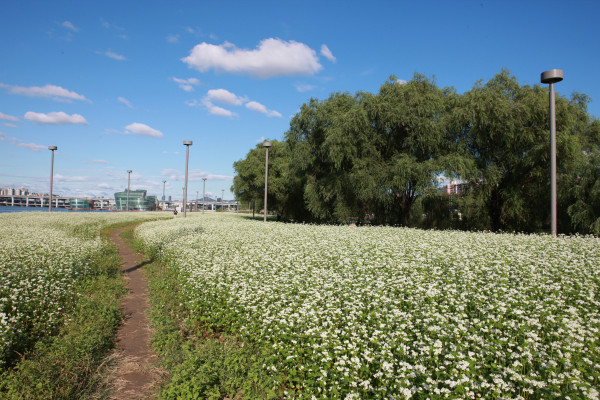
Autumn gives Seorae Island a quieter and more subdued landscape than spring. The island has also long been known for buckwheat flowers, and visitors have traditionally come during autumn to enjoy seasonal flower fields along the Han River.

Some Korean visitors recommend photographing the flowers with N Seoul Tower visible in the distance, enjoying a picnic during the daytime, and then moving toward the Banpo Bridge area in the evening for the night view.

However, buckwheat flower festivals and related seasonal events may not be organized in exactly the same format every year. Travelers visiting Seorae Island specifically for a festival should check the official event schedule for the year of their visit.

• Autumn scenery includes buckwheat flowers and riverside landscapes
• Possible photo views toward N Seoul Tower
• Easy to combine a daytime picnic with an evening Hangang itinerary
• Pleasant destination for autumn walks
• Flower conditions depend on weather and timing
• Check each year’s official schedule for seasonal festivals


Visit Seorae Island Around Sunset

Even outside the main flower seasons, the Han River scenery and sunset provide a good reason to visit Seorae Island. The open river, distant Seoul skyline, and views toward Namsan create especially attractive scenery as the sun begins to set.

Visitor feedback frequently describes sunset as one of the most memorable times to be on the island. A good itinerary is to arrive during the late afternoon, explore the island and flower fields first, and then stay until sunset.

• Han River sunset views
• Recommended for late-afternoon photography
• Daytime and evening atmospheres are noticeably different
• Easy to combine a picnic with sunset viewing
• Clear weather provides the best open river views


How to Enjoy a Picnic and Walk at Seorae Island

The open outdoor areas and walking paths make Seorae Island suitable for more than just flower viewing. Visitors can bring a picnic mat and simple food, relax beside the Han River, walk around the island, or continue into Banpo Hangang Park afterward.

Visitors often mention that the walking routes are comfortable for both walking and running, while the open grass areas make it easy to stop and rest. International visitors have also noted that shops and food facilities are not always immediately available on the island itself, so preparing drinks and light snacks in advance can make a longer visit more convenient.

• Picnic mats can be used
• Suitable for walking and running
• Relax beside the Han River
• Bring drinks and simple snacks for a longer visit
• Take your trash with you and keep the area clean
• Spring and autumn are especially pleasant seasons


What Naver Map and Google Map Visitors Commonly Mention

Korean visitor feedback commonly describes Seorae Island as a comfortable place for walking, running, picnics, and dog walks when it is not overly crowded. The Han River scenery is also frequently praised, particularly around sunset and after dark.

Google Map has more than 700 reviews, and both Korean and international visitors frequently mention the spring canola flowers, Han River scenery, walking, picnics, and photography as major reasons to visit. International visitors also describe the area as a relatively peaceful place to experience nature within Seoul. However, weekends during peak canola flower season can become crowded, and some visitors note that convenience stores or other facilities are not immediately available inside the island.

• Positive feedback about Hangang views and sunsets
• Spring canola flowers are popular for photography
• Frequently recommended for walking, running, and picnics
• Suitable atmosphere for families, couples, and friends
• Weekends during peak flower season can be crowded
• Bringing snacks and drinks can make the visit more convenient


Seorae Island Admission Fee and Opening Hours

Admission to Seorae Island is free. Visitors do not need to buy a ticket or make a reservation for ordinary sightseeing, walking, or picnicking. The island can be entered on foot from Banpo Hangang Park using the connecting pedestrian bridges.

As an open public park area, Seorae Island does not operate like a museum or attraction with a standard ticket counter and closing time. Map information generally lists it as accessible 24 hours a day. However, flower festivals, concerts, performances, and hands-on programs can have their own separate operating hours.

• General admission: Free
• No entrance ticket required
• Generally accessible 24 hours a day
• Walking and picnicking are freely available
• Special events may have separate schedules
• Some event activities and food purchases may require payment


Seorae Island Location

Seorae Island is located around 1335-1 Banpo-dong, Seocho-gu, Seoul. It lies within the Banpo Hangang Park area between Banpo Bridge and Dongjak Bridge and is connected to the riverside park by three pedestrian bridges.

First-time visitors should enter Banpo Hangang Park and then look for the Seoraegyo bridges leading onto the island. Because Seorae Island is not directly accessed from a regular road, it is useful to check the pedestrian route from your subway station to the Hangang Park entrance before traveling.

• Address area: Around 1335-1 Banpo-dong, Seocho-gu, Seoul
• Located inside Banpo Hangang Park
• Between Banpo Bridge and Dongjak Bridge
• Connected by three Seoraegyo pedestrian bridges
• Accessed through pedestrian routes inside Hangang Park

Seorae Island Naver Map


How to Get to Seorae Island from Sinbanpo Station

One of the closest subway stations to Seorae Island is Sinbanpo Station on Seoul Subway Line 9. According to the provided route information, the distance from Sinbanpo Station is approximately 1.1 km, with a walking time of around 19 minutes.

Official event transportation information has also directed visitors from Sinbanpo Station Exit 1 through the Banpo Information Center passage toward the Han River, with an estimated walk of around 17 minutes. Depending on your walking speed and traffic lights, allowing approximately 17 to 20 minutes is reasonable.

• Subway Line 9, Sinbanpo Station
• Recommended exit: Exit 1
• Distance: approximately 1.1 km
• Walking time: approximately 17–20 minutes
• Walk toward the Banpo Information Center passage
• Continue through Hangang Park toward Seorae Island


How to Get to Seorae Island from Dongjak Station

Dongjak Station serves both Seoul Subway Lines 4 and 9, making it convenient from several parts of Seoul. Official event transportation information has previously recommended using Exit 3 or Exit 4 and walking for approximately 20 minutes to reach the Seorae Island area.

This route is particularly useful for travelers coming from areas connected directly to Subway Line 4, including Myeongdong. The walk from the station includes a section through Hangang Park, so comfortable walking shoes are recommended.

• Dongjak Station: Seoul Subway Lines 4 and 9
• Use Exit 3 or Exit 4
• Approximately 20 minutes on foot
• Walking route continues through Hangang Park
• Convenient for travelers using Subway Line 4


How to Get to Seorae Island from Myeongdong

One of the simplest ways to reach Seorae Island from Myeongdong is to take Seoul Subway Line 4 directly to Dongjak Station and then continue on foot.

According to the provided route information, the complete trip from Myeongdong Station takes approximately 37 minutes and costs around KRW 1,550. The subway portion is approximately 14 minutes, followed by around 22 minutes of walking from Dongjak Station toward the island.

This route also works well for travelers who finish shopping or sightseeing in Myeongdong and want to travel to the Han River in the late afternoon for sunset.

• Starting point: Myeongdong Station
• Take Seoul Subway Line 4
• Get off at Dongjak Station
• Estimated total travel time: approximately 37 minutes
• Estimated fare: approximately KRW 1,550
• Walk approximately 20–22 minutes from Dongjak Station
• Convenient for an evening sunset itinerary after Myeongdong sightseeing


How to Get to Seorae Island from Seoul Station

From Seoul Station, visitors can also reach the area near Seorae Island by bus. According to the provided transportation route, one option is to board Bus 401 around the Seoul Station and Sungnyemun area and get off near the southern end of Banpo Bridge or the Hangang Citizens Park entrance.

The full journey is shown as approximately 38 minutes, with a transportation fare of around KRW 1,500. After getting off the bus, approximately 18 minutes of walking is included in the route.

This option can be useful for international travelers arriving at Seoul Station by KTX or AREX who want to continue directly to the Han River.

• Starting point: Seoul Station area
• Use a bus stop toward Sungnyemun
• Bus 401 is one available route
• Get off near Banpo Bridge South End / Hangang Citizens Park Entrance
• Estimated total travel time: approximately 38 minutes
• Estimated fare: approximately KRW 1,500
• Approximately 18 minutes on foot after getting off the bus


Visiting Seorae Island by Car

Travelers arriving by car can use parking facilities within Banpo Hangang Park. Official event transportation guidance has previously directed drivers toward Banpo Hangang Park Parking Lots 2 and 3.

However, the roads and parking areas around Seorae Island and Banpo Hangang Park can become busy during flower season, weekend evenings, and major Han River events. During the peak spring canola flower period or other seasonal events, public transportation can make travel times easier to predict.

• Banpo Hangang Park parking facilities available
• Parking Lots 2 and 3 may be used
• Weekend and event congestion is possible
• Consider public transportation during peak flower seasons
• Check current parking operations and fees before visiting


Best Time for Photos and Tips Before Visiting

If flowers are your main reason for visiting Seorae Island, checking the current blooming conditions before traveling is important. Even within the same month, temperature and rainfall can significantly affect the timing and appearance of the flowers.

For photography, consider arriving in the late afternoon rather than at midday. You can explore the flower fields first and remain on the island until sunset. Weekends can be busy around the flower fields, so travelers who want quieter photographs may prefer weekdays or earlier hours.

• Check current flower conditions before visiting
• Late afternoon is recommended for sunset photography
• Weekdays may be quieter than weekends
• Spring canola flower season can attract larger crowds
• Comfortable walking shoes are recommended
• Bring a picnic mat and drinks for a longer stay


Who Should Visit Seorae Island?

Seorae Island is particularly suitable for travelers who want to experience the Han River in the way many Seoul residents do—by walking, relaxing, exercising, and having picnics rather than only visiting major tourist attractions.

Because admission is free and the island connects naturally with riverside walking routes, travelers can enjoy Seoul’s outdoor environment without adding a major cost to their itinerary.

Spring and autumn are especially suitable for flower photography, while couples and families can combine a walk with a picnic. Solo travelers can also comfortably visit Seorae Island for running, walking, photography, or watching the sunset.

• Travelers looking for free attractions in Seoul
• International visitors who want to experience a Hangang picnic
• Visitors interested in spring and autumn flower photography
• Couples looking for a relaxed Seoul date spot
• Families looking for an easy riverside walk
• Travelers interested in experiencing local Han River culture


Visit Seorae Island for Flowers, the Han River, and Seoul Sunsets

Seorae Island is less about major attractions or elaborate entertainment facilities and more about enjoying the Han River, seasonal flowers, walking paths, and sunset views. Spring brings yellow canola flowers, while autumn offers buckwheat flowers and other seasonal scenery. Even outside the main flower seasons, the open Han River landscape makes it a relaxing place to visit.

Another advantage is that Seorae Island is free to enter and can be reached on foot from Sinbanpo Station or Dongjak Station. Travelers coming from Myeongdong or Seoul Station can also reach the area by public transportation in roughly 40 minutes.

If you want a quieter alternative to the busier sections of Banpo Hangang Park, or if you want to spread out a picnic mat and experience the Han River more like a local Seoul resident, Seorae Island is worth adding to your itinerary.

• Free admission
• Spring canola flowers and autumn seasonal scenery
• Hangang sunset views and photography
• Picnics, running, and walking
• Accessible from Myeongdong and Seoul Station by public transportation
• Suitable for a local-style Hangang experience in Seoul


Discover Korean Hospitals, Hangang Attractions, and Travel Information with Kosmedi

Kosmedi helps international travelers and foreign patients find practical medical and travel information in Korea. Kosmedi introduces hospitals checked by local Korean staff and medical institutions with confirmed interpretation services. Visitors can immediately explore information about dermatology, plastic surgery, health checkups, and other medical programs, including treatments, prices, special events, patient reviews, and detailed hospital introductions.

For Kosmedi partner hospitals and clinics, visitors can also check whether Kosmedi-exclusive discount coupons and special events are available. Before arriving in Korea or while staying in the country, international patients can use real-time messaging consultation to ask questions about hospital reservations and medical services.

Kosmedi is not limited to hospital information. The service also introduces Han River attractions such as Seorae Island, along with Korean restaurants, cafés, festivals, pop-up stores, tourist attractions, discounts, special events, popular destinations, and local places frequently visited by Korean residents. From foreign patients planning Seoul sightseeing between medical appointments to international travelers who want to experience Korea’s seasonal attractions and Hangang culture, Kosmedi helps users explore both medical and travel information in one place.

• Hospital information checked by local Korean staff
• Medical institutions with confirmed interpretation services
• Treatment, health checkup, price, event, and patient review information
• Kosmedi-exclusive discount coupons and special events
• Real-time messaging consultation
• Korean restaurants, cafés, and festival information
• Hangang parks and tourist attraction guides
• Pop-up stores, discounts, and special event information
• Popular destinations for international travelers
• Local places frequently visited by Korean residents


le pain myeongdong cathedral


A Popular Myeongdong Bakery to Visit with Myeongdong Cathedral

Myeongdong is one of Seoul’s best-known districts for shopping, restaurants, and cultural attractions. At the center of the neighborhood is Myeongdong Cathedral, one of Korea’s most important Catholic landmarks and an iconic architectural attraction visited by both Korean residents and international travelers.

If you want to enjoy bread and desserts after visiting the cathedral, Le Pain Myeongdong Cathedral Branch is conveniently located in the underground arcade beneath Myeongdong Cathedral. Its location makes it easy to combine cathedral sightseeing, shopping in Myeongdong, and a bakery stop in one itinerary. The bakery offers its well-known whole chestnut loaf, roasted chestnut pie, several types of baguettes, pastries, cakes, and gift sets.

• Bakery located beneath Myeongdong Cathedral
• Convenient to visit while sightseeing around Myeongdong
• Whole Chestnut Bread and Roasted Chestnut Pie are signature items
• Wide selection of baguettes, pastries, bread, and cakes
• Useful for snacks or gifts during a Myeongdong trip
• Takeout available


What Does “Le Pain” Mean in French?

The bakery name Le Pain comes from French. In French, “Le” is the definite article and “Pain” means “bread.” The name can therefore be understood naturally as “the bread” or simply “bread.”

Reflecting its French-inspired name, Le Pain offers a range of bakery items associated with French baking traditions, including baguettes, croissants, pain suisse, and Mont Blanc. At the same time, Le Pain Myeongdong Cathedral Branch also sells products adapted to Korean tastes and ingredients, such as whole chestnut bread, roasted chestnut pie, and green onion pollock roe baguette.

• Le Pain is a French name
• Pain means “bread” in French
• French-style items include baguettes and croissants
• Korean-inspired ingredients such as chestnut, pollock roe, and red bean are also used
• Combines French-style baking with flavors popular in Korea


Whole Chestnut Bread: A Signature Le Pain Menu Item

One of the best-known items at Le Pain Myeongdong Cathedral Branch is its Whole Chestnut Bread. The soft loaf is generously filled with whole chestnuts, creating a combination of sweet, nutty flavor and substantial texture.

The listed price is KRW 8,900. For travelers who enjoy chestnuts, this bread feels closer to a rich snack or dessert than a simple loaf. Because takeout is available, it can also be purchased to enjoy later at a hotel or as a food gift.

Korean visitor feedback frequently mentions people specifically visiting for the Whole Chestnut Bread, while international visitor comments also commonly mention chestnut-based items. Because popular products can sell out depending on the time of day, visitors who are specifically looking for this signature item may want to arrive earlier.

• Whole Chestnut Bread: KRW 8,900
• Signature loaf filled with whole chestnuts
• Sweet and nutty chestnut flavor
• Suitable as a snack or gift
• Popular products may sell out


Roasted Chestnut Pie | Another Le Pain Signature

Another popular item at Le Pain Myeongdong Cathedral Branch is the Roasted Chestnut Pie. The pastry combines a flaky exterior with a rich chestnut flavor, making it easy to purchase individually as a small snack. A six-piece gift set is also available.

An individual Roasted Chestnut Pie costs KRW 4,200, while the six-piece gift set is KRW 28,000. The gift set can be useful for travelers who want something convenient to share with family, friends, or coworkers.

• Roasted Chestnut Pie: KRW 4,200
• 6-piece Roasted Chestnut Pie Gift Set: KRW 28,000
• Signature product featuring chestnut flavor
• Available individually or as a gift set
• Convenient Korean travel snack or gift


Wide Selection of Award-Inspired Baguettes

Le Pain introduces its baguettes as one of the bakery’s main specialties, supported by its history of winning first place in a baguette competition. Le Pain Myeongdong Cathedral Branch offers not only a classic baguette but also variations featuring chocolate, fig, jambon, garlic, salt, and green onion with pollock roe.

The broad range makes it easy to choose according to personal taste. Travelers can select a classic baguette for a simple bread experience, Chocolate Baguette for something sweeter, or Green Onion Pollock Roe Baguette for a savory Korean-style flavor. These breads work as snacks, meal breads, or accompaniments to coffee.

• No. 1 Baguette: KRW 3,900
• Chocolate Baguette: KRW 4,200
• Fig Baguette: KRW 5,900
• Jambon Baguette: KRW 5,900
• Garlic Baguette: KRW 4,900
• Salt Baguette: KRW 4,900
• Green Onion Pollock Roe Baguette: KRW 5,800


Croissants, Pain Suisse, and Other Pastries

Visitors who prefer pastries can choose from croissants, pain suisse, Mont Blanc, and several other options at Le Pain Myeongdong Cathedral Branch. In addition to a classic croissant, chocolate and almond variations are available for travelers who prefer sweeter flavors.

More contemporary bakery items such as S’more Crookie are also included on the menu, allowing visitors to compare traditional French-style pastries with newer dessert trends in one bakery.

• Croissant: KRW 4,200
• Chocolate Croissant: KRW 4,200
• Almond Croissant: KRW 4,500
• Pain Suisse: KRW 5,500
• Chocolate Pain Suisse: KRW 5,800
• Almond Pain Suisse: KRW 3,800
• Mont Blanc: KRW 6,300
• Tissue Bread: KRW 7,900
• S’more Crookie: KRW 3,800


From Sweet Red Bean Bread to Ciabatta

Beyond its chestnut specialties, Le Pain Myeongdong Cathedral Branch sells a broad selection of breads including sweet red bean bread, salt bread, ciabatta, and walnut bread. The variety ranges from familiar Korean bakery items such as danpatppang, or sweet red bean bread, to European-style breads such as ciabatta.

Many products also use ingredients such as fig, cream cheese, nuts, olives, and condensed milk, giving visitors plenty of options beyond simple everyday bread.

• Sweet Red Bean Bread: KRW 3,600
• Cream Sweet Red Bean Bread: KRW 3,900
• Salt Bread: KRW 3,800
• Pollock Roe Salt Roll: KRW 3,800
• Kaymak: KRW 6,900
• Yogurt Whole Wheat Bread: KRW 4,900
• Whole Wheat Fig Bread: KRW 5,900
• Glutinous Rice Marble Bread: KRW 7,900
• Walnut Bread: KRW 6,900
• Ciabatta: KRW 4,900
• Olive Ciabatta: KRW 5,200


Smaller Breads and Snack Options

Travelers who do not want to purchase a large loaf can choose from several smaller breads and snack-style items. The menu includes cheese breads, olive-based bread, mocha bread, egg tarts, cheese balls, and butter rice cakes.

These smaller products are convenient for visitors who want to buy several different items to share at a hotel or enjoy while walking around Myeongdong.

• Quattro Cheese: KRW 3,900
• Olive Boomerang: KRW 2,600
• Mocha Bread: KRW 6,500
• Condensed Milk Mocha Bread: KRW 6,800
• S Bread: KRW 6,600
• Fig Cream Cheese Bread: KRW 6,800
• Condensed Milk Cream Bread: KRW 3,700
• Egg Tart: KRW 3,900
• Petit Cheese Ball: KRW 1,900
• Comeback Corn: KRW 3,600
• Butter Rice Cake: KRW 1,800


Low-Sugar Loaf Bread Options

Le Pain Myeongdong Cathedral Branch also offers several low-sugar loaf breads in addition to its sweeter bakery products. Available varieties include plain, milk, rye, seven-grain, and whole wheat bread.

These options can appeal to travelers who are looking for a more basic loaf for breakfast or a light meal rather than a rich pastry or dessert.

• Low-Sugar Plain Loaf: KRW 6,800
• Low-Sugar Milk Loaf: KRW 8,200
• Low-Sugar Rye Loaf: KRW 7,600
• Low-Sugar Seven-Grain Loaf: KRW 7,800
• Low-Sugar Whole Wheat Loaf: KRW 7,800


Sandwich Option for a Light Meal

Visitors looking for something more substantial than bread or dessert can also choose a sandwich. The current menu includes a Tomato Basil Sandwich, making it a convenient light-meal option during sightseeing in Myeongdong.

It can be considered together with bread or pastries if you want a simple meal after visiting Myeongdong Cathedral or shopping nearby.

• Tomato Basil Sandwich: KRW 8,900
• Suitable as a simple light meal
• Convenient option during a Myeongdong sightseeing itinerary


Blueberry and Mango Cakes for Special Occasions

Le Pain also sells whole and mini cakes. The current menu at Le Pain Myeongdong Cathedral Branch includes blueberry and mango cakes, with both full-size and smaller options available depending on the occasion and number of people.

These cakes can be considered for birthdays, family gatherings, celebrations, or special moments during a Korea trip. Le Pain is also known for fruit-and-cream cakes, making these options particularly suitable for visitors who prefer fresh fruit desserts.

• Blueberry Whole Cake: KRW 59,000
• Blueberry Mini Cake: KRW 32,000
• Mango Whole Cake: KRW 45,000
• Mango Mini Cake: KRW 30,000
• Suitable for birthdays, celebrations, and family gatherings


Bakery Gift Sets for Travelers

Gift sets are also available for travelers looking for packaged bakery products. The menu includes a six-piece Roasted Chestnut Pie set and a six-piece Sweet Red Bean Bread set.

Because Myeongdong attracts many international visitors, these sets can be convenient for sharing at a hotel or taking to friends and family during a Korea trip.

• 6-piece Roasted Chestnut Pie Gift Set: KRW 28,000
• 6-piece Sweet Red Bean Bread Gift Set: KRW 20,900
• Convenient for sharing with several people
• Suitable as a snack or travel gift from Myeongdong


What Korean and International Visitors Commonly Mention

On Naver Map, Le Pain Myeongdong Cathedral Branch has accumulated a large number of visitor reviews, with a displayed rating of 4.46 and approximately 7,300 reviews in the provided information. Korean visitors commonly mention visiting specifically for distinctive products such as the Whole Chestnut Bread, Roasted Chestnut Pie, and Pollock Roe Baguette, and the bakery is sometimes described as a destination for bakery-focused food trips.

Google Map-based public reviews and international visitor comments also frequently mention fresh bread, pastries, baguettes, and chestnut-based products positively. Some visitors, however, mention having to wait for popular products or finding that the item they wanted was unavailable, so travelers with a specific menu item in mind may want to avoid the busiest times.

• Whole Chestnut Bread and Roasted Chestnut Pie are frequently mentioned by Korean visitors
• Positive feedback about baguettes and pastries
• Popular with international visitors in Myeongdong
• Some reviews mention waiting or sold-out signature items
• Earlier visits may be better when looking for a specific product


A Myeongdong Bakery Known for Blue Ribbon Recognition and Baking Expertise

Le Pain Myeongdong Cathedral Branch is presented as a specialist bakery built on years of accumulated baking techniques and product development. According to the store information provided, Le Pain has been listed in the Blue Ribbon Survey for 10 consecutive years and highlights its first-place baguette competition award as part of its bakery credentials.

Rather than being known only for having a large number of products, Le Pain has several clearly recognizable specialties, especially its Whole Chestnut Bread, Roasted Chestnut Pie, and baguettes.

• Listed in the Blue Ribbon Survey for 10 consecutive years according to store information
• First-place baguette competition history
• Strong focus on signature chestnut products and baguettes
• Established specialty bakery in Myeongdong


In-Store Baking Workspace and Takeout Service

The bakery operates an in-store production workspace and emphasizes product management and hygiene. Customers can take their purchases to go, which is convenient for travelers who plan to continue exploring Myeongdong or want to bring bread back to their accommodation.

Because Le Pain Myeongdong Cathedral Branch is located in the underground arcade beneath Myeongdong Cathedral, visitors can easily stop by after cathedral sightseeing, purchase bread, and continue to their next destination.

• In-store baking workspace
• Takeout available
• Convenient for travelers purchasing food to go
• Easy to combine with Myeongdong Cathedral sightseeing


Le Pain Myeongdong Cathedral Branch Location

Le Pain Myeongdong Cathedral Branch is located at B103, 74 Myeongdong-gil, Jung-gu, Seoul. The bakery is inside the underground arcade beneath Myeongdong Cathedral, so first-time visitors should look for the entrance leading to the cathedral’s underground area rather than searching only at street level.

The bakery is accessible from several subway stations, including Myeongdong Station, Euljiro 1-ga Station, and Euljiro 3-ga Station, making it easy to include in a central Myeongdong sightseeing route.

• Address: B103, 74 Myeongdong-gil, Jung-gu, Seoul
• Located in the underground arcade beneath Myeongdong Cathedral
• Accessible from Myeongdong Station
• Accessible from Euljiro 1-ga Station
• Also accessible from Euljiro 3-ga Station

Le Pain Myeongdong Cathedral Naver Map

Le Pain Myeongdong Cathedral Google Map


How to Get to Le Pain Myeongdong Cathedral Branch from Myeongdong Station

Walking from Myeongdong Station is one of the easiest ways to reach Le Pain Myeongdong Cathedral Branch. The provided route shows a distance of approximately 458 meters and a walking time of around six minutes, with no need for an additional transfer.

The bakery’s own directions also describe it as approximately 450 meters, or about seven minutes on foot, from Myeongdong Station Exit 9. Depending on traffic lights and your walking route, allowing about six to seven minutes is reasonable.

• Starting point: Myeongdong Station
• Recommended exit: Exit 9
• Distance: approximately 450–460 meters
• Walking time: approximately 6–7 minutes
• Walk toward Myeongdong Cathedral
• Enter the underground area and proceed to B103


How to Get There from Euljiro 1-ga Station

Le Pain Myeongdong Cathedral Branch can also be reached on foot from Euljiro 1-ga Station. According to the provided store information, the bakery is approximately 500 meters, or about eight minutes on foot, from Exit 5.

This route can be convenient for travelers shopping around the northern side of Myeongdong or near Lotte Department Store, as there is no need to travel to Myeongdong Station first.

• Subway Line 2, Euljiro 1-ga Station
• Use Exit 5
• Approximately 500 meters
• About 8 minutes on foot
• Convenient for combining with shopping in Myeongdong


How to Get to Le Pain Myeongdong Cathedral Branch from Itaewon

Travelers coming from Itaewon can use Subway Lines 6 and 4. According to the provided route, take Line 6 from Itaewon Station to Samgakji Station, transfer to Line 4, and continue to Myeongdong Station.

The total journey is shown as approximately 28 minutes with an estimated fare of around KRW 1,550. After arriving at Myeongdong Station, continue on foot toward Myeongdong Cathedral.

• Starting point: Itaewon Station
• Take Subway Line 6
• Transfer to Line 4 at Samgakji Station
• Get off at Myeongdong Station
• Estimated total journey: approximately 28 minutes
• Estimated fare: approximately KRW 1,550
• Walk from Myeongdong Station to the bakery


How to Get to Le Pain Myeongdong Cathedral Branch from Hongik University Station

From Hongdae, one simple route is to take Subway Line 2 from Hongik University Station to Euljiro 1-ga Station. From there, walk toward Myeongdong Cathedral and Le Pain Myeongdong Cathedral Branch.

According to the provided route information, the complete journey takes approximately 20 minutes. This is particularly convenient for international travelers who plan to visit Hongdae and Myeongdong on the same day because no subway transfer is required.

• Starting point: Hongik University Station
• Take Subway Line 2
• Get off at Euljiro 1-ga Station
• Estimated total travel time: approximately 20 minutes
• Estimated fare: approximately KRW 1,550
• Walk from Euljiro 1-ga Station toward Myeongdong Cathedral


How to Visit by Bus or Car

Travelers using a bus can get off at the National Human Rights Commission / Ahn Jung-geun Activity Site bus stop and walk approximately three minutes to the bakery.

Visitors arriving by car can use Myeongdong Cathedral parking. However, Myeongdong is a busy tourism and shopping district with heavy pedestrian and vehicle traffic, so public transportation can often be more convenient.

• Approximately 3 minutes on foot from National Human Rights Commission / Ahn Jung-geun Activity Site bus stop
• Myeongdong Cathedral parking available
• Excellent public transportation access in central Myeongdong
• Traffic and parking may be busier on weekends and peak tourism periods


Le Pain Myeongdong Cathedral Branch Opening Hours

According to the currently provided operating information, Le Pain Myeongdong Cathedral Branch is open daily from 9:00 AM to 8:50 PM. The same operating hours are listed from Monday through Sunday, making the bakery relatively easy to include in both weekday and weekend itineraries.

Popular products may sell out before closing time, so travelers specifically looking for Whole Chestnut Bread, Roasted Chestnut Pie, or another signature item may want to visit earlier rather than near the end of the day.

• Monday: 9:00 AM–8:50 PM
• Tuesday: 9:00 AM–8:50 PM
• Wednesday: 9:00 AM–8:50 PM
• Thursday: 9:00 AM–8:50 PM
• Friday: 9:00 AM–8:50 PM
• Saturday: 9:00 AM–8:50 PM
• Sunday: 9:00 AM–8:50 PM
• Popular products may sell out early


Looking for a Bakery Stop During a Myeongdong Food Trip?

Myeongdong is famous for Korean cosmetics, fashion shopping, street food, and a variety of bakeries. Le Pain Myeongdong Cathedral Branch stands out because of its location directly beneath one of Myeongdong’s most recognizable landmarks and its clearly defined signature products, including Whole Chestnut Bread, Roasted Chestnut Pie, and award-inspired baguettes.

The bakery is particularly convenient for travelers who want a snack after visiting Myeongdong Cathedral, bread to take back to their hotel, or packaged bakery products to share with family and friends.

• Travelers planning a bakery-focused food trip in Myeongdong
• Visitors sightseeing at Myeongdong Cathedral
• Travelers who enjoy chestnut bread
• Visitors looking for French-style baguettes and pastries
• International travelers interested in Korean-inspired bakery flavors
• Travelers looking for takeout desserts or gifts in Myeongdong


Discover Korean Hospitals, Restaurants, Bakeries, and Travel Information with Kosmedi

Kosmedi helps international travelers and foreign patients find practical medical and travel information in Korea. Kosmedi introduces hospitals checked by local Korean staff and medical institutions with confirmed interpretation services. Visitors can explore information about dermatology, plastic surgery, health checkups, and other medical programs, including treatments, prices, special events, patient reviews, and detailed hospital introductions.

For Kosmedi partner hospitals and clinics, international visitors can also check whether Kosmedi-exclusive discount coupons or special events are available. Real-time messaging consultation allows users to ask questions about hospital reservations and medical services before arriving in Korea or while staying in the country.

Kosmedi is not limited to hospital information. The service also introduces Korean restaurants, bakeries such as Le Pain Myeongdong Cathedral Branch, cafés, festivals, pop-up stores, tourist attractions, discounts, special events, popular destinations, and local places frequently visited by Korean residents. From foreign patients planning Myeongdong sightseeing between medical appointments to general international travelers interested in Korean food and travel culture, Kosmedi helps users explore medical and travel information in one place.

• Hospital information checked by local Korean staff
• Medical institutions with confirmed interpretation services
• Treatment, health checkup, price, event, and patient review information
• Kosmedi-exclusive discount coupons and special events
• Real-time messaging consultation
• Korean restaurant, bakery, and café information
• Festival and pop-up store guides
• Tourist attractions and discount events
• Popular destinations for international visitors
• Local places frequently visited by Korean residents