



Available Interpretation Languages: English 🇬🇧 / Chinese 中文 🇨🇳 / Japanese 日本語🇯🇵
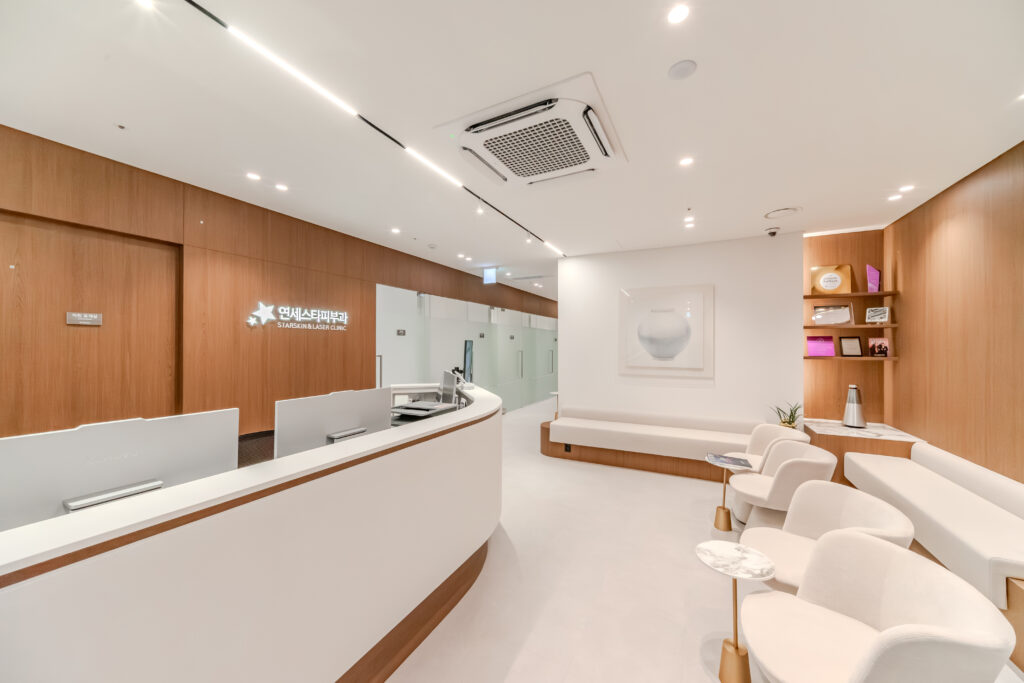
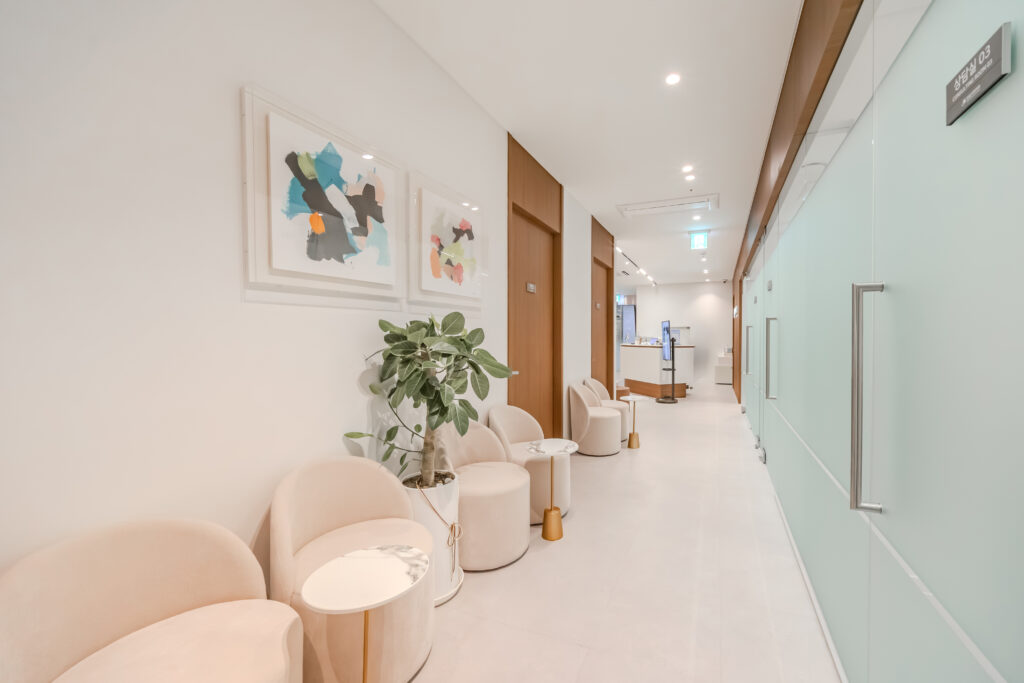
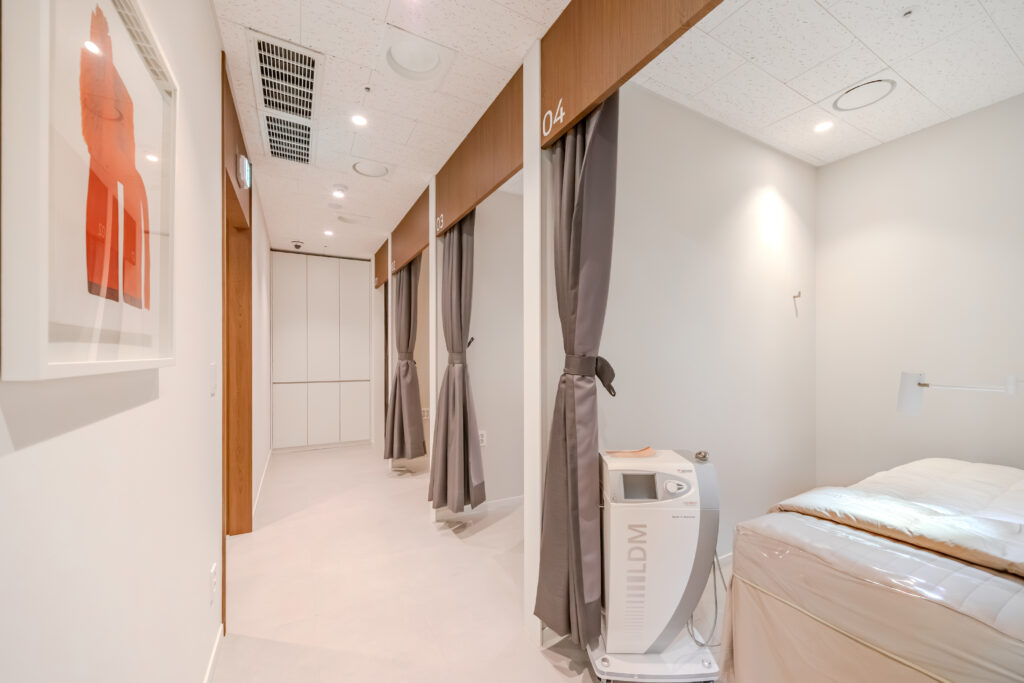
When looking for scar treatment or specialist dermatology care in Korea, it is important to compare more than a specific laser or a well-known treatment name. Patients should also consider how carefully the current skin condition is differentiated, whether previous treatment history is reflected in the treatment plan, whether multiple treatment methods can be combined when appropriate, and whether dermatology specialists are directly involved in diagnosis and treatment. Yonsei Star Dermatology Sinchon is a dermatology specialist clinic that has provided care in Sinchon, Seoul since 2002. With 25 years of experience and experience spanning approximately 100,000 cases, scar treatment is one of its major clinical areas. The clinic treats a broad range of scars, including depressed acne scars, burn scars, surgical scars, scars following cosmetic procedures, self-harm scars, keloid and hypertrophic scars, and difficult retreatment cases after multiple previous treatments at other medical institutions. Yonsei Star Dermatology Sinchon also provides care for acne, pigmentation, enlarged pores, facial flushing, tattoo removal, stretch marks, skin boosters, lifting treatments, and medical skincare. Rather than applying one device or product in the same way to every patient, treatment is selected according to skin thickness, tissue condition, elasticity, hydration, scar structure, previous treatment history, and individual treatment goals.
• Providing dermatology care in Sinchon, Seoul since 2002
• Focus on complex scars and retreatment cases
• Five-dermatologist specialist care system
• Broad treatment range including skin boosters, lifting, acne, and tattoo removal
• More than 30 different dermatologic treatment devices
• Individual treatment design based on skin condition and treatment goals
Customized Skin Boosters
Customized skin boosters are one of the main anti-aging treatment areas at Yonsei Star Dermatology Sinchon . The clinic does not apply a single skin booster uniformly to every patient. Options such as Rejuran, Gowoori, Re2O, and Hilo Wave are considered according to the patient’s skin thickness, elasticity, hydration level, fine lines, skin texture, and the specific areas the patient wants to improve. Suitable ingredients and treatment methods are selected individually and may be combined when necessary.
Even within the same face, the forehead, eye area, cheeks, and area around the mouth can have different skin characteristics. The skin around the eyes is relatively thin and may develop fine lines more easily, while the cheeks may show more noticeable dehydration or loss of elasticity. For this reason, using the same product in exactly the same way across the entire face may not be appropriate for every patient.
Yonsei Star Dermatology Sinchon designs treatment around the patient’s current skin condition rather than focusing only on a product name. The clinic selects among different skin boosters according to the patient’s skin concerns and condition while also considering natural improvements in skin texture, elasticity, and hydration.
• Rejuran
• Gowoori
• Re2O
• Hilo Wave
• Juvelook
• Hydration injection
• Comprehensive consideration of skin thickness, elasticity, hydration, and fine lines
• Customized treatment reflecting the characteristics of different facial areas
• Selection and combination of skin boosters when appropriate
Skin Concerns That May Benefit From Skin Boosters
Skin boosters are not limited to simply providing moisture to dry skin. Treatment direction can differ depending on what needs to be addressed first, such as reduced skin elasticity, increased fine lines, rough skin texture, or skin that appears dehydrated.
Even among people of the same age, skin thickness, oil and moisture balance, and the degree of fine lines may differ. Therefore, the same product is not necessarily suitable for everyone. Yonsei Star Dermatology Sinchon selects skin boosters based on individual skin condition rather than taking a product-centered approach and also considers differences between facial areas instead of applying treatment uniformly across the entire face.
• Dry or dehydrated skin
• Skin with increasing fine lines
• Concerns about reduced elasticity
• Rough skin texture
• Different skin conditions across facial areas
• Cases requiring a different approach after previous skin booster treatment
Elasticity and Lifting Treatments
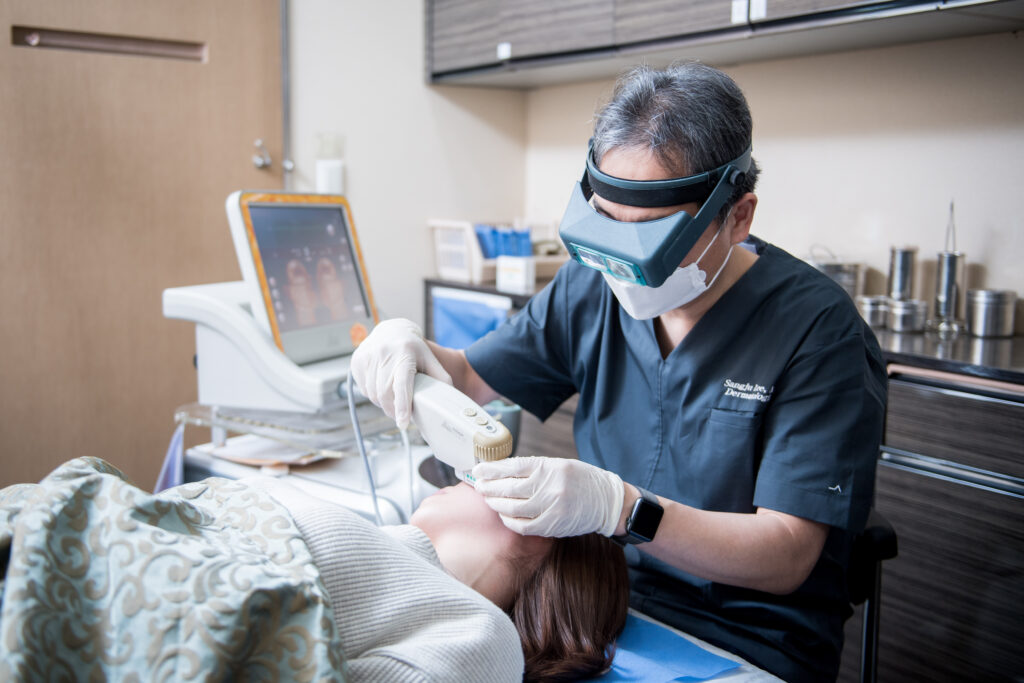
For lifting and skin elasticity treatment, Yonsei Star Dermatology Sinchon uses devices that work through different principles and at different depths, including Ultherapy PRIME, Thermage, and laser shockwave treatment. Rather than simply delivering stronger energy, the clinic evaluates how much elasticity has decreased, where sagging is concentrated, the facial contour, and skin thickness before selecting a device and treatment method.
Even among patients of a similar age, the appropriate approach may differ. A patient with thin skin and generalized loss of elasticity may need a different treatment from someone with more noticeable sagging around the cheeks or jawline. Skin thickness, facial contour, the location of sagging, and the target treatment depth are considered together when choosing an energy-based device.
Yonsei Star Dermatology Sinchon also does not rely on a single device when another combination may be more suitable. Treatments based on different mechanisms may be combined when necessary. The objective is not to create an excessively tightened appearance, but to pursue a natural change that remains harmonious with the patient’s original facial features.
• Ultherapy PRIME
• Thermage
• Laser shockwave treatment
• S.T.P Solution
• Analysis of the degree of elasticity loss
• Analysis of sagging location and facial contour
• Device selection according to skin thickness and target depth
• Combination of different energy treatments when needed
Facial Analysis Comes Before Choosing a Lifting Device
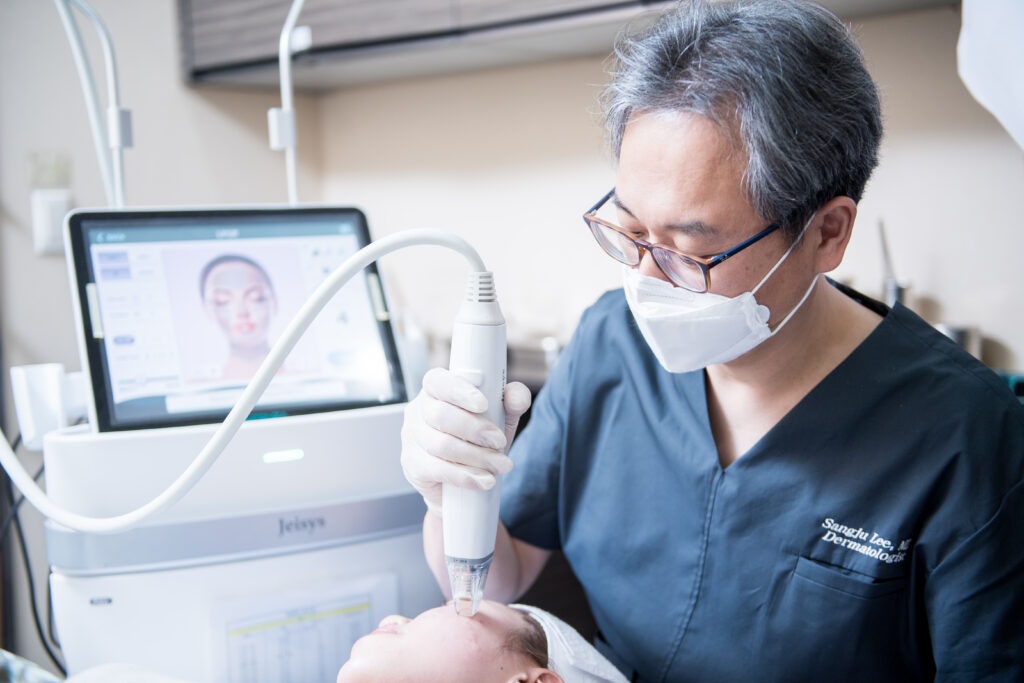
In lifting treatment, the first question should not simply be which device is the strongest. It is more important to analyze what type of change is actually occurring in the patient’s face. Appropriate energy and treatment depth may differ between patients with generalized loss of skin elasticity and those with localized sagging, as well as between patients with thin and thick skin.
Yonsei Star Dermatology Sinchon analyzes the individual’s face and skin before choosing a device. Treatment is selected according to the skin condition and target depth, and procedures based on different mechanisms may be combined when necessary.
• Analysis of the location of skin sagging
• Evaluation of skin thickness
• Consideration of overall facial contour
• Device selection according to the required target depth
• Treatment that does not rely on only one device
• Preference for natural facial harmony rather than excessive change
Gold PTT-Centered Acne Treatment
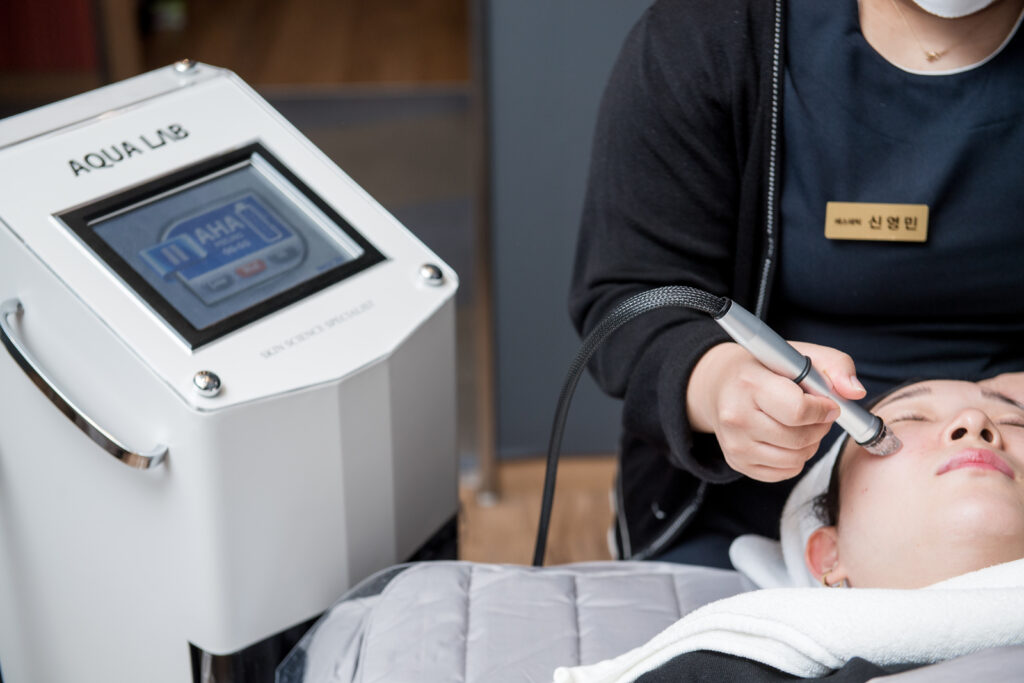
Acne treatment does not end with removing acne lesions that are currently visible. Yonsei Star Dermatology Sinchon also considers the skin environment that contributes to repeated acne, including sebum production and inflammation. Gold PTT is used as a central treatment option, while additional treatment may be combined according to the acne type and current skin condition.
If extraction or short-term inflammation control is repeatedly used as the only approach, visible acne may temporarily improve while recurring sebum production, inflammation, subsequent pigmentation, and scar problems may continue. Yonsei Star Dermatology Sinchon therefore considers both current acne and possible later skin changes and approaches treatment in stages.
Gold PTT is particularly used with a focus on the sebaceous glands, while an individual treatment plan is created according to acne type and skin condition.
• Gold PTT
• Analysis of sebum production and inflammation
• Individual treatment plans according to acne type
• Treatment not limited to simple extraction
• Sebaceous-gland-centered treatment approach
• Step-by-step skin management considering pigmentation and scarring
Why Acne and Acne Scars Should Be Evaluated Together
Active inflammatory acne and acne scars that have already become depressed into the skin are not the same condition. Repeated inflammation may need to be stabilized first, after which residual redness, pigmentation, and depressed scars should be differentiated and managed separately.
Yonsei Star Dermatology Sinchon does not focus only on current acne. The clinic also considers pigmentation and scarring that may develop afterward as part of a staged skin-management plan.
When depressed acne scars have already formed, a scar treatment plan may be established separately from active acne treatment after evaluating scar depth, shape, and the degree of tissue adhesion.
• Differentiation between active acne and scars
• Management of recurring inflammation and sebum
• Management of pigmentation after acne
• Red acne scars
• Depressed acne scars
• Step-by-step treatment according to skin condition
Complex and Difficult Scar Treatment
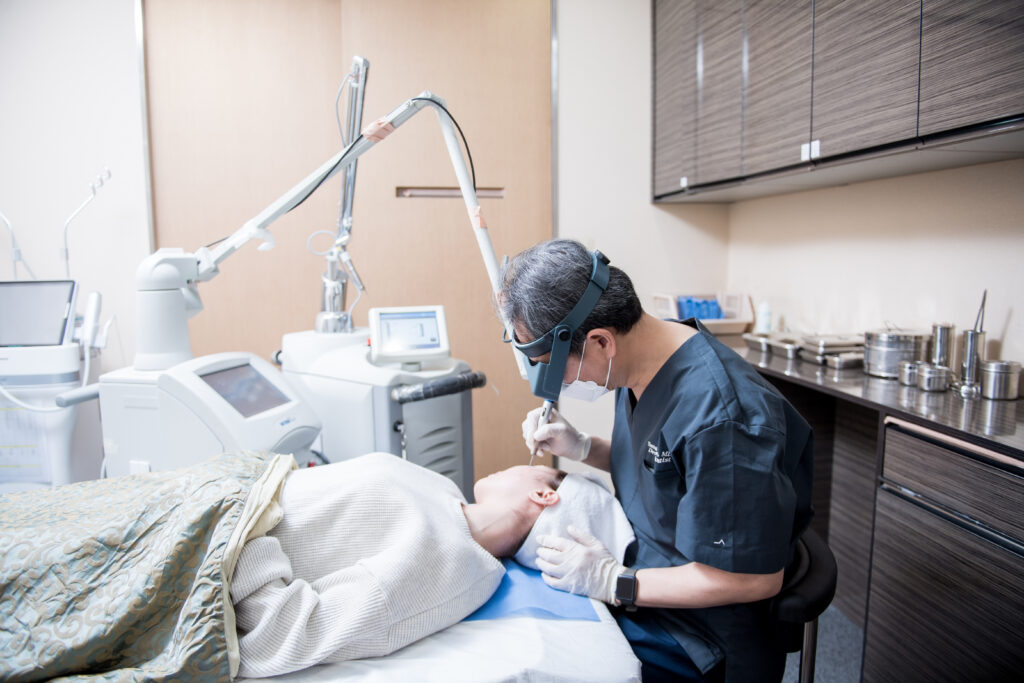
Complex scar treatment is one of the core clinical areas at Yonsei Star Dermatology Sinchon . The clinic treats scars with different causes and structures, ranging from depressed acne scars to scars following cosmetic procedures, self-harm scars, burn scars, keloid and hypertrophic scars, surgical scars, and early-stage scars.
Treatment is not determined by the name of the scar alone. Yonsei Star Dermatology Sinchon evaluates scar depth and shape, the presence of adhesion, color, thickness, deformation of surrounding tissue, and previous treatment history. Even two burn scars may require different approaches if one is thick and raised while another is flat but has residual color change.
Treatments are not limited to lasers. Methods such as the Pinhole Method and laser subcision may be selected or combined according to the structural characteristics of the scar.
• Depressed acne scars
• Scars following cosmetic procedures
• Self-harm scars
• Burn scars
• Surgical scars
• Keloid scars
• Early-stage scars
• Analysis of scar depth, shape, adhesion, color, and thickness
• Combination treatment using multiple methods
Retreatment of Scars Previously Treated Elsewhere
Scars that have already undergone multiple treatments at other medical institutions without sufficient improvement are also a major treatment area. Because the structure of these scars may have changed from the time treatment first began, Yonsei Star Dermatology Sinchon does not simply repeat the previous approach.
The clinic reassesses the current scar depth, adhesion, color, thickness, tissue condition, and previous treatment methods to establish a new treatment strategy. Yonsei Star Dermatology Sinchon places particular emphasis on difficult, complex, and retreatment scar cases.
Care ranges from depressed scars to burn, surgical, and keloid scars with different causes and tissue structures. Treatment is selected again according to the scar structure that remains at the time of evaluation.
• Scars requiring retreatment after treatment at another medical institution
• Review of previous treatment methods and timing
• Reassessment of current scar structure
• Evaluation of depth, adhesion, color, thickness, and tissue condition
• Retreatment that does not simply repeat previous procedures
• Broad treatment range from depressed scars to burn, surgical, and keloid scars
Pinhole Method and Laser Subcision
Scars may involve several structural changes at the same time, including surface discoloration, deep depressions, tissue adhesion, and increased thickness. For this reason, it is important to identify the current scar structure and choose the necessary treatment rather than repeatedly using only one laser.
Yonsei Star Dermatology Sinchon uses the Pinhole Method, laser subcision, and various laser treatments depending on scar condition. One of its key strengths is the ability to select or combine different treatment methods for complex scars and retreatment scars remaining after previous procedures.
• Pinhole Method
• Mild Pinhole Method
• Pinhole Alpha
• Triple Repair
• Laser subcision
• Various scar laser treatments
• Combination treatment according to structural problems such as depression and adhesion
Burn, Surgical, Cosmetic-Procedure, Self-Harm, and Keloid Scars
Burn scars, surgical scars, scars following cosmetic procedures, and self-harm scars differ in their causes and the depth of skin damage involved. Keloids and hypertrophic scars differ from depressed scars because the tissue becomes raised and thicker, which requires a different treatment direction.
For older scars or scars that have already undergone several treatments, the current tissue condition is often more important than the scar’s original appearance. Yonsei Star Dermatology Sinchon evaluates how depressed the skin is, whether tissue adhesion is present, whether red or dark discoloration remains, and whether the scar has increased in thickness before developing a treatment plan.
• Burn scars
• Surgical scars
• Scars following cosmetic procedures
• Self-harm scars
• Keloid scars
• Hypertrophic scars
• Old or complex scars
Customized Tattoo Removal
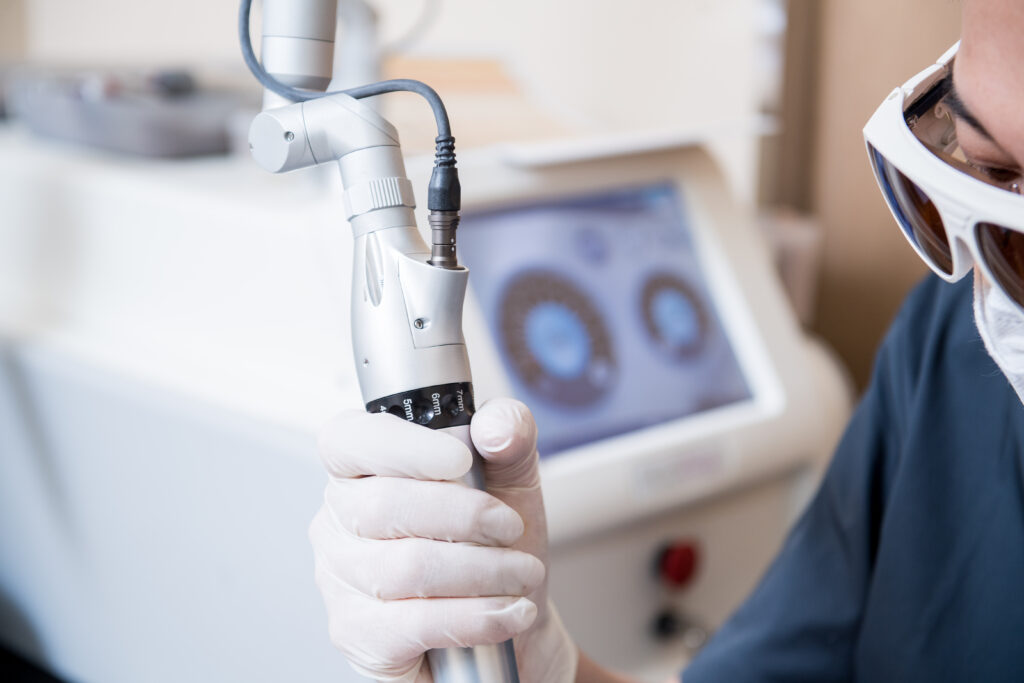
Tattoo removal at Yonsei Star Dermatology Sinchon is not performed in the same way based only on tattoo size. Treatment planning considers tattoo color, pigment depth and density, characteristics of the pigment used, previous tattoo-removal procedures, and the current condition of the surrounding skin.
Laser type and wavelength are selected not only for black tattoos but also for tattoos containing multiple colors. Different colors respond differently to light, so all pigments are not treated in exactly the same way.
If a patient has already received tattoo-removal treatment, Yonsei Star Dermatology Sinchon reassesses the pigment that remains and the current skin condition. Treatment considers not only pigment removal but also the surrounding skin and any scarring, drawing on the clinic’s scar-treatment experience to evaluate both tattoo pigment and skin tissue.
• Black tattoos
• Multicolored tattoos
• Analysis of pigment depth and density
• Laser wavelength selection according to tattoo color
• Consideration of previous tattoo-removal history
• Consideration of surrounding skin and scarring
Retreatment After Previous Tattoo Removal
Skin that has already undergone several tattoo-removal sessions may differ from untreated skin. Certain pigments may remain while others have faded, surrounding skin may show color changes, and scarring may sometimes have developed during previous removal procedures.
Yonsei Star Dermatology Sinchon reassesses the color, depth, and density of the remaining pigment as well as the condition of the surrounding skin before selecting an appropriate laser and treatment direction.
• Review of the number and methods of previous removal sessions
• Reassessment of remaining tattoo pigment
• Evaluation of surrounding skin and scar condition
• Laser wavelength selection based on current pigment
• Consideration of both pigment and skin tissue
Pigmentation, Melasma, Dark Spots, and Pore Treatment
Pigmentation care at Yonsei Star Dermatology includes melasma, dark spots, post-inflammatory pigmentation, age spots, solar lentigines, nevi, and other pigmented spots. Although these conditions may all appear as similar brown lesions, the cause and location of pigment can differ, so the lesion is differentiated before treatment direction is determined.
The clinic also treats skin-texture concerns including acne, enlarged pores, and keratosis pilaris. When pigmentation, pores, and skin texture are all concerns, Yonsei Star Dermatology identifies which issue should be prioritized and approaches treatment in stages.
• Melasma
• Dark spots
• Pigmentation
• Age spots
• Solar lentigines
• Nevi and pigmented spots
• Acne
• Enlarged pores
• Keratosis pilaris
Facial Flushing and Vascular Skin Concerns
Yonsei Star Dermatology also treats skin concerns related to blood vessels, including facial flushing and bruising. Skin that becomes red easily may involve more than a simple skin-tone issue, so vascular condition and skin sensitivity should be considered together.
Pigment-related changes and vascular changes are differentiated before a treatment direction suitable for the current skin condition is selected.
• Facial flushing
• Vascular skin concerns
• Bruising
• Recurrent facial redness
• Treatment considering skin sensitivity
Red and White Stretch Marks
Stretch marks can be divided into red stretch marks that appear in earlier stages and white stretch marks that become lighter over time. Treatment direction may differ depending on the current stage.
Because stretch marks involve structural changes within the skin itself, Yonsei Star Dermatology evaluates the current color, when the stretch marks developed, and the condition of the skin tissue before creating an individual treatment plan.
• Red stretch marks
• White stretch marks
• Evaluation of onset and current color
• Analysis of skin tissue condition
• Customized treatment according to the stretch-mark stage
Hyperbaric Oxygen Therapy and Medical Skincare
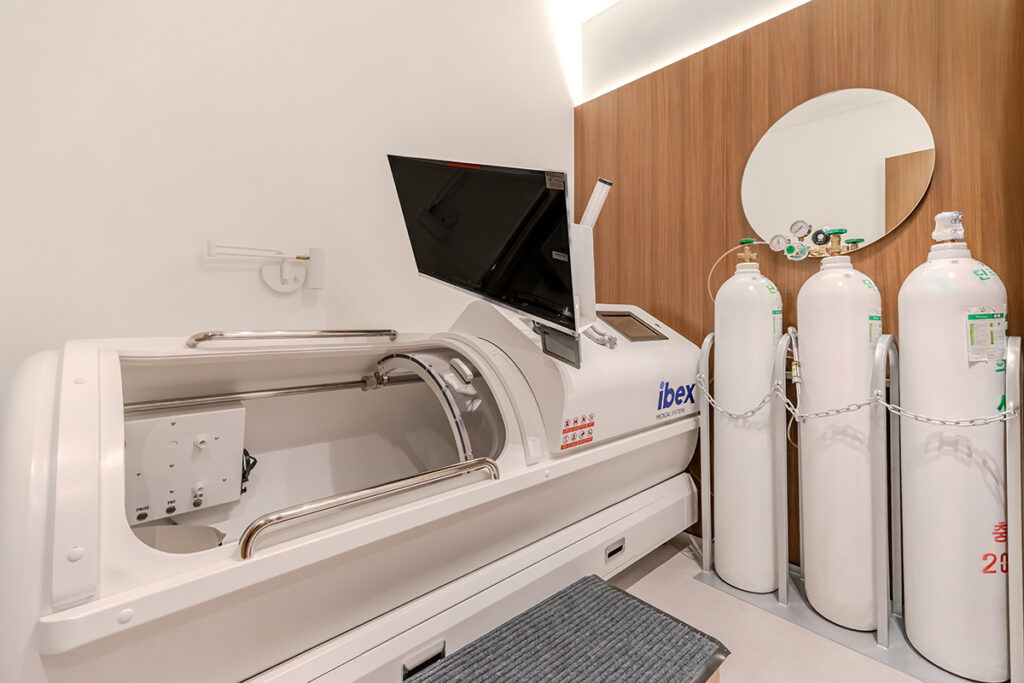
In addition to lasers, injections, and energy-based devices, Yonsei Star Dermatology provides medical skincare according to skin condition, including hyperbaric oxygen therapy, Repair Fit Care, and Acne Fit Care.
Even when patients receive the same dermatologic procedure, skin-barrier condition, sensitivity, and recovery speed can differ. For acne-prone skin, sensitive skin, or patients planning multiple procedures, recovery management and overall skin condition can therefore be considered alongside the primary treatment.
• Hyperbaric oxygen therapy
• Repair Fit Care
• Acne Fit Care
• Recovery management according to skin condition after treatment
• Care for acne-prone and sensitive skin
Various Anti-Aging Devices and Skin Boosters
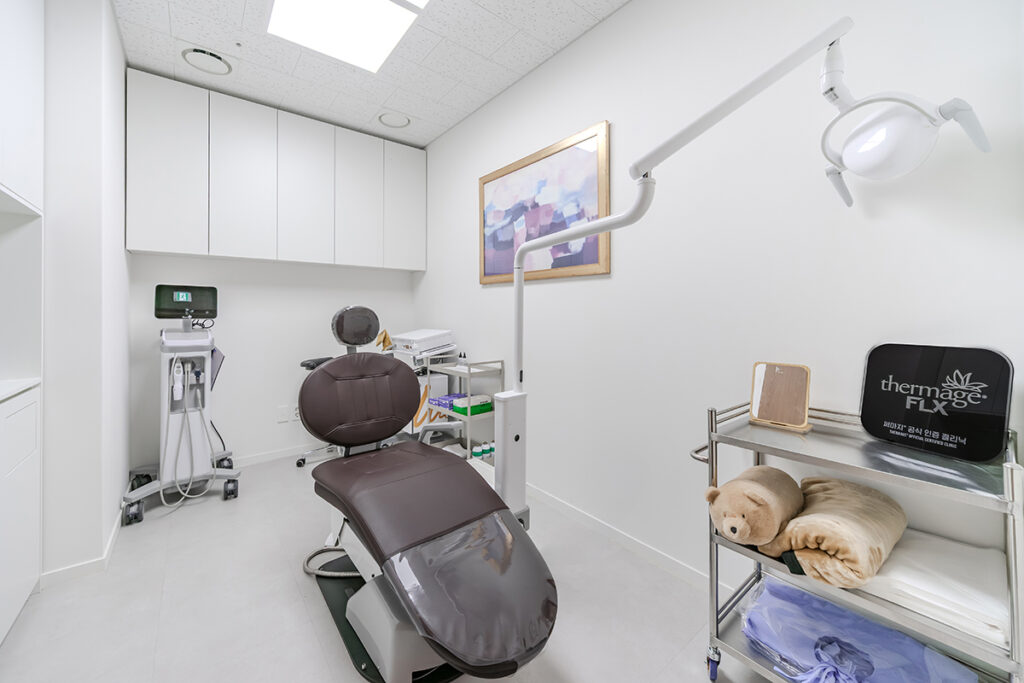
Yonsei Star Dermatology Sinchon operates lifting and elasticity devices based on different mechanisms, including Ultherapy, Thermage, and laser shockwave treatment, as well as various skin boosters including Rejuran, Gowoori, Re2O, and Hilo Wave.
The purpose of providing multiple devices and products is not to fit every patient into a single treatment method. Instead, Yonsei Star Dermatology Sinchon can select procedures that work through different mechanisms and at different depths according to individual skin condition. Concerns such as reduced elasticity, fine lines, insufficient hydration, and facial sagging may require different approaches.
• Ultherapy
• Thermage
• Laser shockwave treatment
• Rejuran Healer
• Juvelook
• Gowoori
• Re2O
• Hilo Wave
• Various anti-aging treatment options
• Customized treatment according to skin condition and concerns
What Differentiates the Main Treatments at Yonsei Star Dermatology Sinchon
The major procedures and treatments at Yonsei Star Dermatology Sinchon share a consistent approach. With customized skin boosters, the clinic evaluates skin thickness, hydration, fine lines, and elasticity before focusing on a particular product. With lifting treatment, facial sagging, skin thickness, and required treatment depth are analyzed before selecting a device.
For acne, Yonsei Star Dermatology Sinchon considers not only active inflammation but also recurring sebum production and the pigmentation or scarring that can follow. In scar and tattoo-removal treatment, previous treatment history and the condition of the remaining skin tissue are reassessed.
For complex scars and retreatment cases in particular, previous treatment is not simply repeated. Scar depth, adhesion, color, thickness, and tissue condition are analyzed again before selecting treatments such as the Pinhole Method, laser subcision, or various laser procedures.
• Treatment direction begins with analysis of current skin condition
• Individual selection among multiple devices and treatment methods
• Combination of treatments based on different mechanisms when appropriate
• Focus on complex and difficult scar treatment
• Retreatment after insufficient results from treatment at other clinics
• Individual skin condition prioritized over a product or device name
Five-Dermatologist Specialist Care System
Yonsei Star Dermatology Sinchon provides care with five dermatology specialists: Representative Director Kang Jin-moon, Representative Director Lee Sang-joo, Director Jung Ji-in, Director Lim Jae-yoon, and Director Park Byung-jin. In areas where precise evaluation of skin condition and careful treatment planning are particularly important, including scars, acne, pigmentation, laser treatment, anti-aging, and tattoo removal, dermatology specialists evaluate the patient’s skin and determine the treatment direction. :chatgpt-content-reference
All five physicians have dermatology training at university hospitals as well as a range of clinical dermatology experience. The specialist care system includes Representative Director Kang Jin-moon, Representative Director Lee Sang-joo, who serves as President of the Association of Korean Dermatologists in 2026, and three additional dermatology specialists. Yonsei Star Dermatology Sinchon provides individualized care according to the patient’s skin condition and treatment goals.
• Five dermatology specialists
• Physicians with university-hospital dermatology training
• Care for scars, acne, pigmentation, laser treatment, anti-aging, and tattoo removal
• Treatment direction determined after evaluating the patient’s skin
• Individual treatment planning based on a range of clinical experience
Representative Director Kang Jin-moon
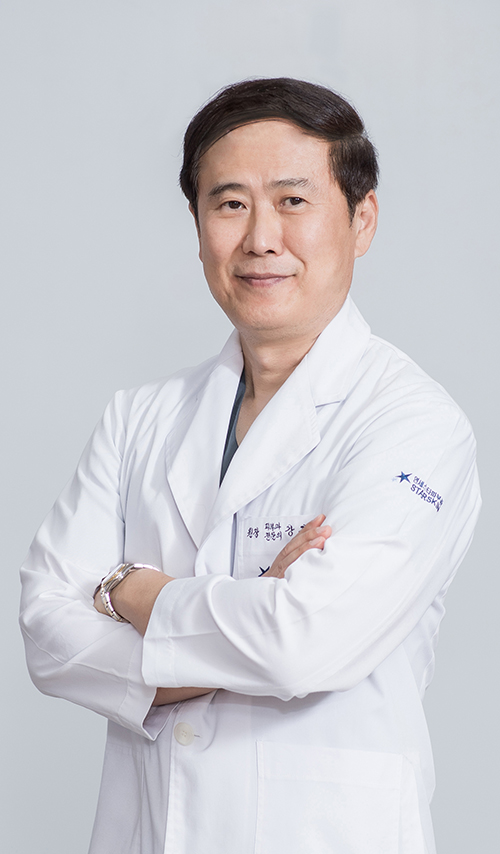
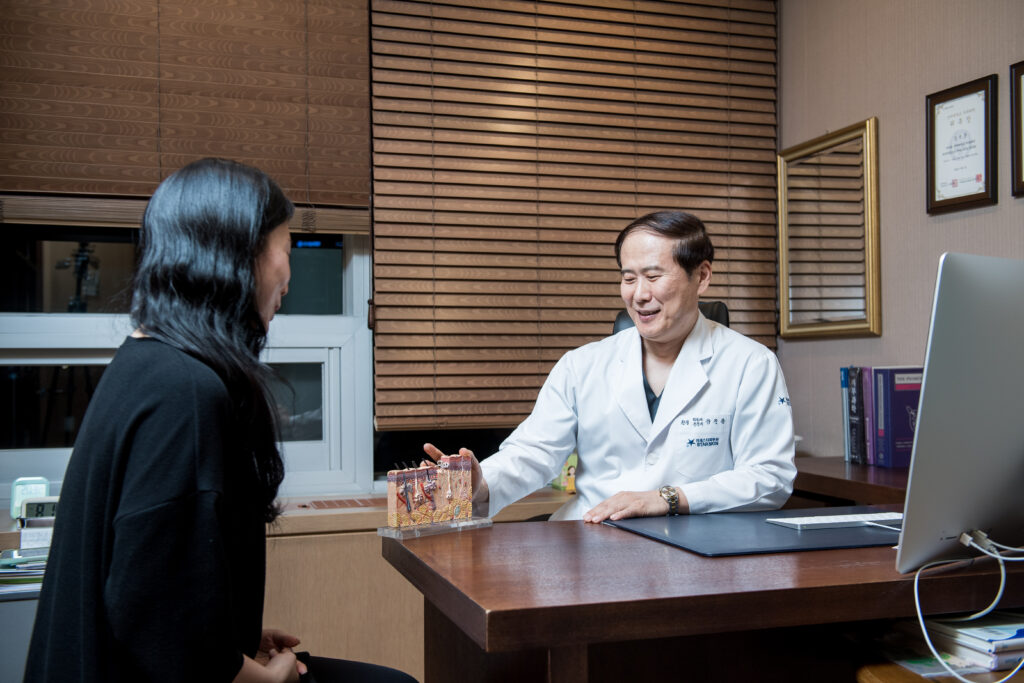
Representative Director Kang Jin-moon is a dermatology specialist who graduated from Yonsei University College of Medicine and completed dermatology residency training at Severance Hospital. He previously served as a professor at Bundang CHA Hospital and currently serves as an adjunct professor in the Department of Dermatology at Yonsei University College of Medicine.
Drawing on dermatology experience gained at university hospitals and educational institutions, he treats a variety of skin diseases and dermatologic concerns. He is a member of the Korean Dermatological Association, the Korean Society for Laser Medicine and Surgery, the Association of Korean Dermatologists, and the Korean Society for Aesthetic and Dermatologic Surgery. He is also the author of Medical Body Care. At Yonsei Star Dermatology Sinchon , his clinical philosophy emphasizes “proper treatment and skilled medical practice.”
• Dermatology specialist
• Graduate of Yonsei University College of Medicine
• Dermatology residency at Severance Hospital
• Former professor at Bundang CHA Hospital
• Current adjunct professor, Department of Dermatology, Yonsei University College of Medicine
• Member of the Korean Dermatological Association
• Member of the Korean Society for Laser Medicine and Surgery
• Member of the Association of Korean Dermatologists
• Member of the Korean Society for Aesthetic and Dermatologic Surgery
• Author of Medical Body Care
Representative Director Lee Sang-joo
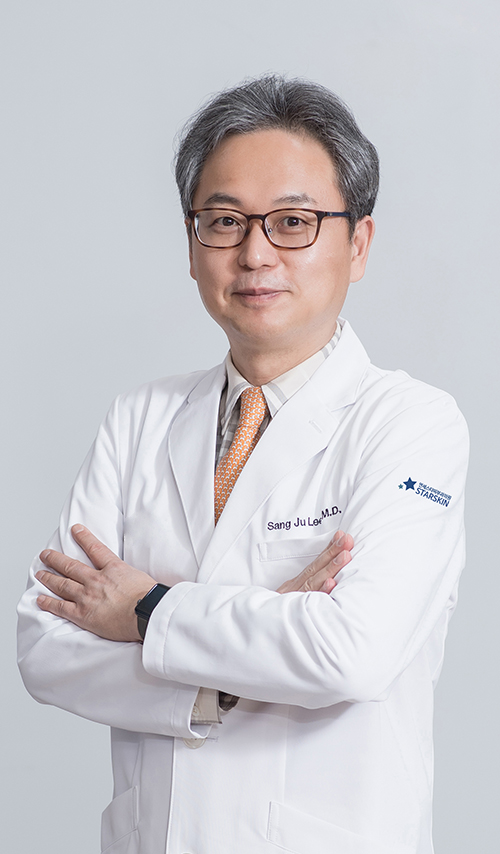
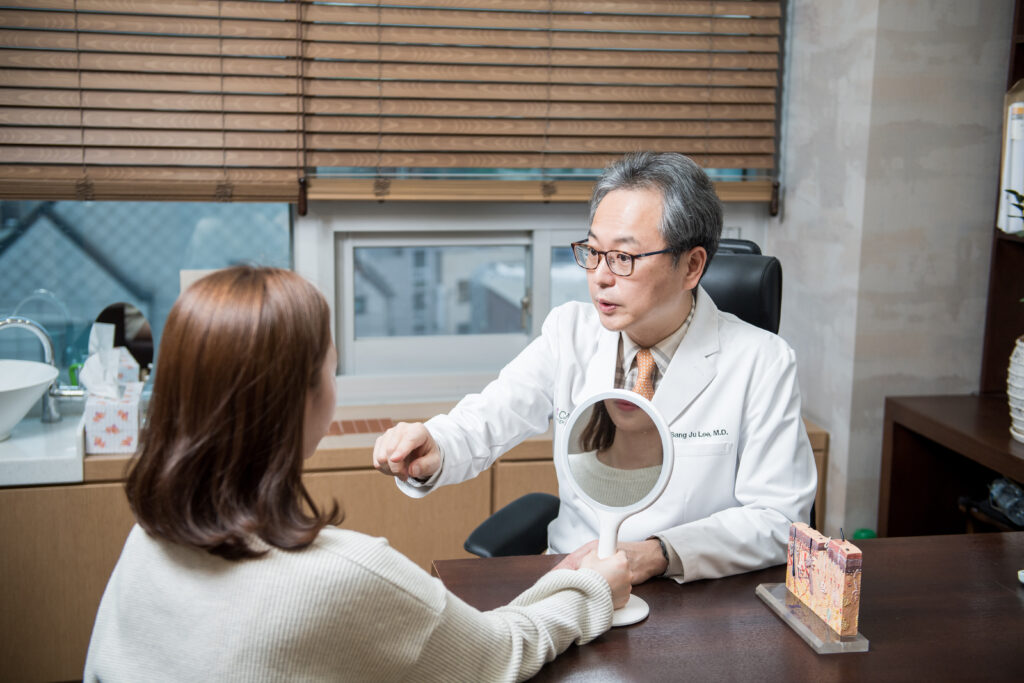
Representative Director Lee Sang-joo is a dermatology specialist and Doctor of Medicine. He graduated from Yonsei University College of Medicine and completed his doctoral studies at the Graduate School of Yonsei University College of Medicine. He completed dermatology residency training at Severance Hospital and currently serves as an adjunct professor in the Department of Dermatology at Yonsei University College of Medicine.
He previously served as a professor of dermatology at Yeongdong Severance Hospital and as Head of Dermatology at the National Police Hospital. He also served as a medical advisor to Neutrogena and to IOPE by Amorepacific. In 2026, he serves as President of the Association of Korean Dermatologists.
His academic writing covers a broad range of dermatology topics, including skin pigmentation, acne, the skin barrier, and medical skincare. His publications include Pigmentary System, Medical Body Care, Acne Bible, Medical Skincare, Skin Barrier, Aesthetic Treatment Using Gold PTT, and Medical Nail Care.
• Dermatology specialist
• Graduate of Yonsei University College of Medicine
• Graduate of Yonsei University College of Medicine Graduate School, Doctor of Medicine
• Dermatology residency at Severance Hospital
• Current adjunct professor, Department of Dermatology, Yonsei University College of Medicine
• Former professor of dermatology at Yeongdong Severance Hospital
• Former Head of Dermatology at the National Police Hospital
• Former medical advisor to Neutrogena
• Former medical advisor to IOPE by Amorepacific
• President of the Association of Korean Dermatologists in 2026
• Author of multiple books on pigmentation, acne, the skin barrier, and medical skincare
Director Jung Ji-in
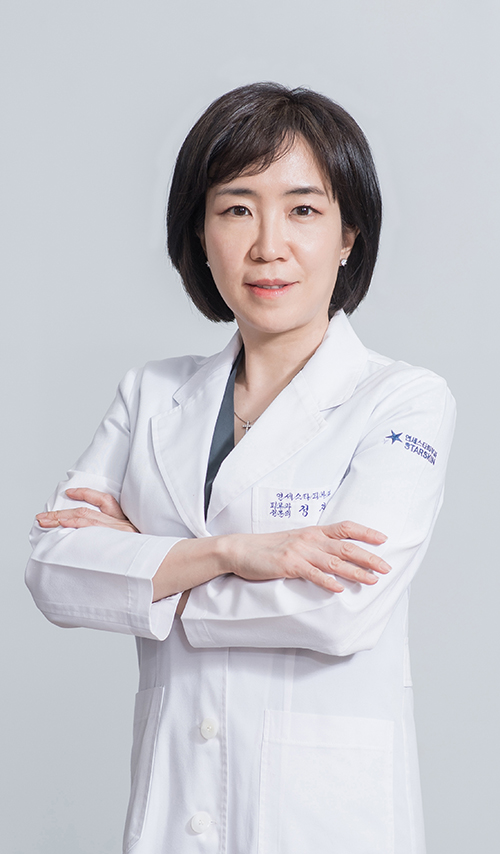
Director Jung Ji-in is a dermatology specialist who graduated from Yonsei University College of Medicine and earned a master’s degree in dermatology from the Graduate School of Yonsei University College of Medicine. She completed dermatology residency training at Severance Hospital.
She later worked as a director at Kims Dermatology, Beautiful Country Dermatology, The Samseong Station Dermatology, Who’s Who Dermatology, and Kanghan Dermatology, gaining broad clinical dermatology experience.
She is a member of the Korean Dermatological Association, the Association of Korean Dermatologists, the Korean Society for Laser Medicine and Surgery, the Society for Aesthetic Dermatologic Surgery, and the Korean Acne and Rosacea Society. At Yonsei Star Dermatology Sinchon , she focuses on accurately evaluating individual skin conditions and carefully selecting the necessary treatment.
• Dermatology specialist
• Graduate of Yonsei University College of Medicine
• Master’s degree in dermatology from the Graduate School of Yonsei University College of Medicine
• Dermatology residency at Severance Hospital
• Former Director at Kims Dermatology
• Former Director at Beautiful Country Dermatology
• Former Director at The Samseong Station Dermatology
• Former Director at Who’s Who Dermatology
• Former Director at Kanghan Dermatology
• Member of the Korean Dermatological Association
• Member of the Association of Korean Dermatologists
• Member of the Korean Society for Laser Medicine and Surgery
• Member of the Society for Aesthetic Dermatologic Surgery
• Member of the Korean Acne and Rosacea Society
Director Lim Jae-yoon
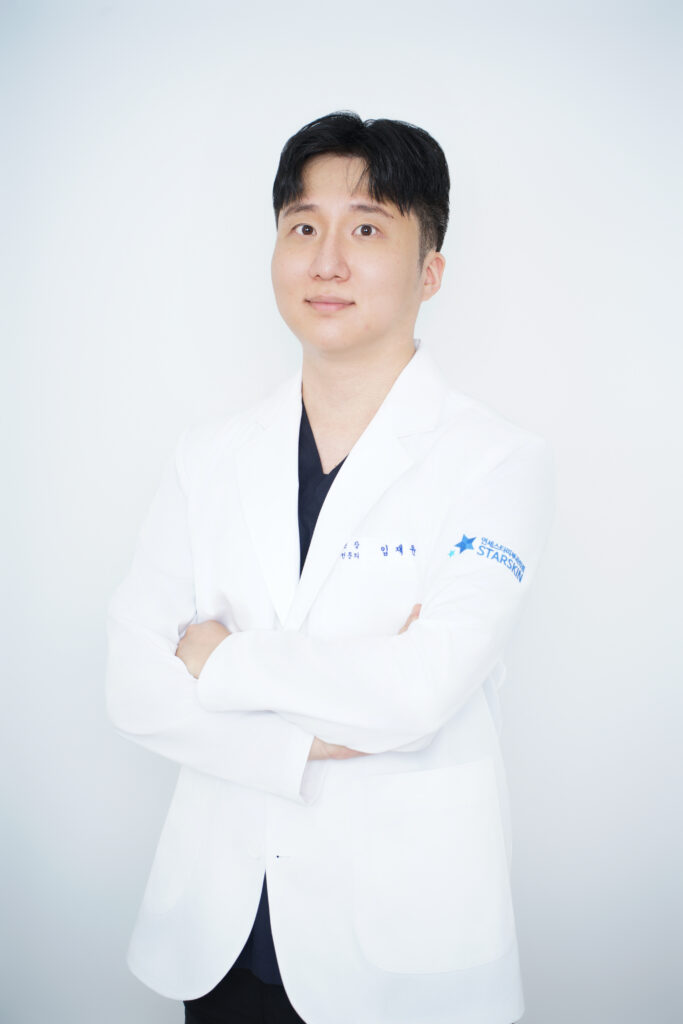
Director Lim Jae-yoon is a dermatology specialist who graduated from Ajou University School of Medicine and completed dermatology residency training at Kangbuk Samsung Hospital, Samsung Medical Center.
He later practiced at Timeless Dermatology and Jamsil Ogana Cell Dermatology, building clinical experience in both skin diseases and aesthetic dermatology.
He is a member of the Korean Dermatological Association, the Association of Korean Dermatologists, the Korean Society for Dermatologic Laser Therapy, and the Korean Society for Aesthetic and Dermatologic Surgery. At Yonsei Star Dermatology Sinchon , he carefully evaluates each patient’s skin condition before determining the treatment direction and provides care for a variety of dermatologic concerns.
• Dermatology specialist
• Graduate of Ajou University School of Medicine
• Dermatology residency at Kangbuk Samsung Hospital, Samsung Medical Center
• Clinical experience at Timeless Dermatology
• Former Director at Jamsil Ogana Cell Dermatology
• Member of the Korean Dermatological Association
• Member of the Association of Korean Dermatologists
• Member of the Korean Society for Dermatologic Laser Therapy
• Member of the Korean Society for Aesthetic and Dermatologic Surgery
• Detailed care based on individual skin condition
Director Park Byung-jin
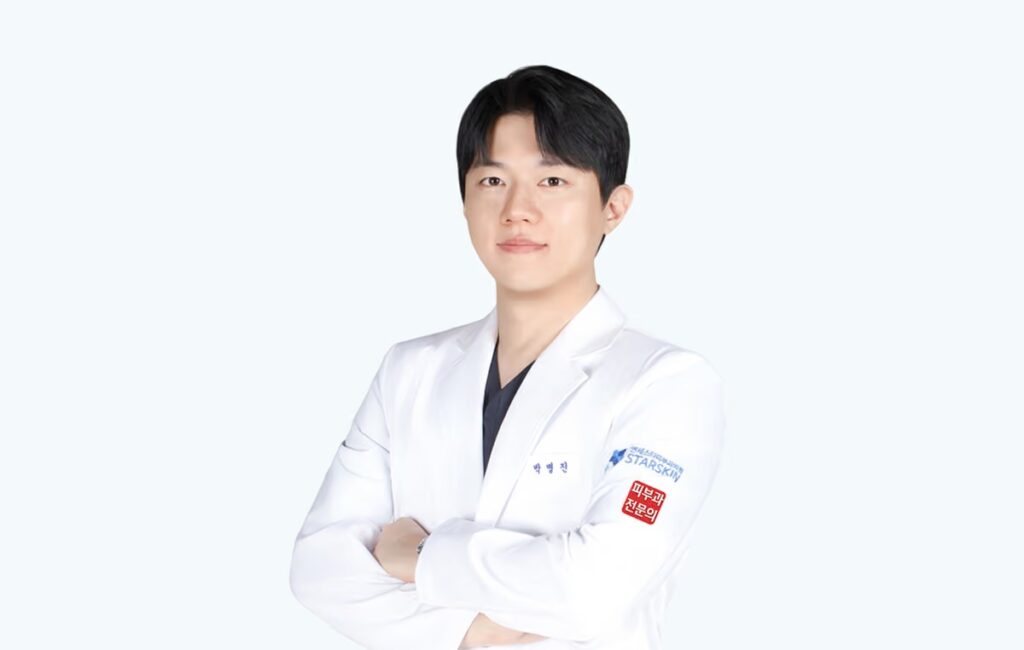
Director Park Byung-jin is a dermatology specialist who graduated with honors from Hanyang University College of Medicine and earned a master’s degree in dermatology from the Department of Medicine at Hanyang University Graduate School. He completed his dermatology residency at Hanyang University Hospital in Seoul.
He has accumulated broad clinical experience as Head of Dermatology at Samsung Medical Center, Director of O’Kims Dermatology in Ilsan, Director of Oh Su-jin Dermatology in Sinsa, and Director of Wells Dermatology in Apgujeong.
He is a full member of the Korean Dermatological Association and the Association of Korean Dermatologists and is active in multiple academic organizations, including the Korean Society for Dermatologic Anti-Aging Research, the Korean Acne and Rosacea Society, the Korean Atopic Dermatitis Association, the Korean Laser Society, the Korean Society for Clinical Dermatologic Treatment Research, and the Korean Society of Cosmetic Dermatology. At Yonsei Star Dermatology Sinchon , he provides specialist dermatology care informed by this broad clinical and academic background.
• Dermatology specialist
• Graduated with honors from Hanyang University College of Medicine
• Master’s degree in Medicine, majoring in Dermatology, Hanyang University Graduate School
• Completed dermatology residency at Hanyang University Hospital in Seoul
• Former Head of Dermatology at Samsung Medical Center
• Former Director at O’Kims Dermatology in Ilsan
• Former Director at Oh Su-jin Dermatology in Sinsa
• Former Director at Wells Dermatology in Apgujeong
• Full member of the Korean Dermatological Association
• Full member of the Association of Korean Dermatologists
• Full member of the Korean Society for Dermatologic Anti-Aging Research
• Full member of the Korean Acne and Rosacea Society
• Full member of the Korean Atopic Dermatitis Association
• Full member of the Korean Laser Society
• Full member of the Korean Society for Clinical Dermatologic Treatment Research
• Full member of the Korean Society of Cosmetic Dermatology
Address and Transportation in Sinchon
Yonsei Star Dermatology Sinchon is located on the 6th floor of Teround, 73 Sinchon-ro, Seodaemun-gu, Seoul. It is approximately 211 meters from Exit 1 of Sinchon Station on Seoul Subway Line 2, making it easy to reach on foot from the station.
Hongik University Station is only one stop away on Line 2, making Yonsei Star Dermatology Sinchon convenient for international visitors staying in the Hongdae or Sinchon area. Sinchon is also served by numerous subway and bus routes, so the clinic is accessible by public transportation from central Seoul.
• Address: 6F, Teround, 73 Sinchon-ro, Seodaemun-gu, Seoul
• Use Sinchon Station on Seoul Subway Line 2
• Approximately 211 meters from Sinchon Station Exit 1
• One subway stop from Hongik University Station on Line 2
• Centrally located in Sinchon with convenient public transportation access
Yonsei Star Dermatology Sinchon Naver Map
Yonsei Star Dermatology Sinchon Google Map
Clinic Hours
Yonsei Star Dermatology is open from 9:00 AM to 8:00 PM Monday through Friday, with a break from 1:00 PM to 2:00 PM. On Saturdays, the clinic is open from 9:00 AM to 3:00 PM without a separate lunch break. The clinic is closed on Sundays and public holidays.
Scar retreatment and treatment plans involving multiple devices may require detailed skin assessment and treatment planning. If you have a preferred visit date, it is advisable to check appointment availability in advance.
• Monday 09:00–20:00, break 13:00–14:00
• Tuesday 09:00–20:00, break 13:00–14:00
• Wednesday 09:00–20:00, break 13:00–14:00
• Thursday 09:00–20:00, break 13:00–14:00
• Friday 09:00–20:00, break 13:00–14:00
• Saturday 09:00–15:00
• No separate lunch break on Saturday
• Closed on Sundays and public holidays
What International Patients Should Prepare Before Visiting
If you are planning dermatology treatment in Korea, it is helpful to prepare information about your main skin concern and previous treatment history rather than providing only the name of the treatment you want.
For scar retreatment in particular, information about which lasers or procedures were previously used, when the treatments were performed, and how much change occurred can be important when determining a new treatment direction. For tattoo removal, knowing the number of previous removal sessions and the lasers previously used can also help during consultation.
Complex scars may require multiple treatment sessions, so the duration of your stay in Korea and the timing of any possible return visit should also be considered. If you are considering skin boosters or lifting treatment at Yonsei Star Dermatology Sinchon , identifying the skin concern you most want to improve and setting priorities before consultation can make treatment planning more efficient.
• Organize your main skin concerns
• Prepare the names of previous lasers and procedures
• Note previous treatment dates and the number of sessions
• Record changes observed after previous treatments
• Consider the duration of your stay in Korea and possible return visits
• Arrange interpretation and appointment scheduling in advance when necessary
Treatment Scope to Know Before Visiting
Yonsei Star Dermatology Sinchon provides treatment for scars, acne, pigmentation, vascular skin concerns, tattoo removal, stretch marks, lifting, skin boosters, and medical skincare. The clinic does not perform surgical procedures or cyst removal.
For scar treatment and retreatment, previous treatment history and the current condition of the remaining tissue are important. Even scars of the same general type can differ in depth, adhesion, color, and thickness, so treatment methods and the number of sessions may differ. The actual treatment plan is determined after a dermatology specialist evaluates the patient’s current skin condition.
• Surgical procedures and cyst removal are not performed
• Previous treatment history is important for scar retreatment
• Treatment methods differ according to scar structure and skin condition
• The number of required treatment sessions varies according to skin condition
• An individual treatment plan is determined after evaluation by a dermatology specialist
Preparing a Korean Dermatology Appointment With Kosmedi
Yonsei Star Dermatology Sinchon is an official Kosmedi partner clinic, and Kosmedi is a Korean medical tourism service that helps international visitors compare dermatology clinics, plastic surgery clinics, health screening centers, and other medical institutions in Korea to find an option that matches their skin concerns and travel schedule. Through Kosmedi, patients can review treatment fields and characteristics of multiple clinics checked by local Korean staff and can receive guidance focused on medical institutions with confirmed interpretation support. Patients can also review clinic treatment event prices, patient reviews, clinic information, and treatment information. In addition to generally available promotions, Kosmedi offers discount coupons and separate events available only through Kosmedi. Patients who have not yet decided which clinic or treatment to choose can use real-time message consultation to share their skin concerns, previous treatment experiences, desired procedures, and Korea travel dates. Kosmedi can also help confirm available appointment dates and interpretation support, allowing international visitors to prepare consultation, clinic comparison, event information, interpretation, and appointments before arriving in Korea.
• WhatsApp: +82 10 9948 7172 | https://wa.me/821099487172 (Click)
• Email: Kosmedisns@gmail.com
• LINE ID: kosmedi
• Instagram: @kosmedi.official | https://www.instagram.com/kosmedi.official/ (Click)
• X: @KosmediOfficial | https://x.com/KosmediOfficial (Click)

